
Finance Commissioner: Saratoga County Must Invest More in Homelessness Solutions
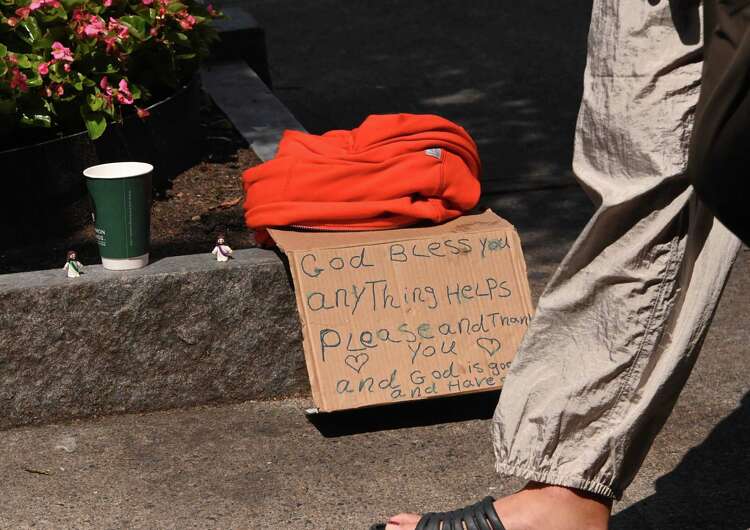
The Homelessness Crisis in Saratoga Springs: A Call for County Action
In the ongoing discussion about how to tackle homelessness in Saratoga Springs, a key figure has raised concerns about the county’s role in addressing the issue. Minita Sanghvi, the city's commissioner of finance, recently emphasized that the problem is not solely a city matter but one that requires significant involvement from the county. She highlighted that the county is "dead last in spending" on its residents, suggesting that this lack of investment is exacerbating the challenges faced by the community.
At a recent City Council meeting, Sanghvi stated that homelessness involves complex issues such as mental health, public housing, and human services, which are interconnected and require coordinated efforts. She argued that the city lacks the necessary budget to handle such a large-scale issue effectively. This sentiment was echoed in her comments to the Times Union, where she expressed concern over recent changes in federal policy, including President Donald Trump's executive order that shifts away from the "housing first" model toward approaches that involve arrests and civil commitments for mental health treatment.
Sanghvi pointed out that these changes could lead to increased costs for both the county and the city, especially given the limited availability of mental health and drug treatment facilities. She stressed the need for more resources to support those who care for the most vulnerable members of society.
According to data released by county officials at the end of 2024, Saratoga County spends the least per resident among all New York counties, with $1,810 per person based on the 2025 tentative budget of $433 million. Monroe County follows with $2,061, while Erie County spends $2,085. In contrast, Hamilton County spends the most at $5,248 per resident.
County Board of Supervisor Chair Phil Barrett responded to Sanghvi's comments by emphasizing the county's commitment to maintaining low taxes and a fiscally responsible approach. He noted that the county's culture of individualism and strong private sector presence helps reduce the need for excessive government spending. However, Sanghvi disagrees, stating that the county's low spending is not a point of pride but rather a cause for concern.
She argued that the county should be working closely with the city to address issues like homelessness and drug abuse. According to her, failing to do so only worsens existing problems. Additionally, she pointed out that the underfunding affects not only homeless individuals but also children, the elderly, the disabled, and county employees, many of whom feel underpaid and understaffed compared to their counterparts in other areas.
The funding situation for the city's homeless population is complicated, involving contributions from state, county, and local sources. Discussions about increasing funding often spark heated debates. Some residents advocate for building more housing, while business owners prefer stricter enforcement of local laws to keep homeless individuals out of sight.
Duane Vaughn, the executive director of Shelters of Saratoga, mentioned that the county supports the Code Blue winter overnight shelter in Saratoga Springs, as it is mandated by the state. Barrett provided additional details, noting that the county spends $6.3 million annually on homeless programs and recently allocated $3 million for land where Shelters of Saratoga will build permanent lodgings. The county also spends about $42 million a year on nonprofits.
Sanghvi acknowledged the city's efforts, pointing out that it provides $387,000 for Rise Housing and Supportive Services, $80,000 for the community engagement court, and $20,000 for Shelters of Saratoga. She also noted that the city covers the costs of police and emergency medical staff involved in caring for the homeless.
Despite the financial challenges and policy changes, Vaughn remains committed to supporting those without a home. He reported that the shelter now serves 75 individuals each night, with numbers continuing to rise due to growing economic disparities. "We will continue to do our work," he said.

Posting Komentar untuk "Finance Commissioner: Saratoga County Must Invest More in Homelessness Solutions"
Posting Komentar