
Lifestyle Program Boosts Brain Health in Older Adults at Risk
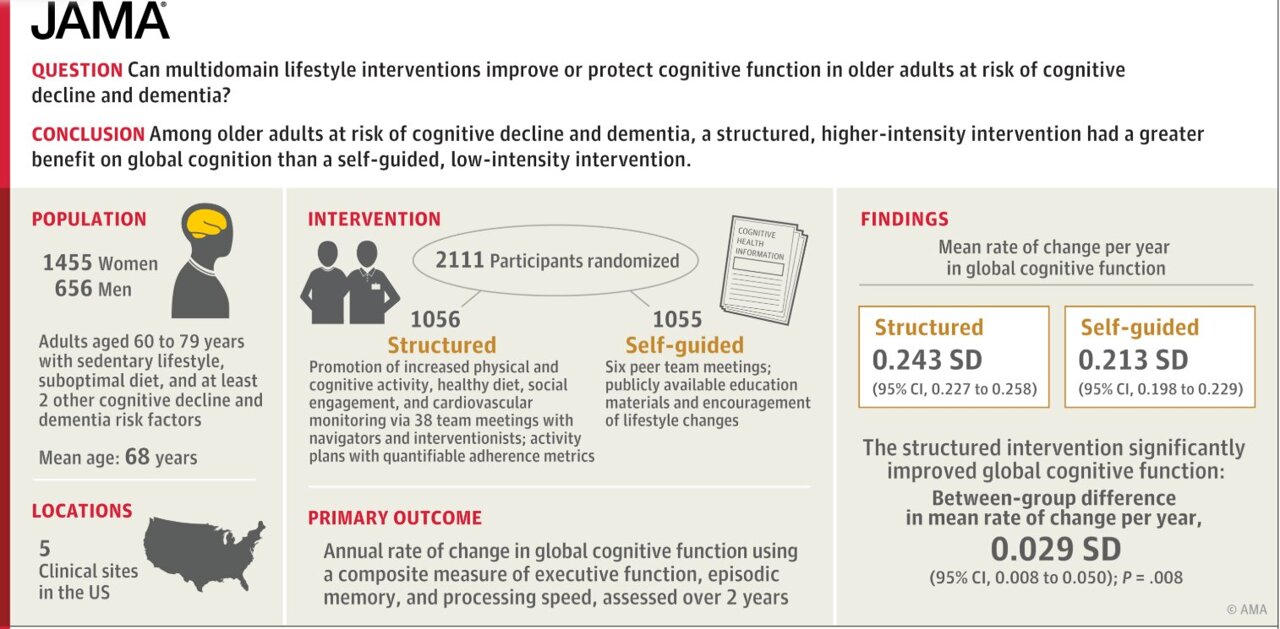
Overview of the U.S. POINTER Study
The U.S. POINTER study, formally known as the "Study to Protect Brain Health Through Lifestyle Intervention to Reduce Risk," has revealed that specific lifestyle changes can significantly improve cognitive function in older adults who are at risk for cognitive decline. This two-year, multi-site clinical trial is part of a broader effort to understand how lifestyle interventions can be used to reduce the risk of dementia and cognitive impairment. One of the key sites involved in this study is the Alzheimer's Disease and Movement Disorder Center at Baylor College of Medicine.
The study compared two different lifestyle interventions: a structured (STR) intervention and a self-guided (SG) intervention. The results showed that participants in the STR group experienced greater improvements in global cognition over the two-year period, helping to protect their cognitive function from age-related decline. The STR intervention was more intensive, structured, and included higher levels of accountability and support compared to the SG approach.
Key Findings and Implications
The findings were first presented at the Alzheimer's Association International Conference (AAIC 2025) in Toronto and simultaneously published in the Journal of the American Medical Association (JAMA). This study marks a significant milestone as it is the first large-scale, randomized controlled clinical trial to demonstrate that accessible and sustainable lifestyle interventions can effectively protect cognitive function in diverse populations across the United States.
Dr. Melissa Yu, professor of neurology and director of the Alzheimer’s Disease and Memory Disorders Center at Baylor, emphasized the importance of these findings, stating that they show individuals can take actionable steps to improve their cognitive health as they age. She also expressed gratitude to the participants and teams involved in the study.
Dr. Joanne Pike, president and CEO of the Alzheimer's Association, highlighted the public health implications of the study, noting that healthy behaviors have a profound impact on brain health. She pointed out that the intervention was effective across a broad range of participants, regardless of sex, ethnicity, genetic risk factors, or heart health status. This suggests that the program could be widely implemented in communities across the country.
Structure of the Interventions
Both the STR and SG interventions focused on four main areas: physical exercise, nutrition, cognitive challenge, and social engagement. However, the level of structure and support differed significantly between the two approaches.
In the STR intervention, participants attended 38 facilitated peer team meetings over two years and followed a prescribed activity program with measurable goals. These included aerobic, resistance, and stretching exercises, adherence to the MIND diet, cognitive challenges through BrainHQ training, and regular reviews of health metrics with a study clinician.
In contrast, the SG intervention involved only six peer team meetings and provided general encouragement without specific goal-directed coaching. Participants were encouraged to make self-selected lifestyle changes based on their individual needs and schedules.
Expert Perspectives and Future Directions
Experts involved in the study believe that these results represent a critical public health opportunity. Dr. Valory Pavlik, professor of neurology at Baylor, noted that the study shows that changes in diet, physical activity, and mental and social engagement can lead to significant cognitive benefits in a relatively short time. He hopes that healthcare providers will consider recommending similar lifestyle changes to patients at risk for cognitive decline.
Dr. Laura D. Baker, professor of gerontology and geriatrics at Wake Forest University School of Medicine and principal investigator of the U.S. POINTER study, emphasized that even modest lifestyle changes can have a protective effect on the brain. She pointed out that while not everyone may have access to intensive programs, small changes can still make a difference.
Looking ahead, the Alzheimer's Association plans to build on the momentum of the U.S. POINTER study by launching several initiatives, including:
- A personal brain health assessment tool
- A virtual brain health training program for healthcare providers
- A community recognition program for organizations promoting brain health
- A brain health roundtable bringing together leaders from various sectors to accelerate impact
These efforts aim to translate the study’s findings into practical tools and programs that can benefit communities nationwide. The association has already invested nearly $50 million in the study and plans to invest an additional $40 million over the next four years to continue following participants and expand the reach of the intervention.
Conclusion
The U.S. POINTER study represents a major step forward in understanding how lifestyle interventions can help protect cognitive function in older adults. With its strong evidence base and wide applicability, the study offers a promising model for future research and public health initiatives aimed at reducing the risk of dementia and cognitive decline. As researchers continue to explore the data collected during the trial, the potential for combination strategies—such as integrating lifestyle changes with drug treatments—may open new avenues for addressing complex diseases like Alzheimer’s.

Posting Komentar untuk "Lifestyle Program Boosts Brain Health in Older Adults at Risk"
Posting Komentar