
5,000 Years of Inequality: Rewriting Prehistoric Social Hierarchies in the Carpathian Basin
New Insights into the Origins of Social Inequality
The global distribution of wealth has become a focal point for intense debate in recent years. Scholars across various disciplines, including social sciences, humanities, and economics, are examining how social hierarchies emerge within human communities and what factors contribute to their development. A long-standing belief has been that the introduction of agriculture in Europe during the Neolithic period, approximately 8,000 years ago, naturally led to the formation of unequal societies. The adoption of the plow and the hereditary transmission of farming resources were thought to have accelerated this process.
However, a recent study published in Science Advances challenges this theory by focusing on the Carpathian Basin. According to Dr. Paul R. Duffy, lead author of the study and an archaeologist at the ROOTS Cluster of Excellence at Kiel University, the findings suggest that social inequalities did not significantly increase over the five thousand years following the arrival of agriculture in Southeast Europe. Moreover, the introduction of the plow did not rapidly drive the spread or permanence of inequality.
Research in the Carpathian Basin
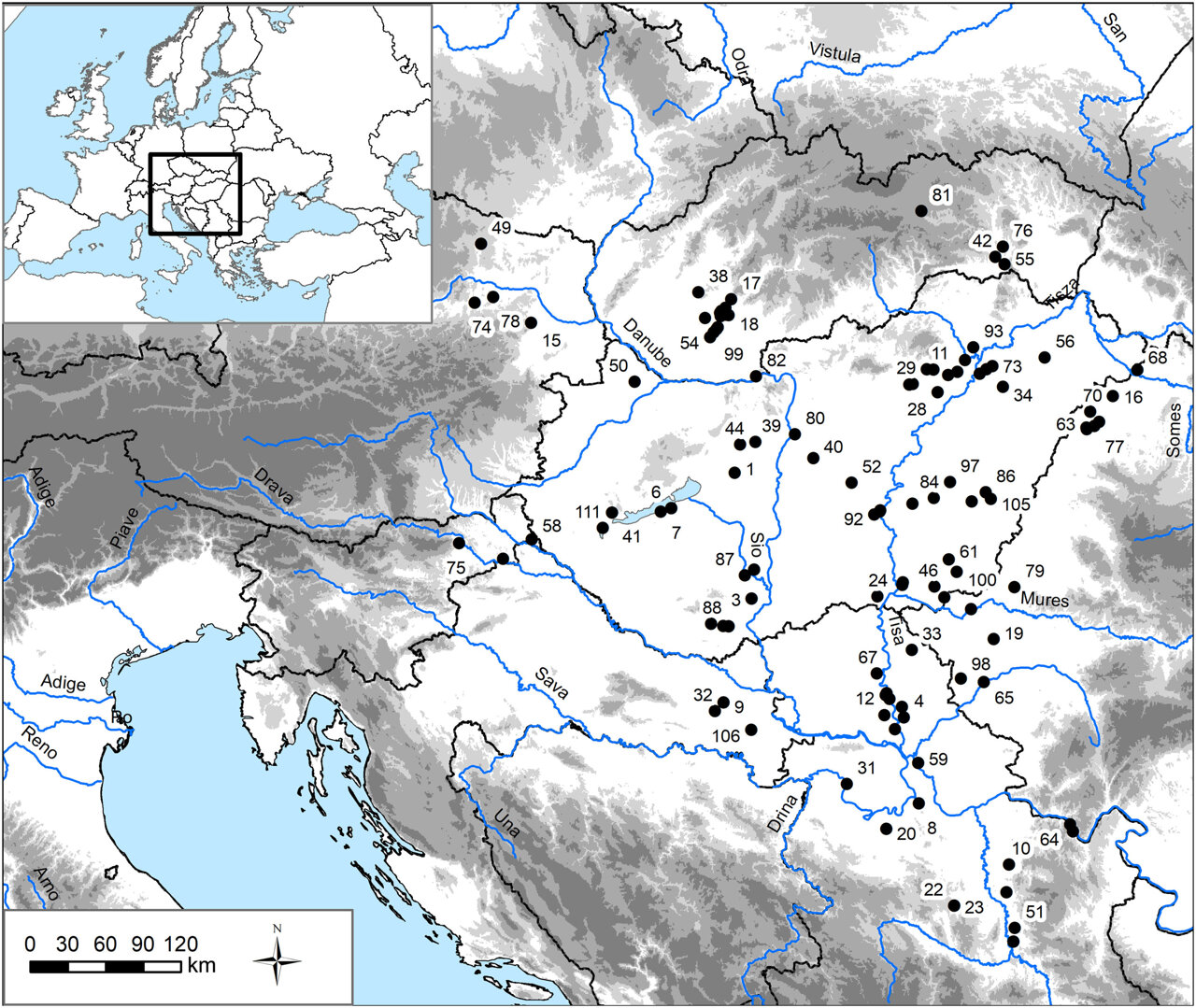
The Carpathian Basin is an ideal location for studying the emergence of socio-economic inequalities due to its historical role as a key route for the spread of early agriculture from the Middle East through Anatolia and the Balkans into Central Europe. Over the past few decades, numerous excavations have taken place in the region, providing a rich dataset for researchers. This wealth of archaeological evidence makes the area particularly suitable for exploring how prehistoric societies evolved.
Dr. Duffy emphasizes that the Carpathian Basin offers a unique opportunity to examine the transition from agrarian societies to more complex social structures. His team, working with colleagues from the U.S., focused on several aspects of prehistoric life, including settlement patterns, construction practices, and communal activities.
Measuring Inequality Through Archaeological Evidence
To assess social inequality, the researchers used the size of houses as one of the primary indicators. The construction of large homes requires significant labor and resources, making them a tangible form of inheritable wealth. However, the study found that the disparity in house sizes between the early Neolithic and the Bronze Age remained relatively stable.
In addition to house sizes, the researchers analyzed other elements such as the scale of settlements, their longevity, and the extent of collaborative projects like earthworks and trench construction. One notable finding was the widespread use of ditches for defensive or ceremonial purposes, which persisted from the early days of farming until at least the first millennium BCE. These ditches only increased in size significantly during the late Bronze Age, around 1400 BCE.
Evolution of Societal Organization
The study also revealed trends in the duration of settlements. Earlier Neolithic settlements tended to last much longer than those of the Bronze Age, which were often large fortresses or centralized hubs. This shift suggests that societies became more organized and capable of collective action over time.
However, these changes did not necessarily result in greater material inequality. It was only in later periods that more pronounced disparities emerged. Co-author Dr. Fynn Wilkes, a postdoctoral researcher at the ROOTS Cluster of Excellence, notes that while societal organization improved, it did not automatically translate into measurable economic inequality.
Mobility and Resistance to Hierarchy
Another intriguing aspect of the research involves the shorter occupation periods of Bronze Age settlements. This suggests that people may have left areas where early hierarchies began to form. Dr. Duffy explains that this mobility could have undermined the power of ambitious leaders, allowing individuals to "vote with their feet" and avoid oppressive structures.
The data from the Carpathian Basin does not support a direct link between the advent of agriculture and rising inequality. Instead, it aligns with previous global studies that question the assumption that social inequality was an inevitable outcome of the Neolithic revolution.
Implications for Future Research
While this study provides valuable insights, Dr. Duffy stresses the need for further detailed research in well-documented regions. Understanding the mechanisms that either foster or prevent inequality remains crucial for developing a comprehensive picture of human societal evolution.
This research contributes to a growing body of evidence suggesting that the relationship between agriculture and inequality is far more complex than previously believed. By examining specific regional examples, scholars can better understand the diverse paths that human societies have taken throughout history.

Posting Komentar untuk "5,000 Years of Inequality: Rewriting Prehistoric Social Hierarchies in the Carpathian Basin"
Posting Komentar