
"A Gift": How Trump Gains Power Through Vague Trade Deals
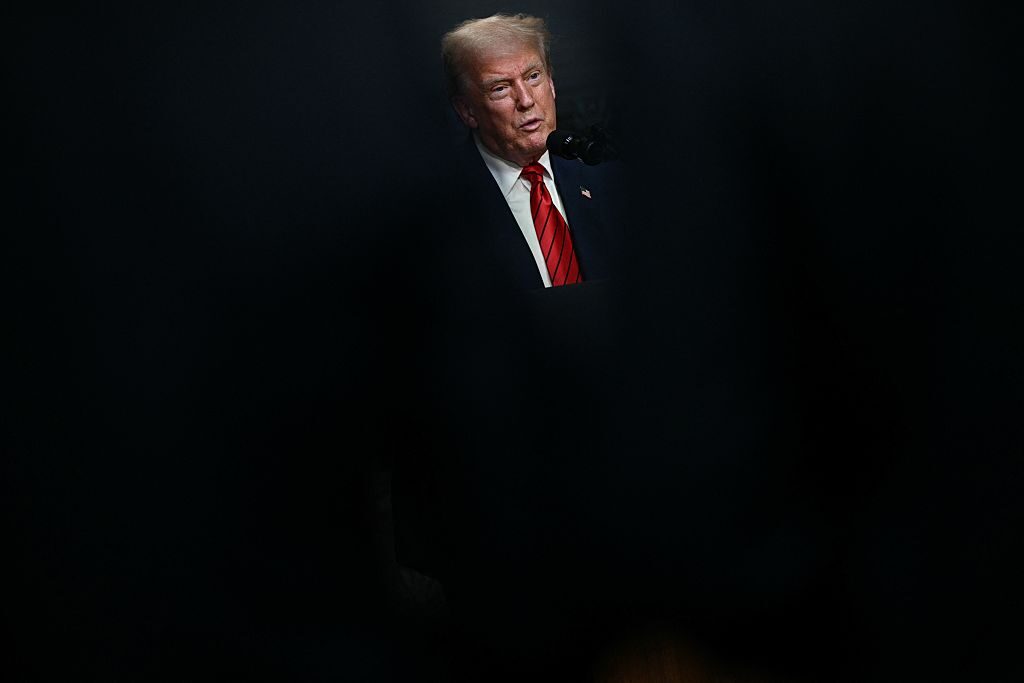
Trump's Vague Trade Deals and the Concentration of Power
For lawmakers, foreign leaders, and financial analysts, the details of Donald Trump’s multibillion-dollar trade deals have remained shrouded in mystery. The president has consistently maintained that there are no specifics to his agreements, a stance he claims is intentional. This approach appears to be designed to enhance his own authority, giving him greater control over the terms and execution of these pacts.
During a live phone interview with CNBC’s morning show, President Trump confirmed that there are indeed no details to his trade deals. When asked about the specifics of his recent agreement with the European Union, he emphasized that the arrangement was structured to give him exclusive power over its implementation. “The details are $600 billion to invest in anything I want. Anything. I can do anything I want,” he said.
This statement not only highlights the lack of transparency in his trade negotiations but also reflects a broader pattern of behavior during his second term. Over the past seven months, Trump has continued to challenge established norms, redefining the limits of executive power and often bypassing Congress when it comes to policy decisions.
When pressed on what he meant by “no details,” a White House official responded that Trump had explained the mechanics of the deal. However, they did not provide any concrete information or specifics about how the trade agreements would function.
The Role of Tariffs and Leverage
Trump made it clear during the interview that he alone would decide the consequences if the EU failed to meet the $600 billion investment requirement. When asked about the enforcement mechanisms behind such investments, he stated that failure to comply would result in higher tariffs. “They paid $600 billion, and because of that, I reduced their tariffs from 30 percent down to 15 percent,” he explained.
This approach raises concerns among legal experts and political analysts. Michael Gerhardt, a professor at the University of North Carolina School of Law, described Trump’s mindset as “quite problematic.” He pointed out that the idea of a foreign nation giving money to the president for personal use could be seen as a form of corruption. Gerhardt noted that the framers of the Constitution included impeachment as a safeguard against such abuses.
Former Speaker Paul D. Ryan echoed similar sentiments, stating that Trump’s tariffs were based on his personal whims rather than a consistent strategy. This perception of unpredictability has led to criticism from both Democrats and some Republicans.
Criticism from Congressional Leaders
Two senior Senate Democrats criticized the vagueness of Trump’s trade policies. Ron Wyden, the Finance Committee ranking member, described Trump’s trade agenda as “disastrous” and noted that it often consists of little more than “a few lines on a napkin.” This lack of clarity has left farmers, businesses, and workers in a state of uncertainty, dependent on Trump’s every move regarding tariffs and trade.
Senate Minority Leader Charles E. Schumer accused the president of creating an environment of chaos, dishonesty, and inflation through his trade policies. He argued that Trump’s actions send a message to global adversaries that America’s security and prosperity are open to negotiation.
Shifting Goals and Economic Necessity
Some former advisors note that the original goals of Trump’s tariffs have evolved since he returned to office. Robert Lawrence, an economic adviser to President Bill Clinton, observed that the tariffs have become unmoored from their initial purpose. Instead of focusing on reciprocity and fair trade practices, they now serve as tools to leverage negotiations and encourage foreign investment in the U.S.
Despite the criticisms, some Republicans argue that Trump’s trade strategies, regardless of their consequences, were necessary. Allen B. West, a former Florida representative, claimed that Trump has rewritten trade policy for the U.S., stating that it was time to stop being “abused by these other countries with their trade policies.”
Conclusion
As Trump continues to shape his trade policies, the lack of transparency and the concentration of power in his hands remain central issues. While some see his approach as a bold redefinition of American trade strategy, others view it as a dangerous precedent that undermines democratic norms and institutional checks. The long-term implications of these trade deals and the president’s methods will likely continue to be a topic of intense debate.

Posting Komentar untuk ""A Gift": How Trump Gains Power Through Vague Trade Deals"
Posting Komentar