
A Goggle-Eyed Fish Challenges Evolutionary History
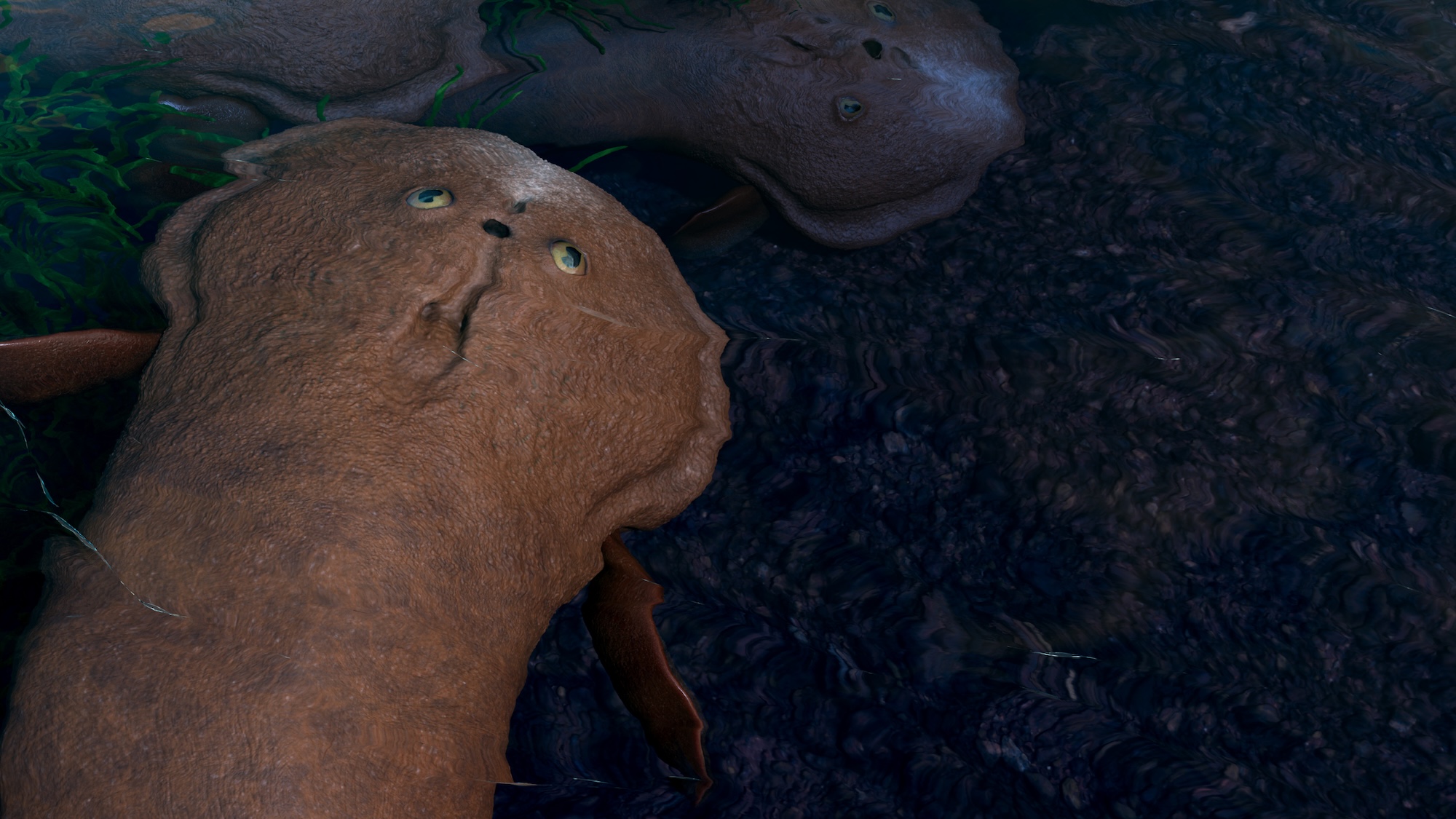
A Fossil That Changes the Story of Evolution
Using advanced imaging techniques, an international research team has reconstructed the heart, brain, and fins of an ancient extinct fish from a tiny fossil fragment. The results reveal a creature that looks like a mix of a tadpole, a horseshoe crab, and Gary the Snail from SpongeBob SquarePants. But despite its cartoonish appearance, this ancient fish could help rewrite one of the earliest chapters in animal evolution. The findings were published in the journal Nature on August 6.
A Fishy Timeline
Earth’s first fish appeared about half a billion years ago, but not near the ocean's surface. These early creatures began their evolutionary journey closer to the seafloor, where they could feed before developing jaws and teeth. The traditional theory suggests that these anatomical features evolved as fish moved higher into the water column. By around 400 million years ago, jawed fish dominated the oceans. From there, evolution introduced limbed vertebrates, land-dwelling creatures, and eventually humans. However, while the "jaws first, then limbs" hypothesis is widely accepted, some gaps remain.
“There is a large data gap beneath this transformation,” said Michael Coates, a biologist at the University of Chicago and senior author of the study. “We’ve been missing snapshots from the fossil record that would help us order the key events to reconstruct the pattern and direction of change.”
For decades, a crucial piece of this puzzle remained hidden in a paleontological archive. A 1969 expedition to Norway’s Arctic Spitsbergen archipelago collected thousands of fossil-embedded sandstone rocks. It took another 40 years before researchers had the time to examine them. Among the fragments, the study co-authors discovered a perfectly preserved, half-inch-long cranium of Norselaspis, dating back 410–407 million years.
Advanced Imaging Reveals Hidden Details
The team sent the specimen to Switzerland’s Paul Scherrer Institute, where experts used synchrotron-based X-ray microtomography to scan it layer by layer. The results were astonishing. After thousands of hours of digital reconstruction, the 3D scans revealed tissue-thin bones encasing organs and musculature with unprecedented detail.
"With this exquisite digital atlas, we now know Norselaspis in greater anatomical detail than many living fishes," said lead author Tetsuto Miyashita, a paleobiologist.
Although Norselaspis was jawless, it possessed anatomical features previously thought to exist only in jawed species. In particular, it had a powerful heart and widened vessels that facilitated greater blood flow. "One might even say Norselaspis had the heart of a shark under the skin of a lamprey," explained Miyashita.
Sensory Organs and Swimming Abilities
Norselaspis’ sensory organs were also impressive. Seven small muscles controlled its eyeballs—one more than humans have—while its inner ears were unusually large. If Norselaspis were our size, its inner ears would each be as big as an avocado, and its heart would be as large as a cantaloupe.
The evolutionary advantages weren’t just internal. Norselaspis swam using angled, paddle-like fins behind its gills, allowing it to turn, stop, and speed up quickly. However, it likely didn’t use these abilities to hunt prey. Without jaws or teeth, it may have used its anatomy to escape predators who were evolving jaws. This dynamic led to a surge in oceanic diversity.
"When jaws evolved against this background, it brought about a pivotal combination of sensory, swimming, and feeding systems, eventually leading to the extraordinary variety and abundance of Devonian fishes," said Coates.
A New Understanding of Vertebrate Evolution
Norselaspis is challenging the timeline of jawed fish evolution. Researchers noted that a nerve linked to its shoulder was separate from the nerves reaching the gills. This suggests that shoulders in tetrapods (four-limbed vertebrates) evolved as a new structure connected to the neck, separating the torso from the head. Most early jawless fishes had torsos that extended continuously to the head, whereas jawed vertebrates developed a neck and throat.
Norselaspis straddles both anatomies, with researchers comparing it to a human whose arms extend from behind their cheeks.
Although it’s still unclear what triggered the development of jaws, Norselaspis reveals that the evolutionary journey of vertebrates wasn’t a straight path. "It wasn’t as simple as marching straight from a bottom feeder to an apex predator," said Miyashita.

Posting Komentar untuk "A Goggle-Eyed Fish Challenges Evolutionary History"
Posting Komentar