
A Town Shaped by Industry Navigates Its New Role as Canada's LNG Hub
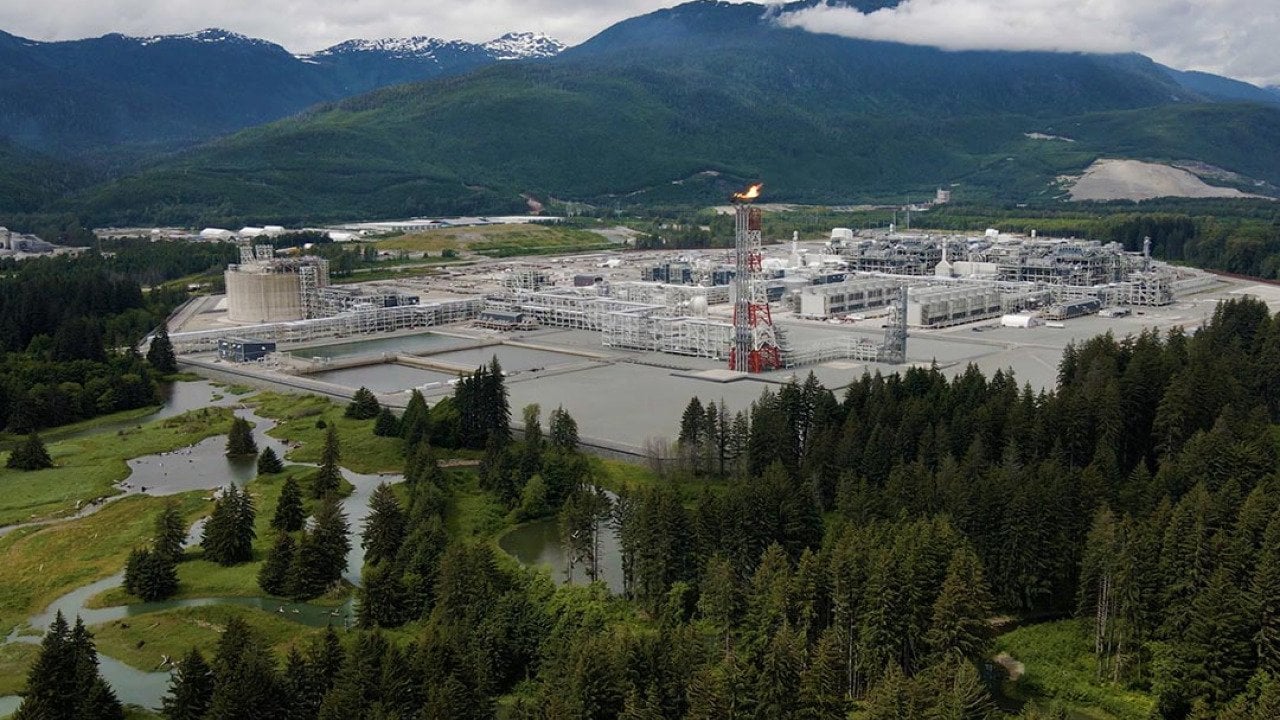
A Town Transformed: Kitimat Embraces Its Role as Canada’s LNG Capital
For the past few months, the small coastal community of Kitimat, British Columbia, has been buzzing with activity centered around the flares. The newly completed liquefied natural gas (LNG) plant, known as LNG Canada, began its initial operations last fall, lighting up the skies with flames that reached as high as 90 meters. This is roughly equivalent to four 18-wheeler trucks stacked on top of each other and visible from over 50 kilometers away.
Dustin Gaucher, a Haisla cultural researcher and educator, shared his experience of the initial flaring. Living more than a dozen kilometers away from the industrial site, he described the sound as resembling a rocket ship going off all night and the smell reminiscent of his grandfather’s boat’s diesel engine. While the intensity of the noise and smell has decreased since production began, concerns about the plant's long-term impact remain.
The flaring process burns off natural gas, primarily composed of methane. According to LNG Canada, these large flares are an expected part of bringing the facility online. However, the plant's effects on the environment and local wildlife are still a point of concern for many residents.
On June 30, LNG Canada successfully filled the belly of a 300-meter-long ship with liquefied natural gas (LNG), marking the beginning of its operations. This was the first of an estimated 170 ships it plans to fill and send overseas annually. The project's first phase is now underway, with a second phase—aimed at doubling production—approved by the B.C. government but awaiting a final investment decision.
Kitimat has a long history as an industrial hub, dating back to the 1950s when it was established as a company town for Alcan, an aluminum smelter now owned by Rio Tinto. The town has seen various industries come and go, including a methanol plant and a pulp mill, both of which closed in 2005 and 2010, respectively, leading to an economic downturn.
LNG Canada, a joint venture involving some of the world's largest fossil fuel companies, represents a significant industrial investment in the community. Including the Coastal GasLink pipeline, which supplies the facility, the project's value is estimated at $40 billion. Many in the community view this as a much-needed resurgence.
Kitimat’s Pride in Becoming the LNG Capital of Canada
For Kitimat Mayor Phil Germuth, launching Canada’s nascent LNG export industry from Kitimat is a source of pride. He highlighted the historical significance of the town, noting that in 1956, National Geographic described the Alcan and Kemano project as the most expensive private sector project in Canadian history. Over 70 years later, Kitimat has attracted LNG Canada, the largest private sector investment in Canadian history.
Germuth emphasized the importance of the relationship between the District of Kitimat and the Haisla Nation Council, which he noted had previously been strained. He credited LNG Canada with fostering a stronger connection between the two communities, leading to mutual benefits.
Haisla Nation Chief Councillor Crystal Smith praised the consortium behind LNG Canada for building relationships before considering the project itself. She highlighted the financial and employment opportunities provided to the Haisla Nation, as well as their majority stake in another project called Cedar LNG, currently under construction.
Prime Minister Mark Carney celebrated the milestone, highlighting the involvement of Indigenous Peoples in the new project. However, his claim about reducing global emissions remains a subject of debate.
Environmental Concerns and Community Engagement
Despite the positive developments, concerns about potential health impacts from the LNG plant’s operations persist. Dustin Gaucher expressed worries about the effects on local wildlife, including wolves, moose, deer, lynx, and cougars. Emissions from flaring are monitored by the BC Energy Regulator, but the long-term environmental consequences remain unclear.
Melissa Lem, a family doctor and president of Canadian Physicians for the Environment, pointed out that LNG production involves fracking, which has its own set of health implications. She cited studies showing higher rates of adverse pregnancy outcomes and respiratory diseases in communities near fracking operations, with Indigenous populations disproportionately affected.
Kitimat has an extensive network of air quality monitoring stations, providing publicly available data. LNG Canada has not directly addressed concerns about wildlife impacts, directing inquiries to its website instead.
Mayor Germuth acknowledged initial concerns about the flaring but noted that most residents are relieved the project is operational. He emphasized that Kitimat, built by industry, understands the need to tolerate certain challenges for long-term gains.
Lucy McRae, a member of the local environmental group Douglas Channel Watch, praised LNG Canada for engaging with the community and addressing concerns. She mentioned regular meetings involving conservationists, hunters, fishers, and health groups, where industry representatives provide detailed updates and address questions.
While McRae does not support the expansion of fossil fuels, she recognizes the need for jobs in the current economic climate. She noted that the project has brought positive changes to the community, despite her personal reservations.

Posting Komentar untuk "A Town Shaped by Industry Navigates Its New Role as Canada's LNG Hub"
Posting Komentar