
AI Data Center Spending Surpasses Retail, Threatening U.S. Economic Stability
The Shift in Economic Power: Data Centers Outpacing Consumer Spending
The American consumer has long been the backbone of the U.S. economy, driving growth through spending on services and goods. In fact, the services sector accounts for roughly two-thirds of the country’s gross domestic product (GDP), making it a critical engine of economic activity. As the saying goes, “America runs on spending.” However, this dynamic is changing rapidly, with a new player emerging as the dominant force behind economic growth.
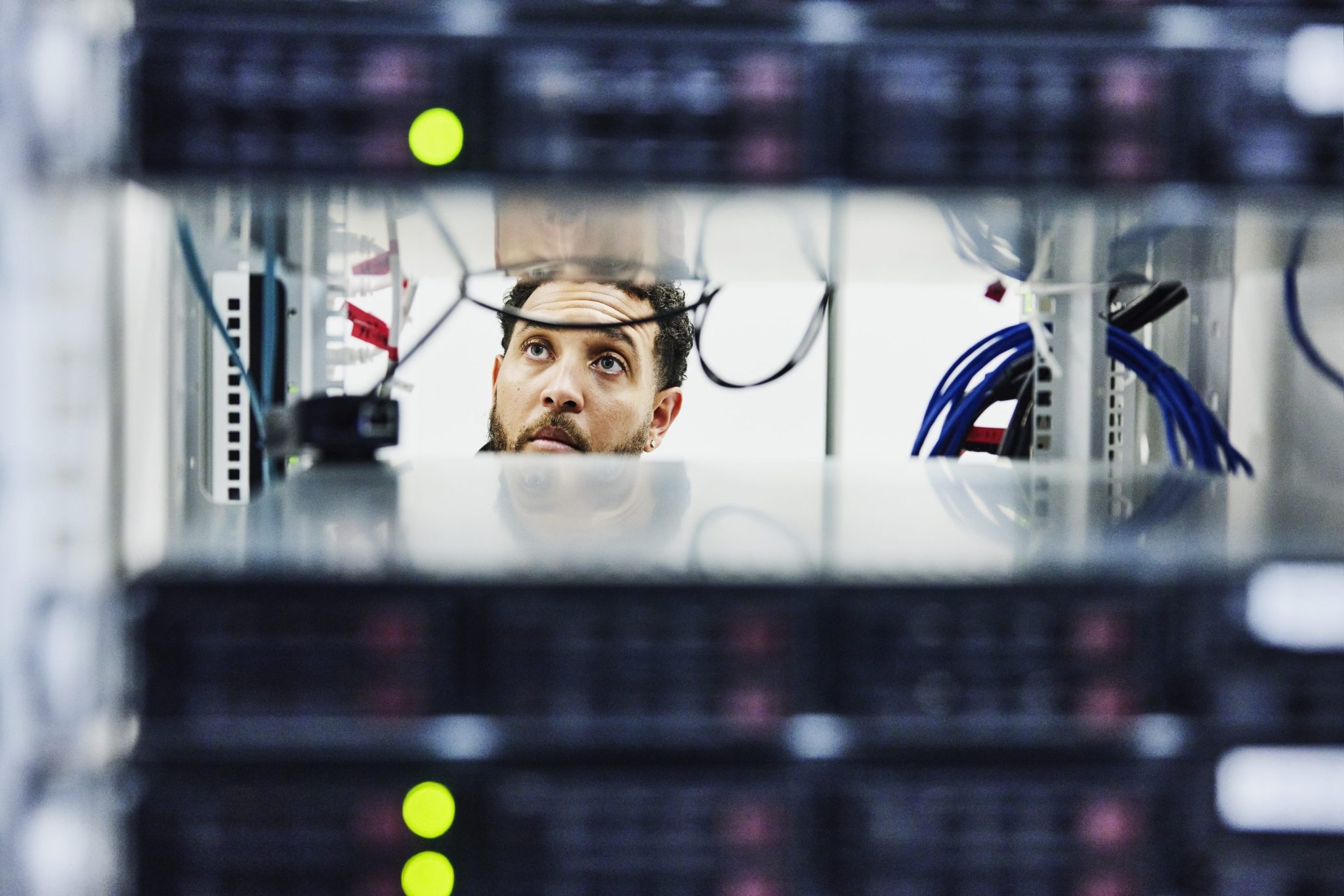
In 2025, data centers—massive rectangular structures housing servers, storage systems, and networking equipment—are becoming a major economic force. These facilities are not only essential for supporting artificial intelligence (AI) but also serve as a massive magnet for investment. Tech giants such as Microsoft, Google, Amazon, and Meta are pouring billions into expanding their data center infrastructure, with some estimates suggesting that their capital expenditures on AI-related projects now exceed those of traditional consumer spending.
This shift marks a significant departure from historical trends. For the first time in recorded history, the impact of AI data center spending on GDP growth has surpassed the total contribution from all U.S. consumer spending. Analysts at Renaissance Macro Research have noted that this trend is not just a temporary blip—it reflects a fundamental transformation in how the U.S. economy is being driven.
The Rise of AI-Driven Investment
Several factors are fueling this surge in data center investment. The rapid development of generative AI and advanced large language models has created an insatiable demand for computing power. Companies across industries are scrambling to keep up with this demand, leading to a boom in infrastructure expansion.
According to McKinsey, global companies will need to invest $6.7 trillion in new data center capacity between 2025 and 2030. This figure underscores the scale of the challenge and the urgency with which tech firms are responding. In the U.S., AI data center spending has grown by at least 10 times since 2022, with some analysts estimating that it now accounts for nearly 2% of total GDP.
Paul Kedrosky, a well-known business blogger, has described this phenomenon as “AI capex eating the economy.” He argues that the scale of investment in AI infrastructure is comparable to historical booms, such as the railroad expansion of the 19th century or the telecom boom of the early 2000s. While these past investments led to long-term economic benefits, the nature of AI data centers is different—they require constant upgrades and are more susceptible to obsolescence.
Economic Implications and Uncertainties
The impact of this investment wave extends beyond the tech sector. With so much money flowing into AI infrastructure, other sectors such as venture capital, manufacturing, and startups are seeing reduced funding. Unlike previous infrastructure booms, which often had lasting effects, the AI data center boom may be more volatile and short-lived.
Despite these concerns, the current investment pattern has helped stabilize the economy. In the face of uncertain macroeconomic conditions, data center spending has acted as a buffer, potentially preventing a recession. However, this raises questions about the long-term sustainability of such growth. If the pace of investment slows, what happens to the broader economy?
Economists like Noah Smith have raised concerns about whether this trend could lead to instability. The question remains: Will the data center boom continue to drive growth, or will it eventually create a bubble that bursts?
A New Economic Paradigm
As AI reshapes industries and redefines what is possible, the U.S. economy is undergoing a profound transformation. Consumer spending, while still a major force, is no longer the primary driver of growth. Instead, the relentless pursuit of AI compute capacity is shaping the trajectory of the economy.
This shift highlights a key change in the way economic power is distributed. The future of the U.S. economy may depend less on the purchasing power of its citizens and more on the ability of tech companies to outpace each other in the race for AI dominance. Whether this trend leads to sustained growth or creates new risks remains to be seen.

Posting Komentar untuk "AI Data Center Spending Surpasses Retail, Threatening U.S. Economic Stability"
Posting Komentar