
AI Storytime Tool Boosts Children's Literacy Skills
Enhancing Literacy Through AI-Powered Storytelling
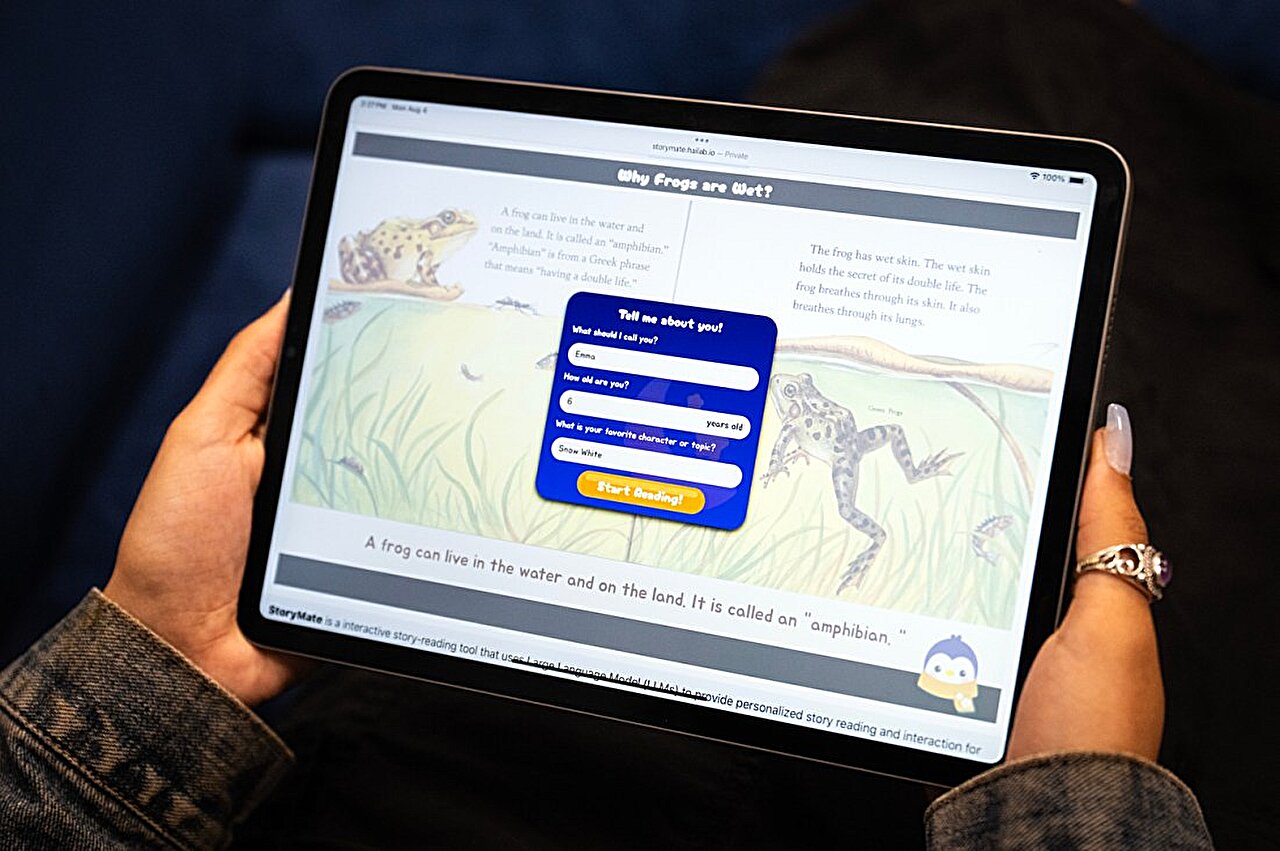
Researchers at Northeastern University have taken a creative approach to improving literacy and reading comprehension by integrating artificial intelligence into the beloved tradition of storytime. Their project, known as StoryMate, is designed to engage children in meaningful conversations that mirror the natural interactions between adults and young readers.
StoryMate is built on the idea that human storytelling is irreplaceable. However, the AI system aims to enhance the experience by creating personalized interactions that adapt to each child's unique interests, age, and engagement level. This approach is based on extensive research involving children, parents, and educators, ensuring that the tool meets real-world needs.
The Role of Human-Like Interaction
According to Dakuo Wang, an associate professor of computer science and design at Northeastern, the conversations that occur during storytime play a critical role in a child's cognitive and emotional development. Traditional interactive story-reading products often rely on pre-generated questions that lack the depth of genuine human interaction. StoryMate seeks to bridge this gap by offering a more dynamic and responsive experience.
Wang emphasizes that the goal of StoryMate is not to replace parents or teachers but to support them. Feedback from users indicates that the system aligns well with their expectations and needs. The research behind StoryMate was published in the Proceedings of the 2025 CHI Conference on Human Factors in Computing Systems, highlighting its significance in the field of human-computer interaction.
Integrating Science and Storytelling
One of the key features that sets StoryMate apart is its ability to blend scientific concepts into the storytelling process. For example, the AI can modify a classic tale like Snow White to include elements such as a frog encounter. It then pauses to explain how frogs live in both water and on land, breathe through their skin and lungs, and asks the child to think about other animals with similar characteristics.
This method encourages children to explore and connect ideas beyond the story itself. If a child's response veers off-topic, the AI gently redirects the conversation, maintaining focus while still allowing for creativity and curiosity.
Educator-Informed Development
To ensure accuracy and relevance, Wang and his team worked closely with kindergarten teachers to annotate 200 children's stories with common questions and answers. This data was used to develop an open-source algorithm that powers StoryMate’s interactive features. The tool was then tested with parents, children, and teachers, who provided valuable feedback.
Most children enjoyed using StoryMate, though some required assistance. Parents noted that the tool helped them ask better questions about the stories, while teachers appreciated the increased engagement among students. Wang also emphasized the importance of incorporating "randomness" into the design to make the experience feel more like a real adult reading with a child.
Expanding Access to Education
This summer, the researchers began a larger-scale test of StoryMate in two California school districts. Teachers in second- and third-grade classrooms are using the tool as part of their reading curriculum. Many students in these districts speak Spanish at home, and their parents may not be fluent in English.
Wang explained that the initiative aims to support first-generation children who may miss out on informal educational opportunities after school. By providing an engaging and accessible tool, StoryMate helps ensure that all students receive the same quality of education both in and out of the classroom.
Future Implications
The success of StoryMate highlights the potential of AI to enhance traditional learning methods in innovative ways. As the tool continues to evolve, it could serve as a model for future educational technologies that prioritize personalization, engagement, and meaningful interaction. With ongoing research and real-world testing, StoryMate represents a promising step forward in the intersection of technology and education.

Posting Komentar untuk "AI Storytime Tool Boosts Children's Literacy Skills"
Posting Komentar