
AMD's Slide Amid China Worries Over AI Optimism
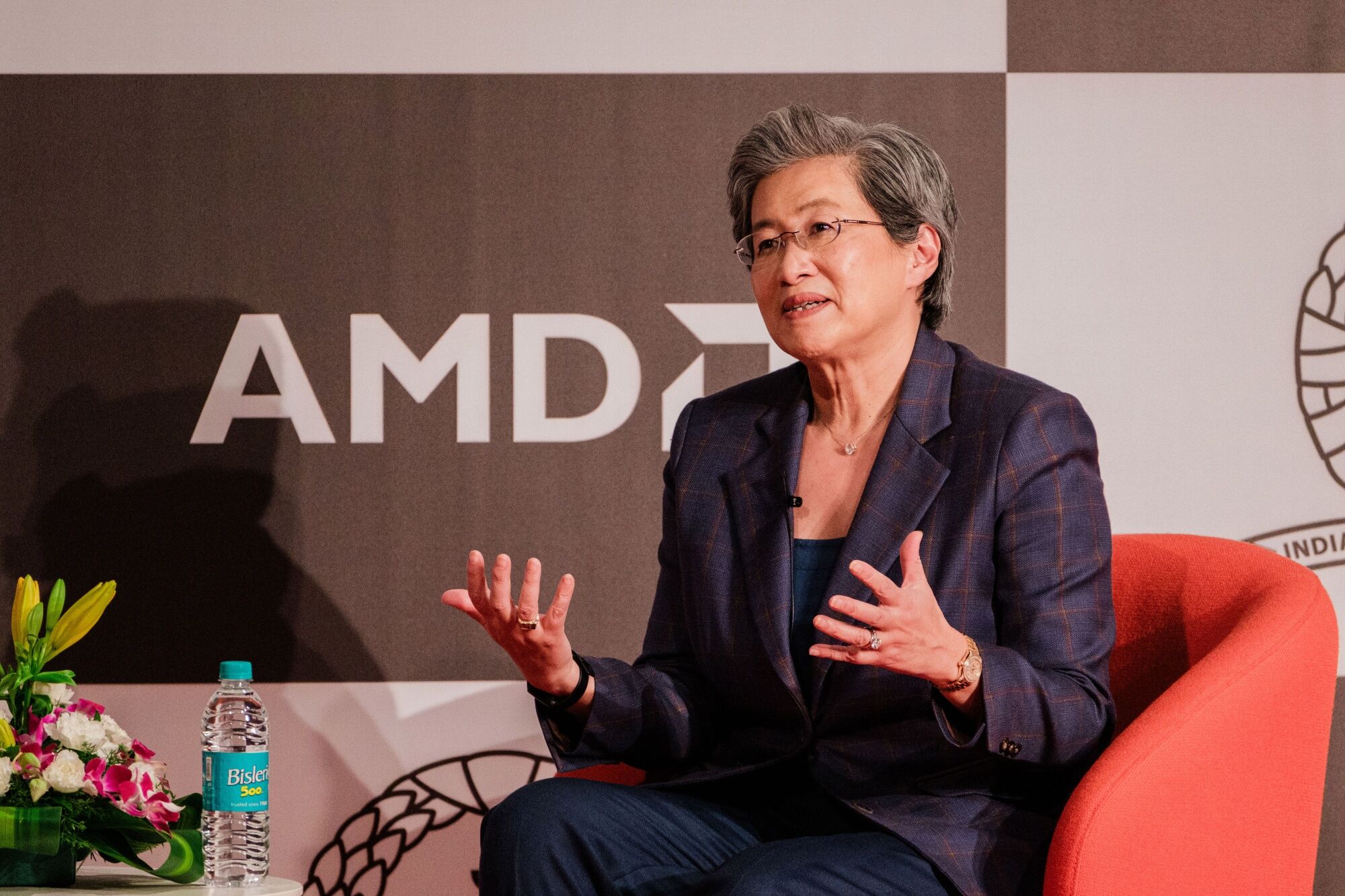
AMD Shares Drop Amid Uncertainty Over Chinese Market
Advanced Micro Devices Inc. (AMD) shares experienced a significant decline on Wednesday, driven by the company’s inability to provide a clear outlook for resuming sales in China. This market is vital for AMD, as it is the second-largest producer of artificial intelligence processors. The uncertainty surrounding the return of sales has overshadowed the company's otherwise positive forecast for its AI business.
In its quarterly earnings report released on Tuesday, AMD did not offer any predictions regarding the sales of the Instinct MI308, an AI processor specifically designed for the Asian market. The Trump administration initially prohibited the shipment of such chips to China in April. However, this restriction was recently reversed, leading to heightened expectations that AMD and its competitor, Nvidia Corp., could soon resume their operations in the region.
China represents the largest semiconductor market globally, and these restrictions have posed a significant threat to the revenue of both companies. During a conference call with analysts, CEO Lisa Su stated, “As our licenses are still under review, we are not including any MI308 revenue in our third-quarter guidance.” This lack of clarity contributed to the drop in AMD's stock price, which fell 6.4% on Wednesday in New York—the steepest single-day decline since April. Despite this, AMD had previously seen a remarkable gain of 44% this year through Tuesday’s close, making it the top-performing stock in the semiconductor industry.
Su expressed optimism about the future of the AI computing market, stating, “Looking ahead, we see a clear path to scaling our AI business to tens of billions of dollars in annual revenue.” The company is also expanding its new MI350 lineup, according to Su.
Three months ago, AMD announced a $800 million writedown related to the Chinese export restrictions and warned that the curbs would cost it $1.5 billion in revenue this year. Wall Street has been closely monitoring how this situation has evolved following the recent policy shift.
During the conference call, analysts repeatedly sought specific guidance on how much China AI revenue AMD would generate and when. They also attempted to get Su to commit to long-term predictions for overall AI chip revenue. However, Su and CFO Jean Hu remained consistent in their message: while they are confident about the AI market, forecasting specific details remains challenging. They explained that earlier writedowns of Chinese inventory cannot be converted into revenue because they involved incomplete chips requiring further manufacturing work.
Despite these uncertainties, AMD’s third-quarter revenue forecast exceeded analysts’ estimates. The company projected sales of approximately $8.7 billion, surpassing the average projection of $8.37 billion. In the second quarter, sales increased by 32% to $7.7 billion, compared to an average estimate of $7.43 billion. Profit stood at 48 cents per share, slightly below the projected 49 cents. Data center sales rose by 14% to $3.2 billion, while personal computer-related sales surged by 67% to $2.5 billion.
Since Su took over as CEO a decade ago, AMD has emerged as a key player in the computing industry. The company's ability to deliver competitive products, especially during a time when longtime rival Intel Corp. has faced challenges, has led to a reversal of fortunes. AMD's market capitalization is now roughly $200 billion higher than Intel’s. However, neither company has yet matched the success of Nvidia, whose dominance in AI accelerators has made it the world’s most valuable business.
AMD remains the second-largest provider of graphics chips, which serve as the foundation for AI accelerators used in data centers. Its microprocessors also compete directly with Intel products in the markets for PCs and servers.

Posting Komentar untuk "AMD's Slide Amid China Worries Over AI Optimism"
Posting Komentar