
An Icy Supervolcano on Pluto Hides a Secret Ocean
A Mysterious Crater on Pluto: A New Theory
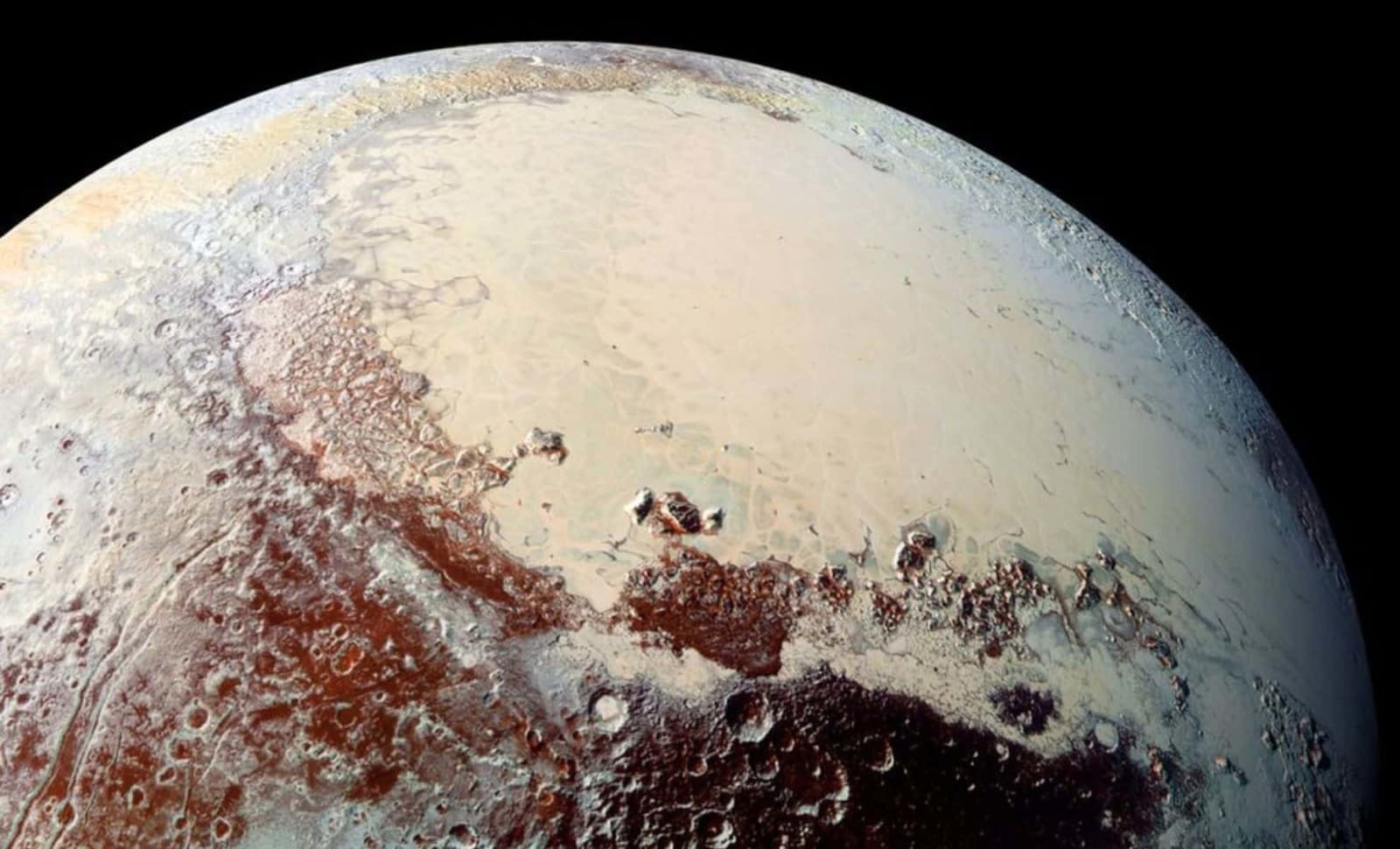
A recent discovery about a mysterious crater on Pluto has sparked new interest in the geological activity of this distant dwarf planet. Scientists believe that what was once thought to be an ancient impact crater might actually be the collapsed caldera of a massive icy supervolcano that erupted just a few million years ago. This theory is based on data from NASA’s New Horizons mission, which provided insights into Pluto's complex and dynamic surface.
A Supervolcano Unlike Any Other in the Solar System
When the New Horizons spacecraft flew past Pluto in 2015, it captured images that challenged our understanding of this distant world. One of the features observed was Kiladze, a depression initially classified as an impact crater. However, new research led by planetary scientist Al Emran of the Jet Propulsion Laboratory suggests that Kiladze may resemble the Yellowstone Caldera in Wyoming, but instead of molten rock, it expelled cryomagma—a mixture of water, ice, and ammonia.
Kiladze's size and structure raised immediate questions. It measures roughly 27 miles (44 kilometers) across and plunges nearly 2 miles (3 kilometers) deep—far deeper than an impact crater of that size should be. “The crater was too deep,” Emran explained, noting that Pluto’s geological activity would normally fill such depressions over time. Instead, its unusual depth and the absence of a typical central peak strongly suggest a volcanic origin.
Evidence Hidden in Pluto’s Ice
Surrounding the crater, scientists detected water ice enriched with traces of ammonia, a compound not seen elsewhere on Pluto. This discovery is critical because ammonia lowers the freezing point of water, potentially allowing subsurface liquid pockets to persist for millions of years. “Ammonia may be what allows the frigid ice to flow,” Emran noted, adding that tectonic pressure could have driven this icy material upward, culminating in one or more explosive events.
Researchers estimate that Kiladze’s eruption could have released as much as 240 cubic miles (1,000 cubic kilometers) of cryomagma across the surrounding terrain. In some places, water ice appears to stretch for more than 60 miles (100 kilometers) from the crater, and scientists believe the actual dispersal could be far greater—possibly extending for a thousand kilometers in finer, undetected deposits.
The presence of ammonia also provides a potential timeline. Pure ammonia would not survive long under Pluto’s harsh conditions because solar wind and cosmic radiation gradually destroy it. Its lingering signature implies that Kiladze’s most recent eruption occurred within the past three million years, a blink of an eye in geological terms.
What Pluto’s Hidden Ocean Might Reveal
The idea of a subsurface ocean on Pluto has been debated for years, but Kiladze’s apparent cryovolcanic history has revived this possibility. Volcanic activity requires a heat source, and the evidence of such recent eruptions suggests that Pluto’s interior may still be warm enough to keep water from freezing entirely.
“Even a centimeter or two of this organic smog would mask the water ice spectral signature we observe,” said Dale Cruikshank, a planetary scientist at the University of Central Florida and a co-author of the study. Since this haze layer has not yet buried the water ice near Kiladze, the eruption must have been recent enough to expose it.
If Pluto can retain heat for billions of years, perhaps from radioactive elements in its core, then it might harbor isolated liquid water pockets—or even a global ocean—beneath its icy crust. This hidden ocean could be the engine behind Pluto’s surprising geological vitality and may hold clues to conditions that could support exotic forms of chemistry or even life.
“If Kiladze erupted as recently as 3 million years ago, it would indeed suggest that Pluto’s interior may still retain some residual warmth today,” Emran explained.

Posting Komentar untuk "An Icy Supervolcano on Pluto Hides a Secret Ocean"
Posting Komentar