
Breakthrough study uncovers vibrant microbial life in trees
Discovering the Hidden World Inside Trees
A groundbreaking study has revealed that trees are home to a vast and diverse community of microbes, with each tree hosting approximately one trillion bacteria in its woody tissue. This discovery, led by a team from the Yale School of the Environment, opens up new possibilities for understanding how trees function and interact with their environment.
Trees are among the most significant components of Earth's ecosystems, serving as massive reservoirs of biomass and storing over 300 gigatons of carbon. However, much about the internal workings of trees remains unknown. The recent research published in Nature provides a deeper insight into the microbial life within tree trunks, highlighting the importance of these hidden ecosystems.
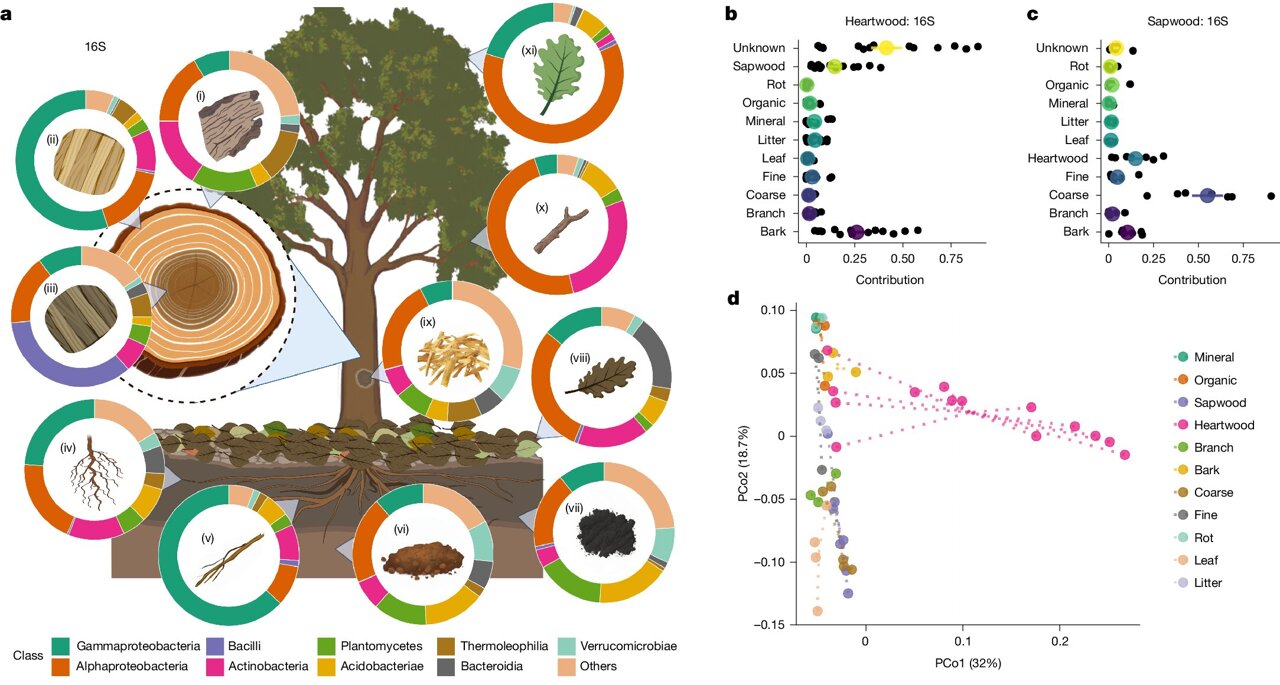
The study was conducted by doctoral candidate Jonathan Gewirtzman and recent graduate Wyatt Arnold, who explored the microbiomes of 150 living trees across 16 species in the northeastern United States. Their findings show that microbes are distributed differently between the heartwood (inner wood) and sapwood (outer wood), with each area having its own unique microbial community. These communities differ significantly from those found in other parts of the tree or surrounding ecosystems.
Microbial Diversity and Function
The inner wood is dominated by anaerobic microbes that do not require oxygen, while the outer wood contains aerobic microbes that rely on oxygen. This distinction suggests that different parts of the tree support distinct ecological functions. The research also found that these microbes are actively involved in producing gases and cycling nutrients, which plays a crucial role in the tree’s overall health and the broader forest ecosystem.
Arnold, a chemical and environmental engineer, noted that the microbial communities varied significantly between different tree species. For example, sugar maples had a very different microbiome compared to pines, and these differences were consistent and preserved across species. This observation supports the idea that microbial communities may have coevolved with their host trees over time, adapting to the specific conditions within each species.
Implications for Forest Ecology and Climate Change
Understanding these internal ecosystems can provide valuable insights into trees' biogeochemical functions and their role in forest carbon cycling and nutrient exchange. This knowledge could be critical in predicting how forests will respond to future environmental changes, including climate change.
Gewirtzman emphasized the need to explore and document the microbial diversity within trees before climate change disrupts these delicate systems. Some of these microbes may hold the key to promoting tree growth, enhancing disease resistance, or even producing compounds that could be useful in various industries.
Further research into wood microbiomes across different global regions and climates could help scientists better understand the factors that influence microbial diversity and function. This work could lead to new strategies for managing and preserving forest ecosystems.
Collaborative Efforts and Methodology
The research team included experts from various disciplines, such as Mark Bradford, Peter Raymond, Craig Brodersen, Marlyse Duguid, Jordan Peccia, and recent graduates Cade Brown and Naomi Norbraten. Their collaboration brought together expertise in ecology, biogeochemistry, plant physiology, and environmental engineering.
To analyze the microbial communities, the researchers spent over a year freezing, smashing, grinding, and beating wood samples to extract high-quality DNA. This meticulous process allowed them to uncover the complex microbiomes within tree trunks.
Bradford described the experience as similar to that of a 19th-century ecologist exploring an unfamiliar island, emphasizing the significance of this uncharted territory. The study highlights the vast potential for discovery in areas that have been largely overlooked.
As scientists continue to explore the hidden world inside trees, they are uncovering new layers of complexity in forest ecosystems. This research not only expands our understanding of tree biology but also underscores the importance of protecting and studying these vital habitats.

Posting Komentar untuk "Breakthrough study uncovers vibrant microbial life in trees"
Posting Komentar