
Curiosity Rover Soars After 13 Years on Mars
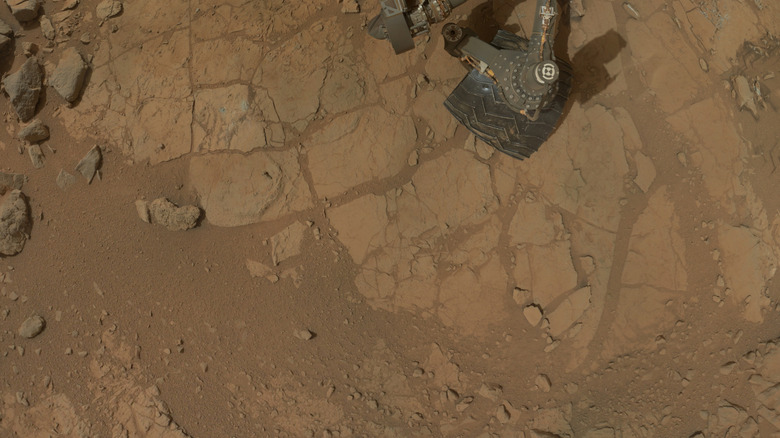
A 13th Birthday Celebration for the Curiosity Rover
It’s a special day for the Curiosity rover, which recently celebrated its 13th birthday. The rover touched down on Mars on August 6, 2012, marking the beginning of an incredible journey through the Red Planet’s rugged terrain. While humans often celebrate their teenage years with milestones like learning to drive or managing schoolwork, Curiosity has been busy doing something far more complex—exploring a world millions of miles away from Earth.
NASA's Jet Propulsion Laboratory (JPL), responsible for operating the Curiosity mission, recently rolled out a new software update to help the six-wheeled explorer become more efficient. The main goal is to extend the life of its multi-mission radioisotope thermoelectric generator (MMRTG), a power source that functions as a miniaturized plutonium-based energy system. This technology has been used in space missions for decades and is known for its reliability, even in the harshest conditions.
The MMRTG works by converting heat from radioactive decay into electricity. It’s not a video game genre, but it’s definitely a key component of Curiosity’s survival. However, even this advanced power system has limitations. Plutonium doesn’t last forever, and unlike a car battery, Curiosity can’t just stop by a gas station to recharge. So, every action the rover takes—whether it’s driving across the Martian surface, taking samples, or sending data back to Earth—uses up some of that precious energy.
To make the most of its resources, NASA has implemented a new strategy: multitasking. Just like a teenager juggling homework and social media, Curiosity now has the ability to perform multiple tasks simultaneously. For example, instead of stopping to upload photos after a drive, the rover can do it while moving toward its next destination. This small change reduces the overall time the rover needs to be active, which in turn conserves power.
Before the update, Curiosity would follow a strict schedule, even if it completed a task earlier than expected. Now, the rover can recognize when it has finished its daily objectives and power down automatically. This efficiency helps preserve the MMRTG’s energy, extending the rover’s operational lifespan.
The History of Radioisotope Power Systems
NASA has been using radioisotope power systems (RPS) since the 1960s. These systems have powered iconic missions such as the Apollo lunar landings and the Voyager spacecraft, which are still traveling through space today. The current version used by Curiosity and its sibling, Perseverance, is designed to work both in space and in planetary atmospheres.
The basic principle behind RPS is simple: when two conductive materials are at different temperatures, electricity flows between them. Inside the MMRTG, plutonium pellets generate heat, while the cold Martian environment provides the other end of the temperature gradient. This process generates about 110 watts of power from just 10.6 pounds of plutonium, enough to keep the rover running for years.
These generators are also built to withstand accidents. In 1968, an RTG was recovered intact after a rocket crash, proving the system’s durability. Safety is a top priority, as any failure could lead to serious consequences.
The Future of Curiosity
While it’s difficult to predict exactly how long the MMRTG will last, NASA initially hoped Curiosity would survive only two years. Instead, the rover has defied expectations, continuing to explore and send back valuable data. With the recent software update, it may be able to go even further.
Future upgrades could make the rover even more efficient, but there are always risks. Something could go wrong, and the mission might come to an end sooner than expected. Still, for now, Curiosity is thriving, and its 13th birthday is a testament to human ingenuity and perseverance.
As the rover continues its journey, it serves as a reminder of what can be achieved when science and technology come together. Whether it’s exploring Mars or advancing our understanding of the universe, Curiosity is a symbol of exploration and discovery. Here’s to the next 13 years and beyond.

Posting Komentar untuk "Curiosity Rover Soars After 13 Years on Mars"
Posting Komentar