
Detroit Reclaims Its Passion for Big Gas Hogs
The Trump Administration’s Impact on the U.S. Auto Industry
The Trump administration’s approach to electric vehicles (EVs) has significantly influenced the U.S. auto industry, allowing manufacturers to continue selling large, gas-powered vehicles for the foreseeable future. This shift has been met with enthusiasm from Detroit-based automakers, who are rethinking their strategies in response to new regulatory changes.
Previously, automakers were under pressure from government regulations and consumer demand to invest heavily in developing cleaner, more fuel-efficient engines. However, with the current administration's policies, these companies are now pivoting back to traditional technologies. Ford Motor CEO Jim Farley recently highlighted this change, noting that it presents a "multibillion-dollar opportunity over the next couple of years." Ford is adjusting its product lineup by scaling back EV plans and focusing more on SUVs and commercial vehicles.
The decline of the anticipated EV boom in the U.S. has led to a push from President Trump and Congress to eliminate state and federal regulations that they claim were aimed at mandating battery-powered vehicles. Key actions include stripping California of its ability to set its own emissions standards, aiming to eliminate greenhouse-gas rules, and zeroing out costly fuel-economy fines. These changes have allowed Detroit carmakers to celebrate the extended lifespan of the internal combustion engine (ICE).
Regulatory Shifts and Industry Adjustments
The rapid shift in policy has prompted auto executives to adapt quickly to the new regulatory landscape. Tyson Jominy, senior vice president of data and analytics at J.D. Power, noted that the pace of change is unprecedented. He emphasized that reverting to existing technology is faster than preparing for new innovations.
While automakers have not provided detailed plans, they have stated that they will continue investing in electric vehicles and other technologies, albeit at levels aligned with current consumer demand. Ford, for example, is set to unveil a new EV strategy and has opposed some of the most drastic regulatory rollbacks.
These policy changes also help offset the financial burden of Trump’s auto tariffs, which have cost companies billions this year. Additionally, they allow automakers to overhaul vehicle lineups that were previously expected to be replaced by EVs. The industry also benefits from saving on regulatory credits designed to offset potential fuel economy and emissions fines.
Since 2022, Ford, General Motors (GM), and Stellantis have spent nearly $10 billion on regulatory credits and fuel-economy rule-violation fines. GM, which once aimed to phase out internal combustion engines by 2035, has praised the benefits of keeping them in the market.
Strategic Moves and Market Dynamics
Stellantis, the parent company of Jeep, Chrysler, and Dodge, has pointed to the provisions of Trump’s Big Beautiful Bill as an opportunity to offer a better mix of gas-powered and electric vehicles. CEO Antonio Filosa highlighted the potential for additional profit. The automaker has new platforms that support various vehicle types, including gas-powered, hybrid, and all-electric models.
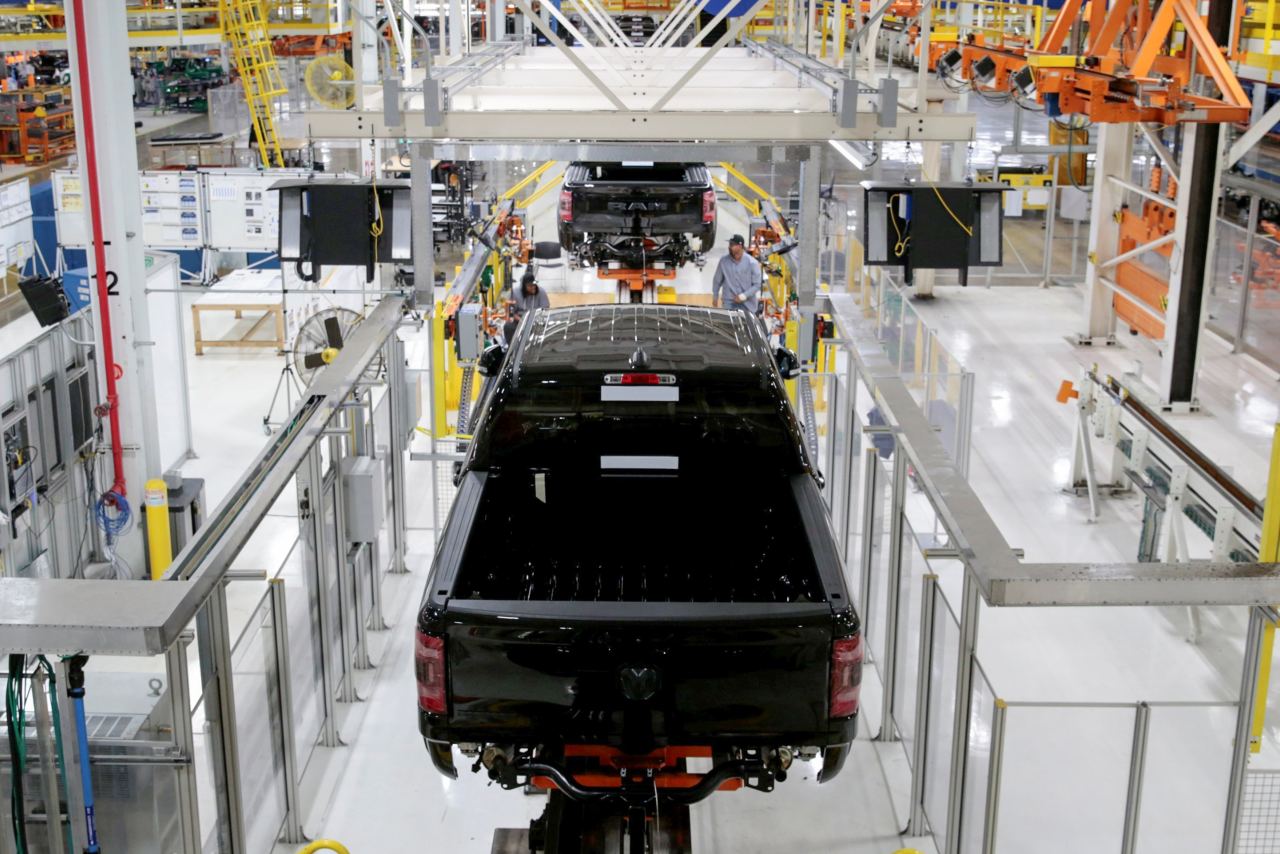
Stellantis has faced challenges with the supply of profitable Ram pickup trucks due to parts shortages. Recently, the company began adding shifts to a Michigan factory to boost production of its popular Ram 1500 trucks. While this decision isn’t explicitly tied to recent regulatory changes, the company stands to benefit from the new environment, as it no longer faces fines for fuel-economy rule violations.
Industry experts like Adam Lee, chairman of Maine-based Lee Auto Malls, note that Americans favor large vehicles, which sell well and generate significant profits. However, he expresses concerns about a truck-heavy strategy potentially failing in the long term. He hopes Detroit automakers will continue their commitments to improving EVs.
Challenges and Opportunities
One challenge for Detroit is that some of the most in-demand gas-powered vehicles, such as small, affordable crossovers, are not the biggest moneymakers. Competition in the higher-margin big SUV and pickup space is already intense, according to Sam Fiorani of AutoForecast Solutions. With higher tariffs and relaxed emission standards, he expects automakers to increase prices on larger models.
Matt Bowers, owner of multiple dealerships in New Orleans, believes the internal combustion engine remains in demand today. People seeking fuel efficiency often opt for smaller SUVs rather than EVs. Regulatory changes, he says, allow companies to build what consumers want, which he sees as a positive move.
Detroit’s car companies have started preparing sites across the U.S. and Canada to build more gas-powered cars and trucks, especially as the EV market has slowed. Ford canceled plans for a three-row EV in Canada, opting instead for heavy-duty pickups. GM abandoned plans to build electric-vehicle motors in New York, shifting focus to V-8 engines.
Despite these changes, GM continues to roll out new EV models, with CEO Mary Barra expressing belief in their eventual dominance. However, she now emphasizes the extended runway for gasoline-powered cars, reflecting the industry's rapid adaptation to new policies. “It also gives us the opportunity to sell ICE vehicles for longer and appreciate the profitability of those vehicles,” she said on a recent earnings call.

Posting Komentar untuk "Detroit Reclaims Its Passion for Big Gas Hogs"
Posting Komentar