
Good Fengshui, Strong Team: The Rise of Shanghai Tang
The Evolution of a Chinese Luxury Icon
Shanghai Tang, once a trailblazing Hong Kong brand that draped mandarin jackets on the shoulders of icons like Kate Moss, Princess Diana, and Gong Li, is now undergoing a significant transformation. Founded by the late Sir David Tang, a flamboyant Hong Kong tastemaker, the brand was known for its unique fusion of Chinese tradition with Pop Art flair. It became a favorite among globe-trotting elites in the 1990s. However, after Tang's passing in 2017 and a series of ownership changes, including a shift from Richemont to a group of investors led by Italian textile entrepreneur Alessandro Bastagli, the brand struggled to keep up with the changing luxury landscape.
In 2018, Shanghai Tang was acquired by Lunar Capital, a Chinese consumer-focused buyout firm led by Derek Sulger and Jerry Mao. The new owners launched what they called a "revolution," aiming to revitalize the brand. They restructured the supply chain, moved the headquarters to Shanghai, and set out to transform the niche legacy label into a modern lifestyle powerhouse.
"When we bought it, it was a very loved brand. There were so many things that could have been improved, but people loved it, and that's really what we bought. But what is now Shanghai Tang, the brand, was just one small part of what we now consider Shanghai Tang, the group. It's a part of all things we are emphasizing, one of the most important parts being experiences," Sulger said in an exclusive interview.
Sulger is focused on building a lifestyle empire around the brand, similar to how he has transformed other legacy names. Lunar Capital's portfolio includes UCCA Group, a fine art-powered retail, education, and commercial content company, and Unmi Group, which operates a constellation of fine dining restaurants. Unmi became Louis Vuitton's main hospitality partner in China, managing the luxury brand's Michelin-starred restaurant The Hall in Chengdu and Le Café Louis Vuitton in Shanghai.
With the help of Cui Dan, a former veteran editor at GQ China, and Hu Chunhui, a prominent figure in Wuhan's fashion retail scene, Sulger and Mao developed a trend-driven product strategy. Products such as the Ginger Flower fragrance and the Five Element bracelets have become some of the brand's recent bestsellers.
"People are hanging these bracelets on their purses as to project good fengshui," said Sulger, referring to the ancient Chinese wisdom of creating balance and harmony through spatial arrangements. "It's a functional product in that way. It's also experiential for us."
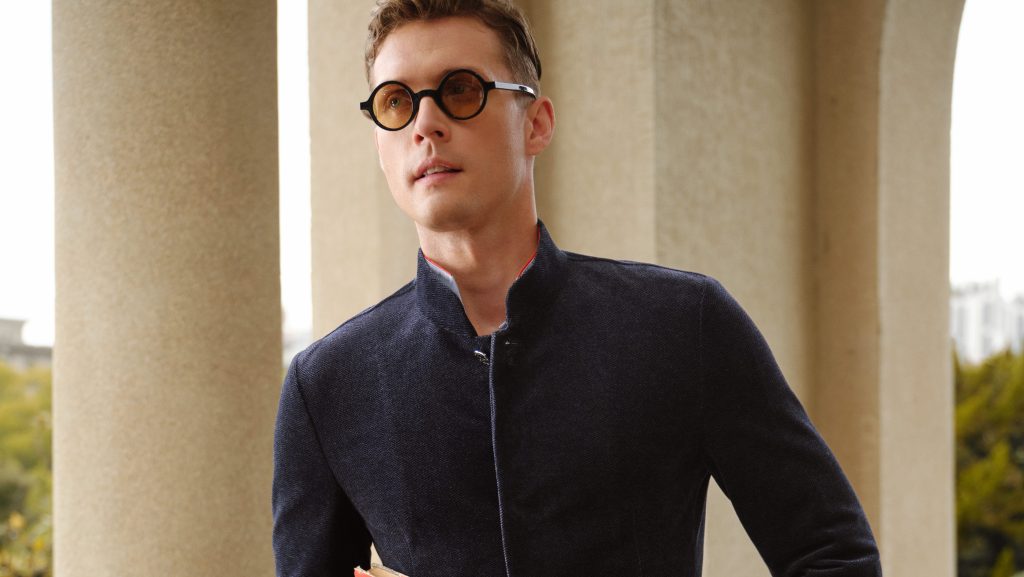
Without a creative director, the self-proclaimed "new founders" have taken a hands-on approach to Shanghai Tang. Every detail matters, from playful copy for the brand's Playmaker Polo, which touts its soft mandarin collar as one that "brings good fengshui when closing deals, hitting the gym, dominating the court, or turning heads over coffee," to Mao overseeing the newly established atelier, which counts around 20 skilled garment makers.
Despite an economic slowdown, the company saw its organic sales soar 60 percent last year. With 10 brick-and-mortar stores in Shanghai, Hong Kong, Singapore, and Malaysia, Shanghai Tang recently expanded into hospitality with two cafés in Shanghai.
For Mao, the brand's proposition is extremely exacting yet open-ended: How can the brand define what Chinese lifestyle is today? "It's a mood, an atmosphere," Mao said. "It is not David Tang wearing a Tang suit and smoking a cigar anymore. We are keen on exploring ways to put Shanghai Tang in a larger context, perhaps it's under the context of the best museum in the country, it's about finding the connection between Chinese style and Chinese art, we want to even open a Shanghai Tang hotel," Mao added.
Mao highlights Tang's deep influence in the contemporary Chinese world during his lifetime, a storyline often overshadowed by his colorful lifestyle and connections to British and Hong Kong elites. He recalls how Tang was one of the earliest supporters of China's "85 New Wave" movement, which included the first crop of professional artists to graduate from the Central Academy of Fine Arts after the Cultural Revolution. "In fact, UCCA's founders didn't start collecting Chinese art until they met David Tang in Hong Kong," Mao added.
"An art connoisseur and a tastemaker with real influence who could build a platform to celebrate his passions is a rarity in China today; that's what makes Shanghai Tang special," Mao said. "Shanghai Tang is not a fashion business, it's a universe of Chinese lifestyles."
Building the brand's universe means unexpected collaborations. Its list of creative crossovers includes the Chinese artist Xu Bing, the famed fashion photographer Chen Man, and Jacky Tsai, the Hong Kong artist.
Under its current company structure, Sulger and Mao own Shanghai Tang independently from Lunar's portfolio of companies. The new structure is meant to help define the future of the brand, which has plans to open a fashion and hospitality flagship in the Middle East and, further down the line, the Shanghai Tang hotel, which will be operated by its hospitality branch called Nocture.
"Just like the projects we are involved in with Louis Vuitton restaurants, where the products are directly integrated with some of the retail experiences, the revenue actually grows in parallel," Sulger said.
A small luxury empire in the making, Sulger and Mao are confident that extending the brand's reach into hospitality—-an aspirational category—-will drive consumer interest.
"Whatever the challenges are, COVID-19, weak economy, bad stock market, the trends, the aspirations and the interests are very clear—people really want experiences, they do want a little bit of an escape, and they really want to sort of surround themselves with aesthetics and feel comfortable. So how you play the trends can become a little bit more interesting," Sulger said.

Posting Komentar untuk "Good Fengshui, Strong Team: The Rise of Shanghai Tang"
Posting Komentar