
How Trump Unified India, China, and Russia Against America
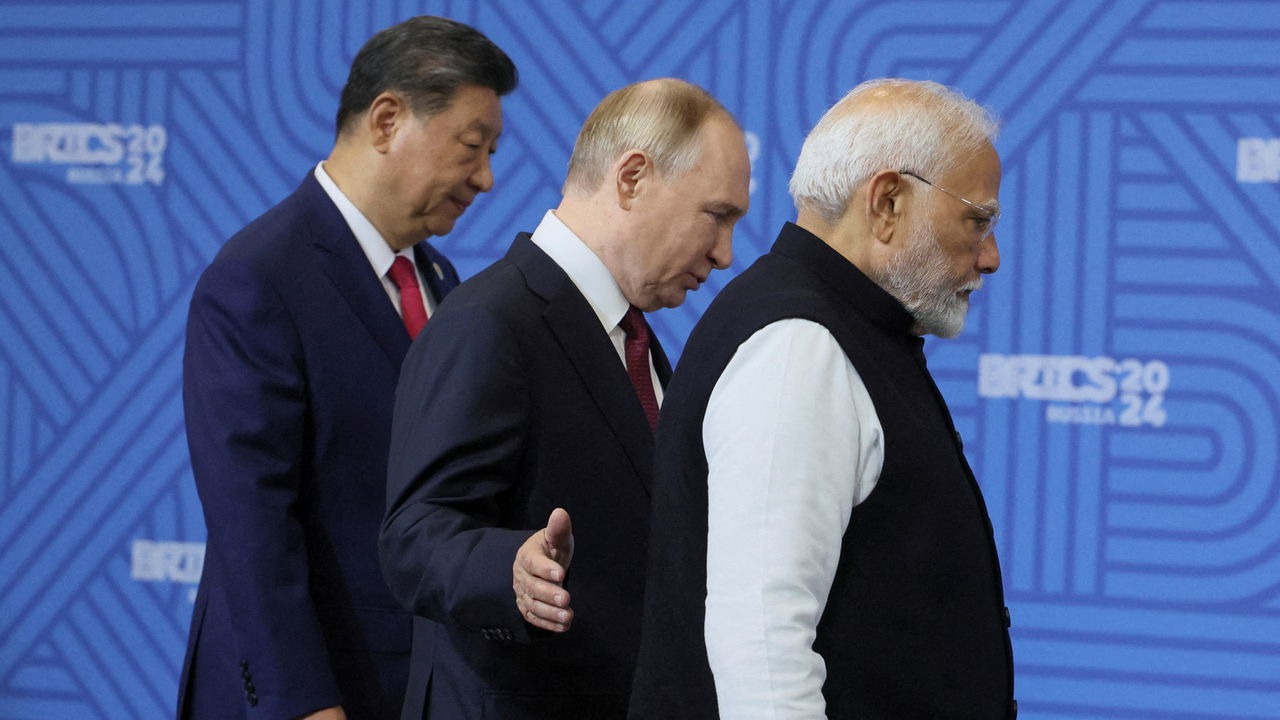
The Unintended Consequences of Trump's Foreign Policy
Donald Trump’s second-term foreign policy has had far-reaching effects that have altered the global landscape in unexpected ways. His aggressive trade strategies, including imposing a 25% tariff on Indian goods and threatening a 100% tariff on Chinese imports, have unintentionally brought together three historical rivals, potentially forming a new Eurasian power axis.
The turning point came in 2025 when Trump introduced a harsh 25% tariff on Indian goods. He justified this move by accusing India of enabling Russia’s war efforts through its continued import of discounted Russian oil. Trump’s rhetoric was direct: “India is funding the enemy.” This move sent shockwaves through New Delhi, which relies heavily on exports to the United States as its largest export market. The economic blow felt like a betrayal rather than a partnership.
What particularly angered New Delhi was the hypocrisy of the West. While condemning India for its Russian oil purchases, the same Western nations quietly continued to buy Russian uranium, palladium, and fertilizers. This double standard eroded trust and prompted India to seek greater energy sovereignty. For years, India prided itself on maintaining strategic autonomy, but Trump’s transactional approach made policymakers question whether the U.S. could be a reliable long-term partner.
The geopolitical implications became more apparent when Trump threatened China with similar measures, demanding Beijing cut Russian oil imports or face a 100% tariff. Suddenly, the two largest Asian powers, despite their mutual distrust, found themselves aligned on one issue: resisting American coercion. This alignment led to quiet coordination between India and China at international forums, where they began pushing back against U.S. narratives and defending their right to import Russian oil.
Moscow, observing this shift, started encouraging both nations to revive the Russia-India-China (RIC) framework, a concept that had been dormant since the early 2000s. Russia positioned the RIC as an alternative to U.S.-led alliances like NATO and the Quad. China responded positively, while India did not dismiss the idea outright. This marked a significant shift in regional dynamics.
It is important to note that this is not a genuine alliance of friendship. India and China still maintain a tense relationship, especially along their shared border. However, the pressure from a common external force has forced them to engage in dialogue, even if it is purely strategic. It is not about friendship; it is about survival.
Meanwhile, Trump’s attempts to rebrand himself as a dealmaker included pushing for a Ukraine ceasefire on terms that favored the Kremlin. He dismissed full Ukrainian territorial restoration as "unrealistic" and excluded Europe from negotiations. These actions further strained relations with traditional allies and highlighted his unpredictable approach to diplomacy.
Historically, India and China have had numerous conflicts, both militarily and diplomatically. However, when both are targeted by the same actor, old rivalries do not disappear but are temporarily set aside. At events such as BRICS summits and G20 meetings, both nations began aligning their stances on issues like oil trade, sanctions, and multipolarity.
Despite the lack of a formal India-Russia-China alliance, no mutual defense pact, and no signed economic union, the shared pressure from U.S. policies has created a form of alignment. Border tensions between India and China remain, and mistrust persists. However, the pressure from U.S. unpredictability, economic punishment, and global instability has forced these nations to find common ground.
The RIC axis is not born out of friendship but out of fear—fear of U.S. unpredictability, economic retaliation, and global instability. Strategic autonomy is no longer just a philosophical choice for India; it has become an economic and diplomatic necessity. Trump’s approach has made this reality painfully clear.
This is not a conspiracy; it is a consequence. America may not be prepared for a world where the very powers it tried to divide begin to work together. The unintended consequences of Trump’s foreign policy have reshaped the global order in ways that Washington never anticipated.

Posting Komentar untuk "How Trump Unified India, China, and Russia Against America"
Posting Komentar