
Inside CHSN01: China's Steel Fuels Future Fusion Reactors
The Evolution of Cryogenic Materials in Fusion Research
For many years, fusion projects like the International Thermonuclear Experimental Reactor (ITER) have used materials such as 316LN or JK2LB cryogenic stainless steels. These alloys perform well at extremely low temperatures, but they have limitations in terms of strength and durability. Their yield strengths typically reach around 0.9 to 1.1 gigapascals (GPa) at 4.2 K, and they begin to lose ductility after repeated cycles. These constraints limit the magnetic field strength in ITER to 11.8 tesla and require a larger, more expensive design.
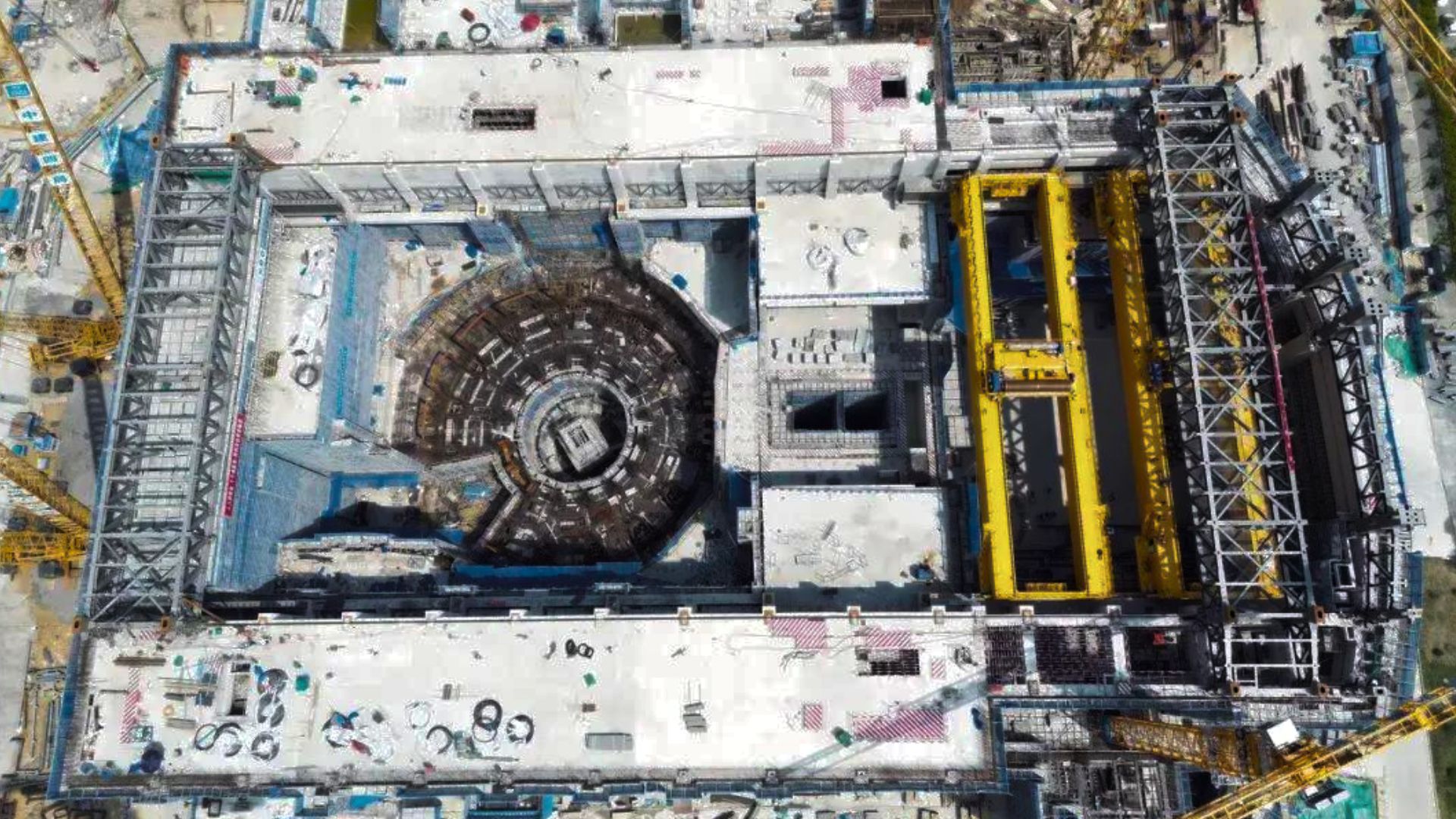
Chinese researchers aimed to develop a material that could withstand much higher stresses without cracking, which led to the creation of CHSN01. This new alloy has been certified to handle 20 tesla fields and 1.3 GPa of combined electromagnetic stress while still stretching about 30% before breaking. It maintains these properties even after 60,000 on-off cycles, which is the expected workload for China’s Burning-Plasma Experimental Superconducting Tokamak (BEST).
Composition and Properties of CHSN01
The success of CHSN01 lies in its unique composition. Engineers started with Nitronic-50, a nitrogen-strengthened austenitic steel, and reduced the carbon content to below 0.01%. This prevents the formation of brittle carbides during long-term service at 4 K. They then increased the nitrogen content to about 0.30%, which, along with elevated nickel levels, keeps the metal in the tough, ductile austenite phase even at –269 °C.
A small amount of vanadium was added once the carbon-nitrogen balance was achieved. This creates vanadium-nitride particles that are only a few nanometers in size. These particles help pin dislocations and increase strength without reducing toughness. Additionally, the team imposed strict limits on oxygen, phosphorus, and sulfur, keeping their levels below 0.02%, ensuring no unwanted inclusions can act as crack starters under magnet loads.
These modifications result in impressive performance metrics. At 4.2 K, CHSN01 sustains approximately 1.5 GPa of yield stress while still stretching over 30% before fracture. This makes it roughly 40% stronger than the 316LN jackets used in ITER, yet equally resistant to cracking.
Importance of Stronger Jackets in Fusion Technology
Superconducting magnets are essential components in tokamaks, acting as the core of the system. When the current increases, Lorentz forces try to expand the helically wound conductor. Engineers can counteract this by adding bulk or by encasing the cables in a strong jacket that doesn’t yield. With CHSN01, China has chosen the latter approach.
Finite-element and crack-growth models show that the jacket can start with flaws up to 6 mm², which is well above the 0.5 mm² non-destructive testing detection limit, and still survive the 60,000 pulses that BEST will undergo. This means fabricators no longer need to over-polish or oversize the conductors, reducing weight, cost, and assembly time.
Stronger jackets also enable higher magnetic fields. Increasing the field from 11.8 T to 20 T roughly quadruples the confining pressure on the plasma, allowing physicists to design a machine that is one-third the volume but achieves a fusion power gain (Q) greater than one. Smaller reactors are easier to shield, cheaper to build, and could be clustered like modular fission units.
Fatigue Resistance and Longevity
High strength alone isn't enough because fusion magnets operate for years. To ensure CHSN01's longevity, researchers measured its fatigue-crack-growth rate at 4.2 K and used a Paris-law model to predict life under real load spectra. At a conservative 99% confidence level, jackets can start with an initial flaw area of 1 mm² and still last the full mission without reaching critical crack length. These numbers provide inspectors with a clear threshold for nondestructive evaluation, something previous alloys couldn't offer.
Scaling from Lab to Industrial Production
Because CHSN01 is based on existing Nitronic production routes, Chinese mills were able to scale quickly. By mid-2025, 500 tonnes of conductor jackets had been delivered to the BEST construction site in Hefei. According to reports, project physicist Li Laifeng believes that the volume proves the alloy is "ready for industry, not just the lab."
Broader Applications Beyond Fusion
Zhao Zhongxian, a pioneer in cryogenics, argues that CHSN01's impact extends beyond tokamaks. MRI scanners, particle accelerators, maglev trains, and even quantum-computing dilution refrigerators rely on structures that face similar cold-plus-stress challenges. Replacing existing materials with a stronger and tougher steel could reduce magnet footprints or extend service intervals across various industries.
A Quiet but Pivotal Innovation
Fusion research often captures public attention with record-breaking plasma shots or novel reactor concepts. However, history shows that major energy technologies depend heavily on advancements in materials science. By pushing cryogenic stainless steel into the 1.5 GPa class without sacrificing toughness, Chinese researchers have provided the mechanical "keystone" that high-field magnets needed.
Whether BEST meets its 40–200 MW power target later this decade, every fusion team now has a benchmark. If a conductor jacket cannot match CHSN01's performance, it may be time to revisit metallurgical approaches.

Posting Komentar untuk "Inside CHSN01: China's Steel Fuels Future Fusion Reactors"
Posting Komentar