
Lyft's Stock Drops Amid Weak Sales and Lower Rides
Lyft Faces Market Challenges Amid Global Expansion
Lyft Inc. experienced a significant drop in its stock price following the release of its quarterly financial results, which fell short of Wall Street’s expectations. The ride-hailing company reported revenue of $1.59 billion for the three months ending June 30, slightly below the $1.61 billion that analysts had anticipated. Despite achieving an all-time high in the number of rides completed on its platform, this figure also failed to meet projections. As a result, Lyft's shares declined by approximately 7.2% during after-hours trading, reaching around $12.97.
This performance came just hours after Uber Technologies Inc. released a more optimistic forecast for the third quarter and exceeded expectations in terms of gross bookings. However, Uber's ride-share unit recorded $23.8 billion in bookings, which was slightly below expectations, contributing to a decline in its stock price on Wednesday.
The underwhelming results from both Uber and Lyft highlight broader concerns about discretionary consumer spending amid economic uncertainty. Recent data revealed a weaker labor market than previously estimated, and inflation-adjusted consumer spending, which constitutes roughly two-thirds of U.S. economic activity, declined in the first half of the year.
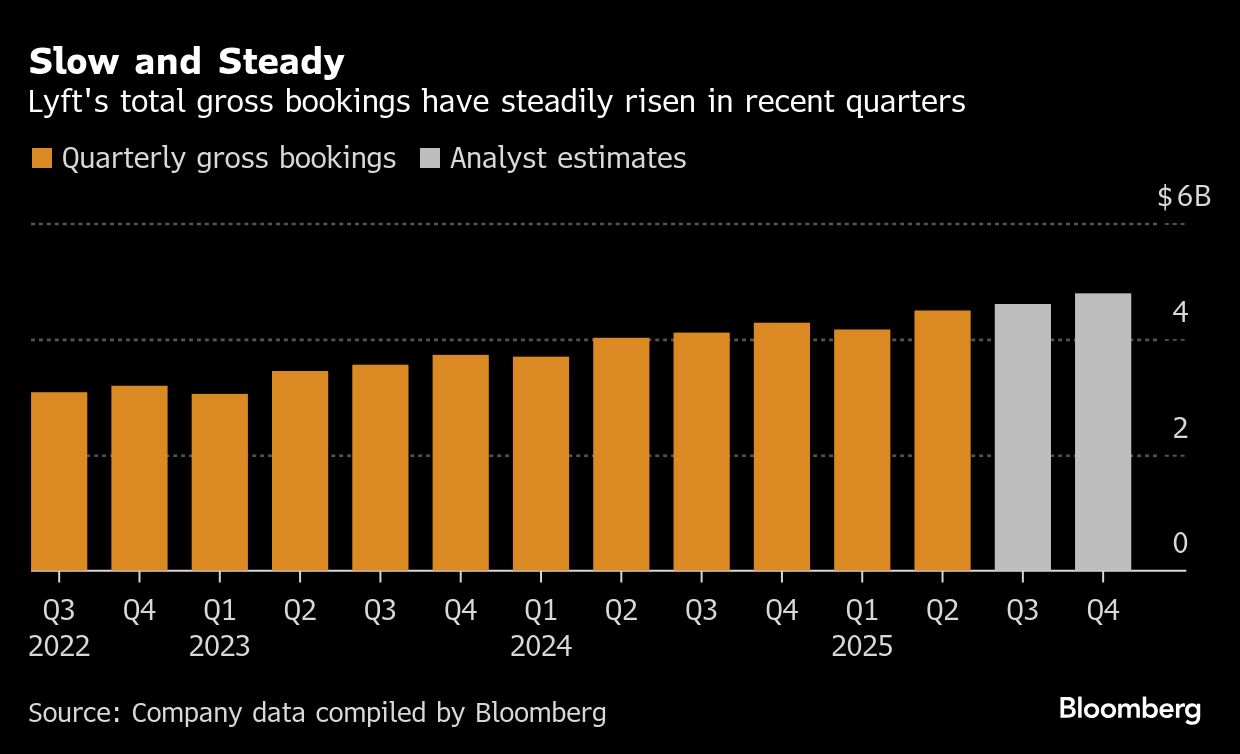
Despite these challenges, Lyft’s second-quarter results were not entirely negative. The company reported a net income of $40.3 million, significantly exceeding the $18.1 million expected by analysts. Gross bookings increased by 12% compared to the previous year, aligning with estimates. Additionally, the number of active passengers reached a record high.
Andrew Rocco, a strategist at Zacks Investment Research, noted that while Lyft’s results were strong, investors may be selling off the stock due to slower growth compared to Uber. Lyft’s sales grew by 12% over the past year, whereas Uber’s revenue increased by 18%.
Looking ahead, Lyft expects gross bookings to rise to as high as $4.8 billion in the third quarter and has projected adjusted earnings between $125 million and $145 million. This outlook includes the integration of Freenow, the European taxi app it recently acquired, starting August 1.
Since achieving consistent positive free cash flow in the past year, Lyft has focused on expanding its global presence. It has entered the ten most populous Canadian cities and Puerto Rico. Recently, the company officially launched operations in nine new European markets, including the UK and Germany, following the acquisition of Freenow.
As part of its expansion strategy, Lyft announced a partnership with Baidu Inc. to deploy autonomous vehicles in Europe. Initial launches are planned for Germany and the UK in 2026, pending regulatory approval, with Lyft using Baidu’s robotaxis. Meanwhile, Uber has also partnered with Baidu for driverless cars but plans to launch them in Asia and the Middle East later this year rather than in Europe.
Lyft is also working toward offering its first driverless rides in Atlanta later this year in collaboration with May Mobility Inc. The company has plans for U.S. deployments in 2026 with Intel Corp.-backed Mobileye Global Inc. and Benteler Group.
In addition, Lyft announced a new partnership that would allow United Airlines Holdings Inc. members to earn miles on rides.

Posting Komentar untuk "Lyft's Stock Drops Amid Weak Sales and Lower Rides"
Posting Komentar