
Next-Gen Tsunami Alerts Save Lives
Understanding the Importance of Tsunami Early Warning Systems
When a massive 8.8 magnitude earthquake struck near Russia's Kamchatka Peninsula, its effects were felt far beyond the immediate area. In the hours that followed, tsunami alerts were issued by multiple countries with coastlines along the Pacific Ocean’s Ring of Fire. These alerts led to evacuations and heightened emergency response efforts in regions ranging from Japan to Hawaii and the U.S. West Coast. Despite the scale of the event, there was relatively little damage or loss of life. However, this incident served as a stark reminder that natural disasters can strike quickly, and the most effective defense is time—along with the systems that give people a chance to act before it's too late.
Tsunamis are rare but highly destructive events. They can travel across the ocean at speeds of up to 500 mph, with waves crashing into populated areas with devastating force. A series of large waves hitting during the night can be especially dangerous, as coastal communities may not have enough time to react. Two of the most catastrophic tsunamis in recent history include the 2004 Indian Ocean tsunami, which claimed over 230,000 lives across 14 countries, and the 2011 Japan tsunami, which resulted in more than 18,000 deaths.
Given the extreme risks associated with tsunamis, early warning systems are essential for saving lives. These systems provide critical alerts and educate the public on how to respond. However, the success of these systems depends just as much on how well the public receives and understands the messages as it does on the technology itself. Whether through sirens, text messages, or social media, warnings must be clear and actionable for them to be effective.
Components of an Effective Tsunami Early Warning System
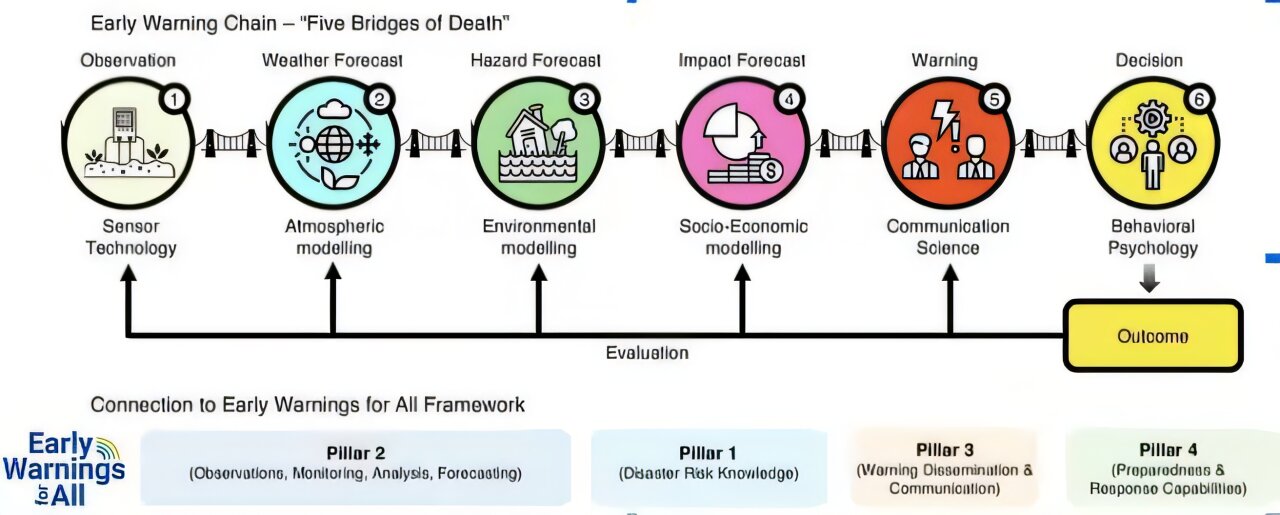
An effective tsunami early warning system starts with detection. Seismic networks monitor underwater earthquakes, while ocean sensors like DART buoys and tide gauges measure changes in sea level. This data is then analyzed by organizations such as the U.S. Pacific Tsunami Warning Center (PTWC) and the Japan Meteorological Agency (JMA), which assess the likelihood and potential impact of a tsunami and issue alerts accordingly.
Once detected, the system models the potential impact using environmental and socioeconomic forecasting methods. This helps anticipate where the most severe effects might occur and what steps should be taken to mitigate damage. However, one of the biggest challenges lies in communication. Alerts need to be sent out quickly and clearly through various channels, including radio, television, text messages, sirens, and social media. These alerts typically inform people about when the first waves will hit, which areas are at risk, and what actions they should take to stay safe.
The "last mile" of communication—the final step in ensuring that those at risk receive the message—is often the most difficult part of the process. Even the most accurate warnings can fail if they don't reach the right people at the right time.
Gaps in Current Warning Systems
Despite their importance, many tsunami warning systems still have significant gaps. For instance, in rural or impoverished communities, evacuation to higher ground is critical, yet infrastructure may be inadequate, and trust in government messaging may be low. Language barriers can also hinder understanding, making it harder for residents to know how to respond.
A lack of public awareness is another major weakness. In some areas, people may not understand the meaning of different warning levels or what to do when an alert is issued. Confusion or inaction can result from inaccurate information, exaggerated past warnings, or a lack of community involvement in preparedness efforts.
Additionally, warning systems and local emergency response plans are not always shared widely. If schools, health facilities, and community organizations are not actively involved in planning and drills, the entire response effort may fail when it is needed most.
Technological and logistical challenges also persist. In some regions, real-time monitoring systems are either missing or rely on outdated technology that may not function properly during power outages or severe weather. Difficult terrain and limited road access can further complicate evacuation efforts.
Funding is another key issue. Many early warning systems depend on non-governmental organizations rather than being included in national budgets, making them vulnerable to underinvestment and eventual failure.
Lessons from Countries with Advanced Systems
Some countries have developed highly effective tsunami warning protocols. Japan, for example, has integrated early warning systems into national policy and community preparedness. Its approach includes real-time seismic monitoring, public outreach, clearly marked evacuation routes, and regular drills that reinforce life-saving behaviors. Students in schools routinely practice evacuation procedures, and disaster preparedness is a key part of the curriculum. Interactive apps and community trainings ensure that residents are aware of the risks and how to respond.
Chile has also made significant progress, especially after the 2010 earthquake and tsunami. The country has improved training exercises and coordination between national and local agencies to ensure that warnings lead to effective action. In Indonesia, the 2004 Indian Ocean tsunami prompted the development of a regional alert system supported by international partners, enhancing understanding of risks and improving preparedness strategies.
The U.S. Pacific Tsunami Warning Center serves as a model for international cooperation, coordinating alerts among dozens of countries in the region to ensure that warnings are not limited by national borders.
Research also highlights the importance of strong social networks and community engagement in successful evacuations. Communities with robust social capital are better equipped to follow evacuation protocols, particularly when efforts are made to reach vulnerable populations such as children, the elderly, and the disabled.
The Broader Impact of Early Warning Systems
Ultimately, the effectiveness of tsunami early warning systems depends not only on speed and accuracy but also on trust, understanding, and action. This requires more than just technology—it demands training, investment, and collaboration between the public and private sectors. Regular drills help ensure that when warnings are issued, people know exactly what to do.
Although tsunamis are infrequent, their potential for destruction is immense. Enhancing early warning systems must go beyond reacting to past disasters and instead focus on preparing for future risks. A continuous and proactive global commitment is necessary to acknowledge our collective vulnerability and take responsibility for safeguarding lives.

Posting Komentar untuk "Next-Gen Tsunami Alerts Save Lives"
Posting Komentar