
Novo Nordisk Stock Plummets Post-Earnings Report
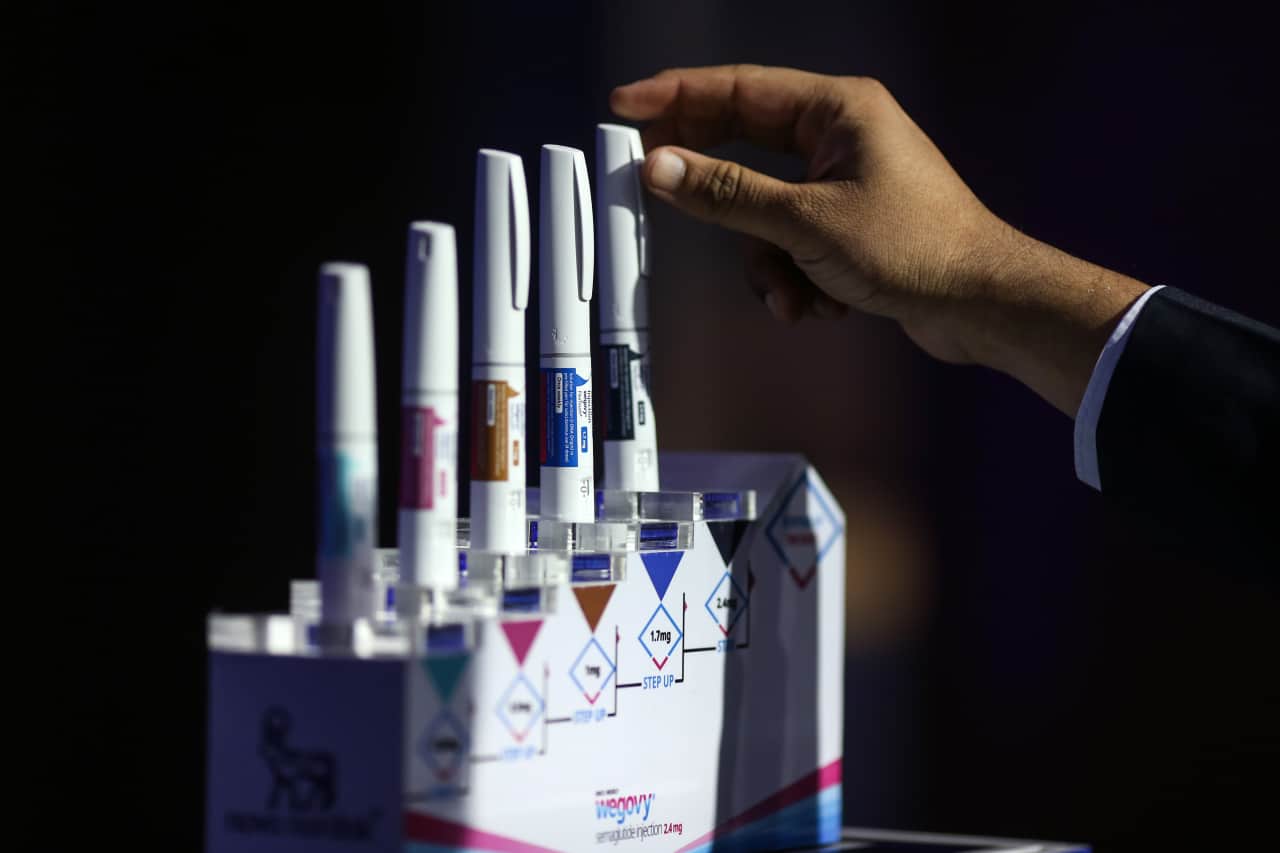
Novo Nordisk Faces Challenges in Obesity Drug Market
Novo Nordisk, a leading player in the obesity medicine sector, has recently announced significant changes to its drug development pipeline. This decision comes as the company's weight-loss drug Wegovy faces increasing competition from Eli Lilly’s Zepbound. The announcement has led to a decline in the company’s American depositary receipts, which dropped by 2% on Wednesday following the release of its second-quarter earnings report.
The stock had already experienced a steep decline of 31.6% since July 29, after the company issued a major guidance cut. This was part of a broader selloff that lasted for a week. During an investor call, Novo’s chief scientific officer and head of research and development, Martin Holst Lange, explained that several experimental treatments were halted, including an early-stage weight-loss drug similar to Zepbound, which failed in a Phase 2 trial. Additionally, the development of an early-stage weight-loss pill called INV-347 and a mid-stage treatment for MASH called zalfermin was also discontinued.
Despite these challenges, the company reported strong sales figures for the second quarter. Wegovy generated 19.5 billion Danish krone (DKK), or $3 billion, surpassing the FactSet consensus estimate. Ozempic, the brand name for the same medication used as a Type 2 diabetes treatment, recorded sales of 31.8 billion DKK, or $5 billion, slightly below the estimated 32.4 billion DKK. Overall second-quarter sales reached 76.9 billion DKK, just ahead of the 76.8 billion DKK consensus estimate. The diluted earnings per share were 5.96 DKK.
However, these results do not address the growing concerns about the future of Novo’s weight-loss medicines. The company’s struggles are occurring amid a broader reconsideration of the obesity market, where the initial excitement from 2022 and 2023 has diminished. Analysts have noted that Novo’s recent guidance cut signals the end of the obesity drug bubble, which had been losing momentum for over a year.
One of the key issues for Novo is the sale of compounded knockoff versions of Wegovy in the U.S. The company claims that the availability of these drugs has negatively impacted the uptake of Wegovy prescriptions. In response, Novo is pursuing legal action against the compounders.
Moreover, data presented by the company shows that Wegovy is lagging behind Zepbound in the U.S. market. As of July, Zepbound accounted for 59% of branded weight-loss prescriptions, while Wegovy held 40%. To counter this, Novo entered into a deal with CVS Health, requiring patients covered through CVS’s pharmacy benefit manager to use Wegovy instead of Zepbound. The company reports early signs of success from this agreement, which became effective in July.
Investors remain skeptical, however. Last week, Novo significantly reduced its full-year sales growth estimates for 2025, now projecting a range of 8% to 14%, down from the previous forecast of 13% to 21%. Profit estimates were also lowered, with operating-profit growth expected to be between 10% and 16%, compared to the prior estimate of 16% to 24%.
In addition to these financial adjustments, Novo announced a new CEO, Maziar Mike Doustdar, who will take over from Lars Fruergaard Jørgensen on August 7. Doustdar previously led international operations for the company.
The stock faced further pressure after analysts at UBS downgraded their rating on the stock to Neutral from Buy. These developments highlight the ongoing challenges Novo Nordisk faces in maintaining its market position and addressing the evolving landscape of the obesity drug industry.

Posting Komentar untuk "Novo Nordisk Stock Plummets Post-Earnings Report"
Posting Komentar