
Op-Ed: NATO Needs to Evolve Into a Coalition of the Ambitious
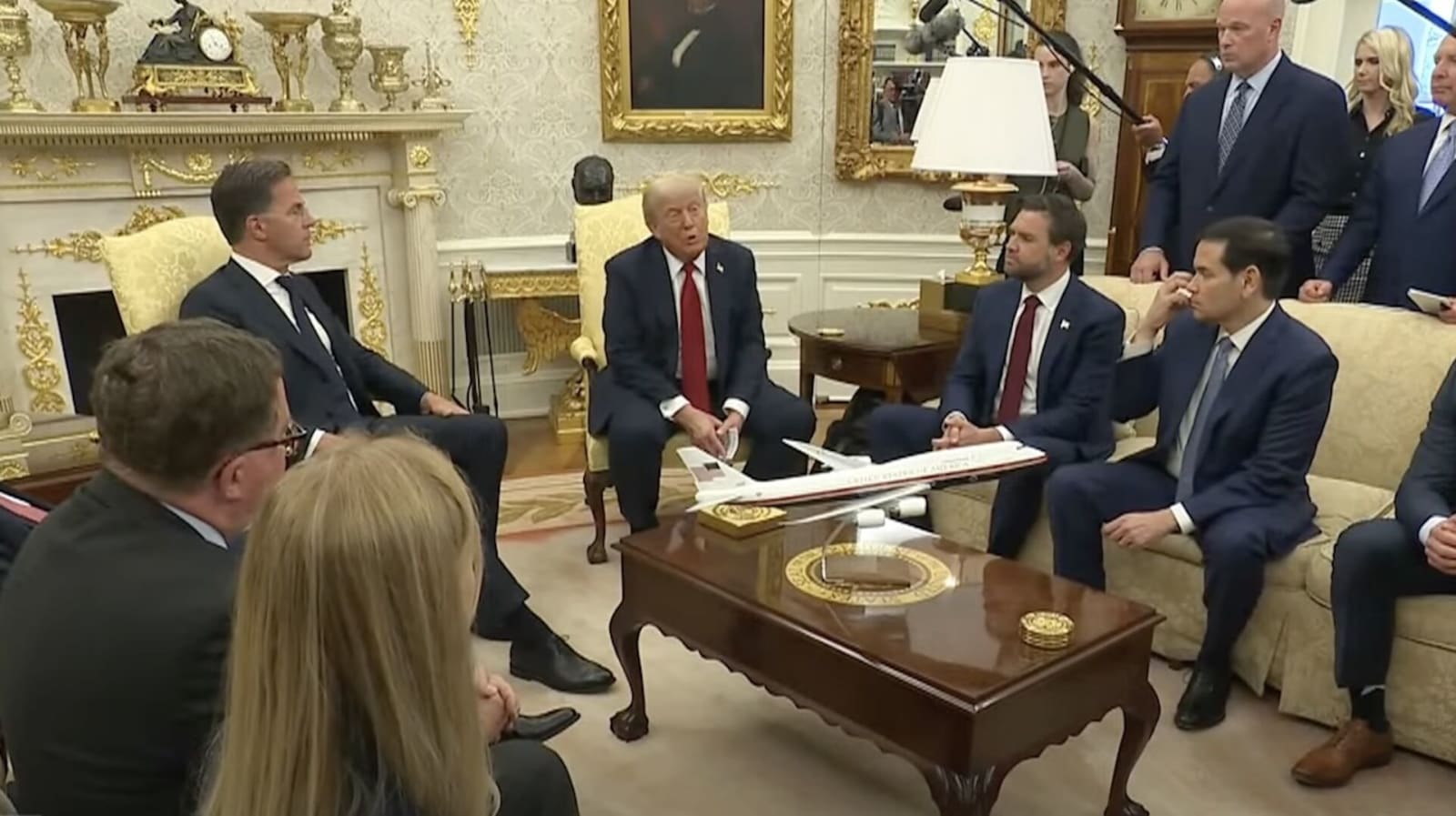
A Historic Shift at the NATO Summit
President Donald Trump recently achieved a significant milestone at the NATO summit, as nearly all alliance members pledged to increase their defense spending to 5% of GDP by 2035. This commitment marks a crucial step in reversing years of underinvestment in military capabilities and restoring NATO's strength to safeguard the free world against rising authoritarian powers.
The importance of this goal cannot be overstated. It is not enough for NATO members to simply meet financial benchmarks; they must also recognize that economic growth is equally vital to the alliance’s long-term security. Western Europe’s stagnation has led to a weaker continent, which inadvertently shifts more of the defense burden onto the United States. Without robust economic growth, NATO allies remain vulnerable to threats from adversaries like Russia and China.
The Need for Economic Revitalization
While increasing defense spending can enhance deterrence, it is only part of the solution. To truly revitalize the alliance, NATO must focus on growing its economic base. As of 2024, only 23 out of 32 NATO member states met the 2% of GDP defense spending benchmark. Eastern European countries, despite being less affluent, have historically prioritized defense more than their Western counterparts. For example, Poland spent 4.1% of its GDP on defense in 2024, while Estonia exceeded 3%, and Lithuania reached 2.8%.
In contrast, Western European nations such as Germany, France, Italy, and Spain either fall short of or barely meet the 2% threshold, despite their greater wealth and capacity to contribute. This discrepancy highlights the need for a broader strategy that addresses both defense and economic growth.
The Economic Disparity Between the U.S. and NATO Allies
The economic gap between the U.S. and NATO allies has widened significantly over the past two decades. In 2005, the U.S. economy was roughly equal in size to the combined economies of NATO’s next seven largest members. However, today, the U.S. economy stands at $30 trillion, while the combined GDP of NATO’s next seven is less than $20 trillion. Even Canada, which has the closest economic ties to the U.S., has experienced slower growth compared to its northern neighbor.
Western European countries have also struggled with economic growth. While the Netherlands grew by 85%, Germany by 70%, France by 50%, the UK by 47%, and Spain by 58%, Italy managed only 32%. These figures underscore a broader trend of stagnation fueled by excessive regulation, bureaucratic inefficiencies, and a lack of innovation.
The Impact of Regulatory Overreach
Europe’s regulatory environment has become a major obstacle to economic growth. The EU has shifted from being an engine of prosperity to a factory of regulations that often hinder rather than help businesses. European policymakers have focused on controlling digital markets rather than enabling them, leading to a complex web of rules that stifle innovation and risk-taking.
A recent survey by Amazon revealed that European tech firms spend 40% of their IT budgets on regulatory compliance, and two-thirds do not fully understand the requirements of the EU’s new AI Act. This regulatory burden discourages entrepreneurship and pushes promising ideas out of Europe in search of more supportive environments.
The Consequences of “Green” Energy Mandates
Europe’s “green” energy mandates have further weakened its economic and strategic position. These policies have raised energy prices, slowed growth, and created dependencies on hostile adversaries. European reliance on Russian gas, for instance, contributed to Russia’s invasion of Ukraine and provided funding for its war machine. Now, dependence on Chinese green technology poses a new threat, with the Chinese Communist Party effectively holding a “kill switch” over European power grids.
At the same time, China has launched a full-spectrum campaign of economic warfare against Europe, backing Russia’s invasion and undermining allied infrastructure. China steals intellectual property, manipulates trade terms, and infiltrates critical sectors such as energy and automotive industries. It also supplies 80% of Russia’s dual-use war imports.
The Need for Military Readiness and Strategic Growth
The U.S. and its NATO allies face serious challenges in maintaining military readiness. Current levels of defense spending are insufficient to address these shortfalls, and the strain on combat readiness is growing. These issues must be addressed to ensure the ability to deter and, if necessary, win conflicts with both Russia and China.
The Trump administration has recognized the urgency of rebuilding the American military and ensuring fair burden-sharing among NATO allies. While increased defense spending is essential, it is not enough. European economies must also strive to match America’s pace of growth and innovation.
A Call for Economic and Strategic Unity
Western Europe must rediscover its role as a driver of innovation and entrepreneurship to create a stronger, more formidable alliance. Protectionist policies that target American companies should be abandoned, as should the illusion that peace can be maintained through submission to hostile regimes.
NATO was founded in an era when economic growth was taken for granted. Today, growth must be treated as a strategic imperative. The United States should not bear the sole responsibility for promoting both growth and defense. Instead, the NATO coalition must work together to build greater economic and military capacities.
Thus, NATO allies must commit to two interconnected priorities: unity and growth. Only by addressing both can the alliance ensure its long-term security and stability.

Posting Komentar untuk "Op-Ed: NATO Needs to Evolve Into a Coalition of the Ambitious"
Posting Komentar