
Parents counter back-to-school spending amid Trump tariffs
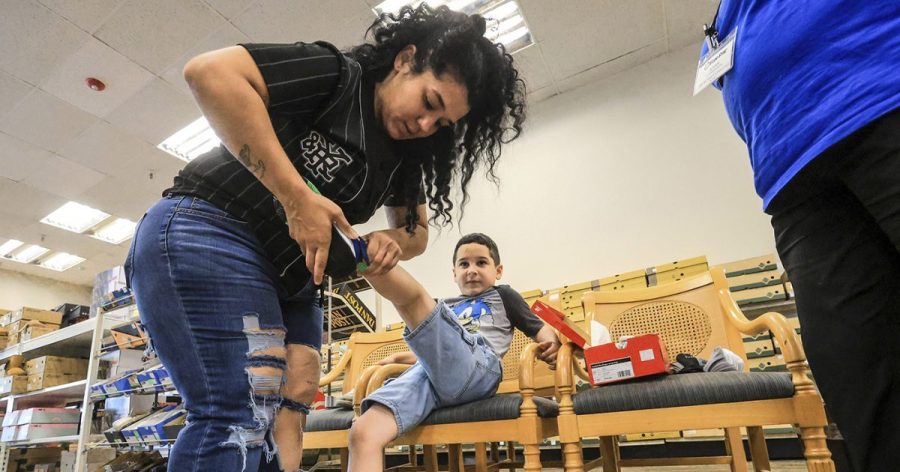
Parents Rush Back-to-School Shopping Amid Tariff Fears
As the back-to-school season approaches, many parents are making their purchases earlier than usual due to concerns over tariffs and rising prices. This has led to a significant increase in shopping activity during July, with more families buying essentials before the traditional start of the season.
According to recent surveys, most parents anticipate higher costs for back-to-school supplies this year. Around half of them attribute these price increases to trade policies implemented by the previous administration. A survey conducted by the National Retail Foundation (NRF) revealed that 67% of back-to-school shoppers were already visiting stores before mid-July, a notable rise from 55% in the previous year. This marks the highest level of early shopping since the NRF began tracking such data in 2018.
Fifty-one percent of these early shoppers specifically mentioned concerns about price hikes caused by tariffs as their main reason for purchasing ahead of time. Katherine Cullen, vice president of industry and consumer insights at the NRF, explained that consumers are navigating an uncertain economic environment. “They don’t know how much things will cost later in the year, so they’re trying to deal with that by buying ahead of time,” she said.
Another survey by U.S. News found that 85% of shoppers considered tariffs when thinking about potential price increases for back-to-school items. The impact of these trade policies has been widespread, affecting even experts in the field.
The administration’s approach to trade has involved various agreements with countries like Japan and the United Kingdom, with tariffs set at 15% and 10%, respectively. Additionally, reciprocal tariffs on dozens of other nations were scheduled to take effect, adding to the uncertainty for consumers.
While some families are trying to cut costs, essential items like school supplies, clothing, and shoes remain necessary. These products are often difficult to find secondhand, forcing families to make tough decisions about quality and quantity. Julie Margetta Morgan, president of the Century Foundation, noted that some families might reduce the quality of their purchases or turn to credit cards and “buy now, pay later” options to manage expenses.
Inflation has also been on the rise, increasing by 2.7% in June, surpassing the Federal Reserve's target of 2%. The Fed's July beige book highlighted that tariffs have increased costs across all 12 regional districts, leading to higher prices for consumers.
The growing need for assistance with back-to-school costs is evident. Dale Bannon, national community relations and development secretary of the Salvation Army, mentioned that the demand for help is higher this year, particularly for basic needs. “Many of the families we serve live paycheck to paycheck, and any price increase can have devastating effects,” he said.
To address this issue, the Salvation Army has partnered with Toyota to double the number of backpacks distributed, providing essential supplies to 17,000 families.
Despite the challenges, the administration remains committed to its tariff strategy, emphasizing long-term benefits for the U.S. economy. “We have to solve our trade deficit with China. … Hundreds of billions of dollars a year we lose with China. And unless we solve that problem, I’m not going to make a deal,” the former president stated.
Businesses have also attempted to purchase goods earlier in the spring to avoid tariffs, but not all items can be bought in advance. Experts predict that the full impact of these policies will be felt later in the school year and during the holiday season.
Steve Lamar, president and CEO of the American Apparel & Footwear Association, noted that the tariff uncertainty has affected sourcing, investments, and hiring throughout the economy. “It has a chilling effect on consumer behavior,” he said. “People are buying earlier, knowing that the tariffs will really begin to accelerate.”

Posting Komentar untuk "Parents counter back-to-school spending amid Trump tariffs"
Posting Komentar