
Parents fight back-to-school spending amid tariff concerns
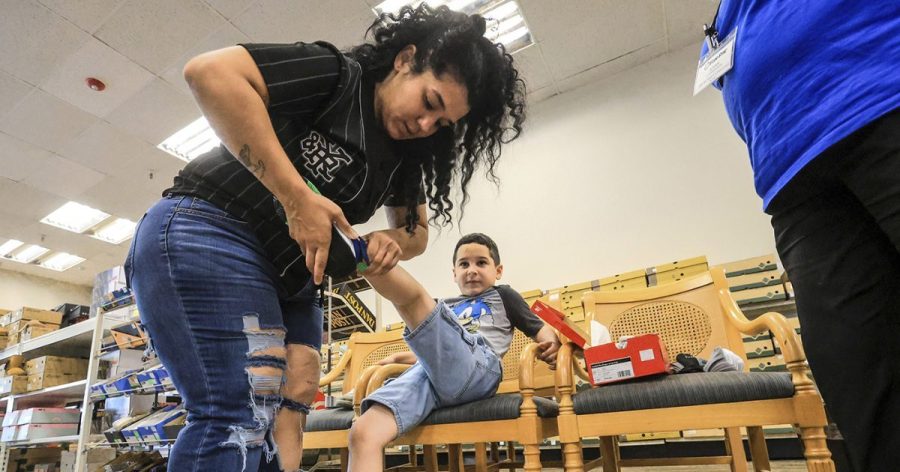
Parents Rush Back-to-School Shopping Amid Tariff Fears and Rising Prices
Parents across the United States are experiencing a surge in back-to-school shopping as concerns over tariffs and rising prices have led to an unusual early start to the season. This shift has been driven by uncertainty about future costs, prompting families to purchase essential items earlier than usual.
Recent surveys indicate that most parents expect to pay more for back-to-school supplies this year. Around half of those surveyed attributed the increase to President Trump’s trade policies, which have sparked widespread anxiety among consumers. The National Retail Foundation (NRF) reported that 67 percent of back-to-school shoppers were already shopping before mid-July, marking a significant rise from the 55 percent recorded last year. This is the highest level since the NRF began tracking such data in 2018.
Fifty-one percent of these shoppers specifically mentioned concerns about price increases due to tariffs as their primary reason for shopping early. According to Katherine Cullen, vice president of industry and consumer insights at the NRF, consumers are navigating an uncertain environment where they are unsure of future costs. “They’re trying to deal with that by buying ahead of time, stocking up now, while they know what prices will be,” she explained.
A separate survey conducted by U.S. News found that 85 percent of shoppers considered tariffs when thinking about potential price increases for back-to-school items. The complexity of Trump’s trade policies has left even experts struggling to keep up, let alone parents trying to manage their budgets.
The president has announced trade deals with countries like Japan and the United Kingdom, involving tariffs of 15 percent and 10 percent, respectively. Additionally, he has declared “reciprocal” tariffs on dozens of other nations, set to take effect soon. These actions have created a climate of uncertainty that is affecting both businesses and families.
While some parents are looking to cut costs, many school supplies such as clothes, shoes, and basic materials like pencils and notebooks are essential and difficult to find secondhand. Julie Margetta Morgan, president of the Century Foundation, noted that families may have to compromise on the quality or type of items they purchase. “It’s also very likely that we see families dealing with these expenses by loading up on debt,” she said, citing credit cards or “buy now, pay later” options.
Inflation has also been on the rise, increasing by 2.7 percent in June. The Federal Reserve’s target for inflation is 2 percent, but the impact of tariffs has led to higher costs in all 12 regional districts, according to the Fed’s July beige book. This trend is placing additional pressure on families who are already struggling with rising expenses.
The Salvation Army has observed an increase in the number of families needing assistance with back-to-school costs. Dale Bannon, national community relations and development secretary, noted that “the need is higher” this year, particularly for basic needs. Many of the families served by the organization live paycheck to paycheck, making any price increase potentially devastating.
To address this issue, the Salvation Army has partnered with Toyota to double the number of backpacks distributed through a unique partnership with dealers. This initiative will provide 17,000 backpacks filled with essential supplies to parents in need.
Despite the challenges, the president has continued to emphasize his tariff strategy, claiming it will benefit the U.S. in the long term. “We have to solve our trade deficit with China,” he stated, highlighting the financial losses associated with trade imbalances.
Many businesses have tried to purchase products earlier in the spring to avoid tariffs, but not all items can be bought in advance. Experts predict that the full impact of these policies will be felt later in the school year and during the holiday season. Steve Lamar, president and CEO of the American Apparel & Footwear Association, noted that the tariff uncertainty has had a chilling effect on sourcing, investments, and hiring throughout the economy.
As the situation continues to evolve, families remain on high alert, adjusting their spending habits and seeking ways to manage rising costs. The combination of trade policies, inflation, and economic uncertainty has created a complex landscape for parents and consumers alike.

Posting Komentar untuk "Parents fight back-to-school spending amid tariff concerns"
Posting Komentar