
President's Resolve: 'We Must Boost National Strength'
The Challenge of Building National Power
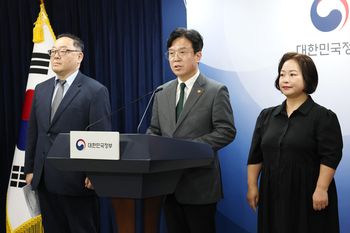
President Lee Jae Myung recently emphasized the need to strengthen the nation’s power during a workshop for senior government officials. His remarks came after concluding tariff negotiations with the United States, where he noted that Washington applied significant pressure without showing the expected courtesy from a 70-year ally. The New York Times even described the approach as “global extortion.” While the new reciprocal tariffs of 15 percent match those for Japan and the European Union, the de facto nullification of the zero-tariff Korea-U.S. FTA is seen as a painful setback.
Economic Strength and Private Enterprise
Lee’s blunt comments may have polarized audiences, but many Koreans likely shared his sentiment. His statement also raises an important question: How is national power built? At its core, it lies in economic strength, and much of that depends on the vitality of private enterprise.
The recent negotiations highlighted this point. Korea’s shipbuilding industry played a key role in the discussions. Washington, locked in a rivalry with Beijing, sought cooperation from Seoul because the U.S. shipbuilding sector has declined. Overprotectionist measures such as the Jones Act, which allows only U.S.-built vessels to operate in domestic shipping, created a high-cost, low-productivity structure that ultimately led to the collapse of U.S. shipyards. The lesson is clear: strong companies are the foundation of national power.
Corporate Tax Burdens and Policy Challenges
Despite this, the government’s policy direction since the negotiations seems to run counter to this principle. Taxes are being raised, regulations are tightening, and the combination threatens corporate competitiveness. Korean companies already face heavier corporate tax burdens than many competitors. Including local taxes, the top corporate tax rate is 26.4 percent, 2.5 points above the 2024 average of 23.9 percent among Organisation for Economic Cooperation and Development members.
Corporate tax as a share of GDP was 3.6 percent in 2023, compared to 2.4 percent for the Group of 7. Japan stands at 3.1 percent, Germany at 0.7 percent, and the United States at 1.5 percent. Korean companies now face tariff pressures abroad and corporate tax burdens at home.
At the same time, the government has begun distributing 13.8 trillion won ($9.9 billion) in consumption vouchers nationwide, only to follow with corporate tax hikes. This move seems contradictory, as if farmers never consume their seed grain.
Labor Reforms and Business Concerns
In the National Assembly, the majority Democratic Party is pushing to pass a tougher commercial law revision alongside the so-called Yellow Envelope Act. The revised commercial law threatens corporate control structures, while the labor bill could destabilize labor-management relations. Key provisions would allow subcontracted workers to demand negotiations directly with primary contractors and classify restructuring or mergers as legitimate grounds for strikes if they affect working conditions.
Large Korean companies operate vast ecosystems of hundreds or even thousands of subcontractors across multiple tiers. In practice, this could require primary contractors to negotiate hundreds of times a year with lower-tier unions. Even decisions to build overseas factories could trigger collective action. The law would clearly shift power toward labor, raising concerns about normal corporate operations. Warnings from the U.S. and European chambers of commerce in Korea about potential market exits are not unfounded.
Impact on Subcontractors and Workers
The impact on smaller subcontractors and workers may not be entirely positive. Large firms may become reluctant to work with subcontractors deemed to carry high strike risks, potentially creating informal “blacklists.” For some subcontractors, losing contracts could lead to bankruptcy and job losses, delivering a harsh blow to those already in weaker positions.
The government has described itself as a “pragmatic market-oriented” administration, yet many now question what that means. So far, its policies appear worker-friendly but hardly business-friendly.
A Critical Moment for the Nation
Barely two months into the Lee Jae Myung administration, conditions are emerging that make strikes easier and business operations harder. Companies are under growing strain, and one reality remains clear: Without strong, competitive enterprises, building national power will be an uphill battle.

Posting Komentar untuk "President's Resolve: 'We Must Boost National Strength'"
Posting Komentar