
Rarer Than a Diamond: This Tiny Fossil Stuns Scientists
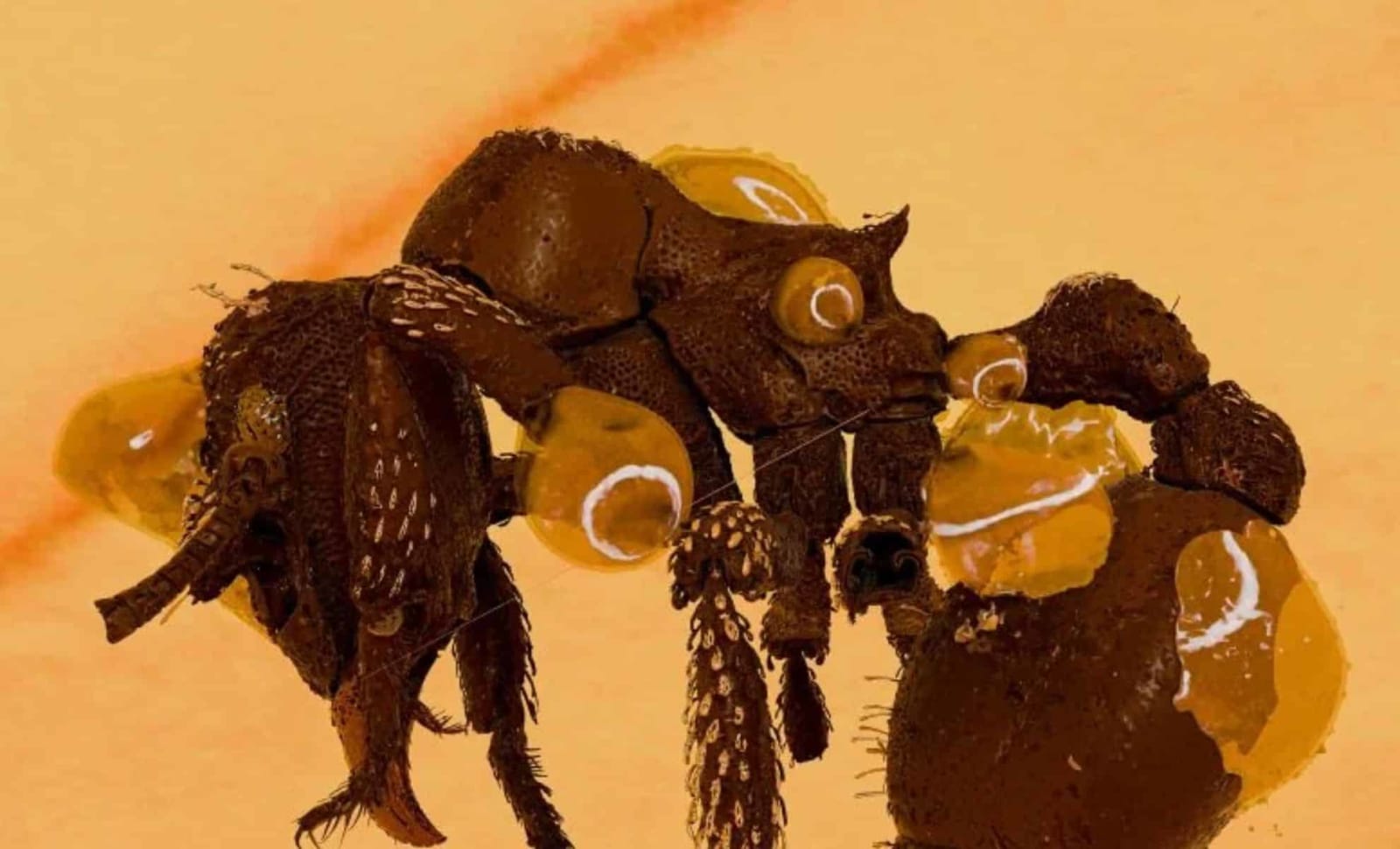
A Remarkable Fossil Discovery in Dominican Amber
A newly discovered fossil, dating back 16 million years, has captured the attention of scientists and redefined our understanding of ant evolution. This remarkable specimen, a "dirt ant" preserved in Dominican amber, is providing new insights into the ancient ecosystems of the Caribbean and the evolutionary journey of the Basiceros lineage.
The study, published in the Proceedings of the Royal Society B, presents the first direct evidence that the Basiceros genus once inhabited the Caribbean before disappearing during the Miocene epoch. The fossil, identified as an adult worker ant of a new species named Basiceros enana, is unlike any previously seen. Measuring just 5.13 millimeters in length, this tiny ant offers a rare window into a world where predator ants thrived alongside other ancient creatures.
Researchers from the New Jersey Institute of Technology (NJIT) have described the find as “like finding a diamond,” given the extreme rarity of dirt ants in both modern and fossilized forms. Today, living Basiceros species are found only in neotropical rainforests from Costa Rica to southern Brazil, far removed from their former Caribbean habitat.
Unraveling an Ancient Evolutionary Puzzle
For years, scientists believed that Basiceros ants evolved exclusively within South America. However, this fossil challenges that assumption, proving that these ants once roamed the Caribbean islands before vanishing millions of years ago. Phil Barden, the senior author of the study, explained, “Fossils like this challenge our assumptions about biogeographic history. If you look only at living species, you would never guess that their ancestors once lived in the Caribbean.”
This unexpected discovery also alters the evolutionary narrative of the genus. The fossil indicates that Basiceros ants nearly doubled in size over 20 million years, contradicting earlier hypotheses that their ancestors were larger and later shrank. This suggests a more complex evolutionary path than previously thought.
Cutting-Edge Imaging Reveals Hidden Details
To study the fossil, the research team employed high-resolution micro-CT scanning, a technique that allowed them to visualize microscopic details invisible to the naked eye. This revealed specialized hairs—long “brush hairs” and shorter “holding hairs”—that dirt ants use to camouflage themselves by collecting soil particles on their bodies.
This form of crypsis, or extreme concealment, appears to have been in place at least 16 million years ago, showing that even ancient ants mastered survival strategies that remain effective today. The level of detail uncovered through this technology highlights the importance of advanced imaging techniques in paleontology.
Why These Ants Disappeared?
Despite their remarkable survival traits, Basiceros enana eventually vanished from the Caribbean. Researchers believe this disappearance was driven by a combination of environmental changes during the Miocene that altered or reduced their habitats. Intensified competition with other ant species may have pushed them to local extinction, while a significant decline in predator diversity across the region, with more than one-third of ant genera disappearing since the formation of Dominican amber, likely played a role.
Gianpiero Fiorentino, the study’s lead author, said, “This fossil is a missing piece in a larger puzzle. Understanding why these ants disappeared may help us better predict which species are at risk today.”
The Broader Implications of the Discovery
The discovery of Basiceros enana offers more than a glimpse into the past; it also provides valuable lessons for the future. By examining how ancient species adapted, migrated, and vanished, scientists can better understand the dynamics of extinction and survival.
“This is exactly why fossils matter,” Barden emphasized. “They don’t just fill gaps—they rewrite what we thought we knew.” The tiny ant fossil from Dominican amber is not just a scientific curiosity; it is a reminder that Earth’s evolutionary history is far more intricate than it appears. Each new find reshapes the map of life’s past, highlighting both the resilience and fragility of species across time.

Posting Komentar untuk "Rarer Than a Diamond: This Tiny Fossil Stuns Scientists"
Posting Komentar