
Rate Cuts Near? Stocks May Surge as Fed Eases Policy
Investor Expectations and Historical Market Behavior
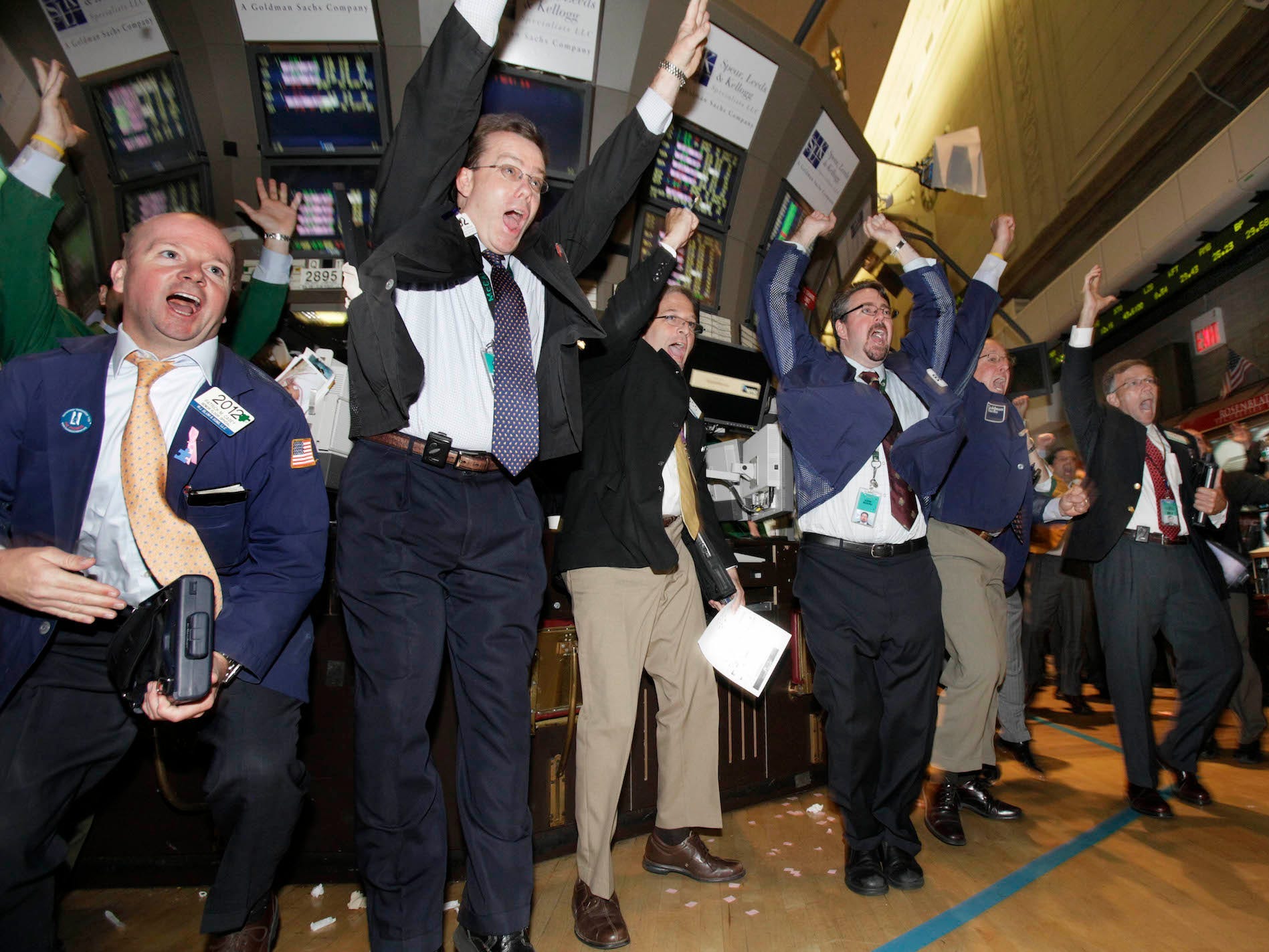
Investors are anticipating that the Federal Reserve will resume rate cuts in the coming month. Historically, such actions have often led to significant gains in the S&P 500, although there have been exceptions. Understanding how the market behaves once rate cuts begin is crucial for investors navigating the current economic landscape.
After a period of weak job growth, many are betting on the Fed to implement rate cuts during its September meeting. According to historical data, these cuts can act as a catalyst for stock market performance in the following months.
LPL Financial recently analyzed how stocks have performed from the first rate cut in a reduction cycle until the start of a new hiking cycle. The findings reveal that, on average, the S&P 500 has returned 30.3% over nine periods since 1974 when rates were declining. The median return during those periods was 13.3%, with positive returns recorded in six of those cycles.
Jeff Buchbinder, LPL's chief equity strategist, highlighted in an August 5 report that some upside potential may still exist for the second half of 2025. However, he cautioned that past performance does not guarantee future results. He also noted that a new tariff regime, similar to what was seen in the 1930s, could slow earnings growth and increase market volatility.
Notable Market Surges and Exceptions
The most significant market surges occurred before the dot-com bubble, when the S&P 500 rose by 161% between 1995 and 1999. Other substantial gains included a 62.8% increase from 1984 to 1993 and a 38.2% rise from 2019 to 2021.
However, rate cuts are not always beneficial. During recessionary periods, when the Fed acts too late, the market can suffer. For example, during the 2007-2009 rate-cutting cycle, the S&P 500 fell by 23.5%. Similarly, from 2001 to 2004, the index dropped by 9.6%.
Buchbinder emphasized that this time around, it is not certain that rate cuts will be a boon for stocks. Investor sentiment has already pushed the market to new highs despite ongoing uncertainty about the economy’s health. Additionally, the market has risen by 12% since the Fed’s first cut last September.
Economic Challenges and Potential Risks
The delayed effects of trade policy could weigh on the economy in the second half of the year, leading to weaker labor market demand. Recent market complacency toward trade policy and an economic narrative dependent on strong data has raised concerns as a potential weakness.
It is also uncertain whether the Fed will continue to ease policy in the coming months. Economists at Morgan Stanley and Bank of America believe the central bank may keep rates steady for the rest of 2025, despite CME FedWatch data indicating a 93.2% chance of a rate cut next month.
Given the heightened levels of risk, Buchbinder recommends a conservative approach in the near term. LPL favors growth stocks, large-cap companies, and sectors like financials and communication services.
Strategic Recommendations for Investors
Buchbinder advised investors to prepare for occasional bouts of volatility, given the high level of optimism reflected in equity prices. He emphasized that the firm’s short-term asset allocation committee advises against increasing portfolio risk beyond benchmark targets at this time.
The committee continues to monitor several factors, including tariff negotiations, economic data, earnings, the bond market, and technical indicators, to identify potentially more attractive entry points for adding equities during periods of weakness.
Investors should remain vigilant and consider a balanced approach as they navigate the current market environment.

Posting Komentar untuk "Rate Cuts Near? Stocks May Surge as Fed Eases Policy"
Posting Komentar