
Rent cap proposal bypasses legislative process
Massachusetts Residents Could Vote on Rent Control Initiative Next Year
Residents of Massachusetts may soon have the opportunity to vote on a proposed law aimed at limiting rent increases. A coalition of housing groups called Homes for All Mass is planning to file an initiative petition with the office of Attorney General Andrea Campbell. The deadline for submitting signatures and the proposed language is 5 p.m. on Wednesday, marking the start of a lengthy process to get the measure on the ballot.
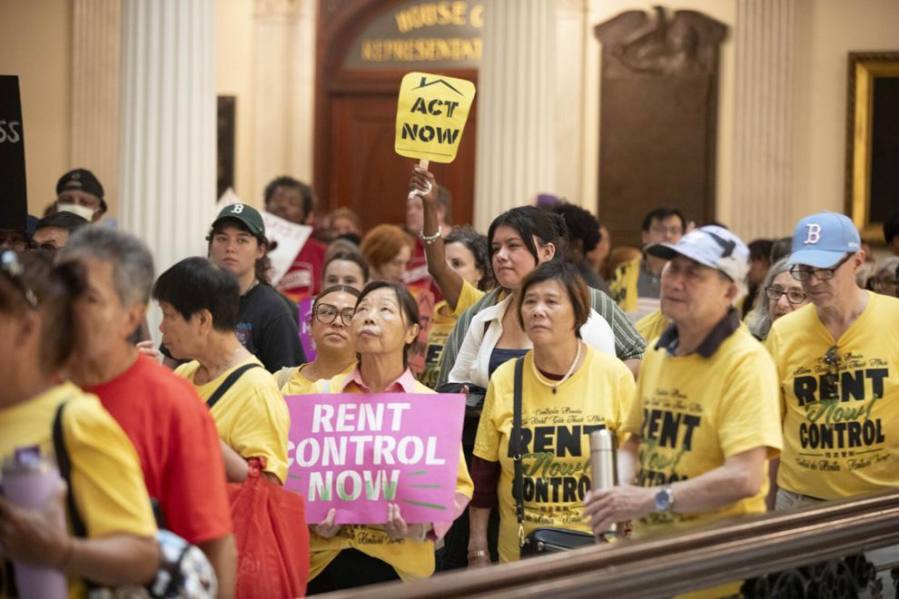
Earlier this week, hundreds of advocates gathered at the State House for a rally organized by Homes for All Mass. This event took place ahead of a legislative hearing that discussed a rent stabilization proposal. Supporters believe this measure could provide immediate relief to some residents while new housing units are developed under a major housing law passed in 2024.
The initiative petition would limit annual rent increases to the cost of living, with a cap of 5%. There would be exemptions for owner-occupied buildings with four or fewer units, as well as new buildings for the first ten years. Last year, the cost of living increase was 2.9%, which would have been the maximum allowable rent increase in 2025 if the measure had been in place. In 2022, the cost of living increase was 8%, but the measure would have restricted the rent boost to 5%.
“Massive rent hikes are pushing seniors out of the homes they’ve lived in for decades, and making it impossible for young families to save money for a down payment on their first house,” said Noemi Ramos, executive director of the New England Community Project. “As the state works to build more affordable housing over the coming years, we need rent stabilization to protect workers, families, and seniors from out-of-control housing costs today.”
Rent control was banned in Massachusetts through a 1994 ballot referendum, and the Legislature has shown little interest in reinstating the policy over the years. According to Harvard University’s Joint Center for Housing Studies, the majority of renters struggle to afford their rent.
“Rent stabilization is critical because rents are going up so quickly, and people need relief immediately,” said Annie Gordon, a resident of Fairlawn Estates in Mattapan. “Having lived at Fairlawn for 50 years, I was there when we had rent control up until 1994, and I saw the stability it created for my community and the city. Then, after it was banned, I saw huge rent increases, apartments that weren’t well maintained, stress, fear, homelessness, and evictions.”
Advocates argue that the potential ballot question could prevent corporate landlords from imposing steep rent hikes. However, the policy is expected to face strong opposition from the real estate lobby.
During the recent hearing, landlords from the Small Property Owners Association argued that rent stabilization bills are not the solution to the state's housing problems. Tony Lopes, who spoke on the SPOA panel, told lawmakers, “This bill may be well-intentioned, but the outcome will have fewer available units, deteriorating housing conditions, and owners walking away from reinvestment in all the housing stock that needs care. And it penalizes the small property owners who make up 60% or more of [the] commonwealth’s rental market, including the immigrant and minority property owners who are seeking just to get ahead. We need to consider real solutions, zoning reform, more state-level housing production, and accountability for the rising cost of insurance.”
By the close of business on Wednesday, initiative petition texts and signatures from 10 registered voters must be submitted to Campbell’s office. After a review, the AG typically makes certification decisions regarding which proposals are ballot eligible by the first Wednesday in September. Backers then need to collect 74,574 signatures from registered voters and file them with local elections officials for certification by November 19.

Posting Komentar untuk "Rent cap proposal bypasses legislative process"
Posting Komentar