
Salsa Blackthorn C GX Review: Perfect for Cross-Country and Bikepacking
A Versatile Trail Machine for Every Rider
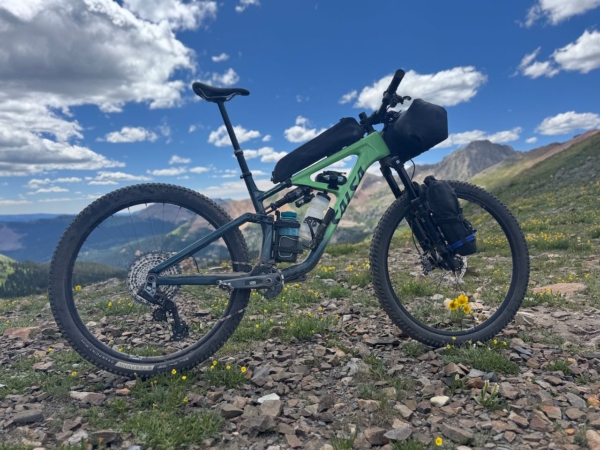
It was the kind of day I dream about all winter: 8 hours of alpine singletrack, grinding up punchy climbs and bashing down rocky descents above treeline. The bike? Salsa’s new Blackthorn 125 C GX Transmission, fully loaded with bikepacking gear. This model is designed to handle a wide range of riding scenarios, from technical trails to long-distance adventures.
Salsa claims the new ride can do everything your typical trail rider could want, mixing uphill capability with downhill brawn. But the real trick is its willingness to transform into a bikepacking rig. Graced with an amalgamation of gear storage options and lots of room for water, the Blackthorn 125 can carry a life support system for long hauls.
The Blackthorn series is essentially offered as three bikes in one: a decently lightweight trail bike, a bikepacker, and a heavy-hitting bike park crusher. These disciplines require traditionally opposing design characteristics. The relaxed geometry, spritely suspension, and light-but-sturdy components are a balancing act to be sure.
That begs the question: Does the Blackthorn 125 deliver on its versatility promise? Is three bikes-in-one a better value than two cheaper bikes at either end of that spectrum? I rode hundreds of trail miles to find out.
In short, Salsa’s second-generation Blackthorn wagers that one bike can rip moderate trails, blast technical downhills, and work for overnight bikepacking. That comes from a mixture of slack geometry, sturdy parts spec, and versatile accessory bolts. The Blackthorn 125 is a true do-it-all trailbike. It’s well balanced for uphill grinds and downhill fun, but still won’t replace a full stable of mountain and adventure steeds.
Key Specifications
- Sizes: S, M, L, XL
- Frame material: Carbon
- Wheel size: 29” (can be converted to “mullet” 29/27.5”)
- Travel (front/rear): 140/125mm
- Build options: C GX Transmission ($6,499), C Deore 12 ($3,999)
Pros and Cons
Pros
- Versatile platform for all-mountain riding
- Sturdy parts spec
- Excellent accessory mounts
- Capable climber and descender
Cons
- Tires are terrible
- Limited build kits
- High entry-level cost
Geometry and Design
Without getting too deep into the weeds on geometry numbers, overall, the Salsa Blackthorn is long, slack, and stable like any self-respecting enduro-curious bike. An adjustable flip chip lets you adjust between a 64.7-degree and 64.4-degree head tube angle (i.e., slack or slacker). That slack attitude gives it a long, stable, confident feeling when pointed downhill. It thankfully utilizes short chainstays that tuck the back wheel right underneath your body for a short in the rear, long in the front feeling. It also saves the relatively long bike from cornering like a yacht.
The seat tube angle is fairly upright, which gives it a casual, comfortable climbing position that’s adequately aggressive. It’s a position that I didn’t mind pedaling for 8 hours a day on the techiest sections of the Colorado Trail.
Component Notes
The Blackthorn 125 is offered in two build kits that share the same frame. There’s the $6,500 C GX Transmission version and the $4,000 C Deore 12. I won’t go too deeply into the component spec for each version. However, they offer a similar balance of burly and capable.
The top-of-the-line version I’ve been testing comes with a Fox 36SL Performance Elite Fork and Fox Float X Performance Elite shock — tried-and-true options for heavy-duty trail riding that are thoroughly adjustable to just about any character. SRAM Code brakes offer plentiful braking power and consistency. The SRAM GX Eagle Transmission electronic drivetrain performed flawlessly (even if charging that little battery was a pain).
The Blackthorn 125 shares a front and rear triangle with the Blackthorn 145. It’s possible to convert between the two suspension travel options, but it requires a different shock and yoke. And you’d probably want to swap in a longer travel fork to prevent the geometry from getting wonky. So, it’s not as easy as flicking a switch. Most folks will want to nail the travel option on the first try, but at least they can make the change down the road.
Special Features
It wouldn’t be a Salsa without being absolutely peppered with bolts for accessories. When paired with the right racks and bags, the bike transforms into a deep backcountry adventure rig or a full-on bikepacker. This bike can accommodate two water bottles in the bottom part of the front triangle. That is surprisingly rare and most appreciated for this class of shorter travel enduro bikes.
For most of the test period, I swapped in one of Tailfin’s top tube bags in place of a second bottle to carry extra gear so I could leave my hip pack at home. I also added OneUp’s EDC pump with integrated tool storage underneath the water bottle cage to keep maintenance mainstays tight.
There’s another hole in the frame’s front triangle. Salsa capitalized on this space for storage by adding a slot through the carbon frame. An included (but removable) Velcro strap tightly secures a tube bundle and CO2 cartridge. Then there’s a pair of bolts on the top tube that can pair with just about any accessory. I ended up bolting on Tailfin’s new Long Top Tube Bag, which added an enormous amount of storage capacity. It was such a good match that I left it on for the entire test period, backcountry and frontcountry alike.
Trail Riding Impressions
I smashed the Blackthorn 125 through the full gamut of trails that Colorado has to offer. I rode everything from bike park laps to long, winding cross-country loops and chunky backcountry trails.
The Blackthorn is a capable descender given its long, stable chassis, powerful brakes, and sturdy components. Yet as I barreled it at some of my chunkiest local trails, I came away with a few insights. It can take a thrashing. But I was reminded pretty quickly how easy it is to burn through 140mm of suspension. It could get harsh when I pushed it fast into rock gardens and other technical bike park features.
In other words, the geometry is aggressive, but the suspension travel is limited. I could certainly get down anything, but at a slightly softer pace compared to a cushier and more forgiving enduro bike. However, when the trail was on the moderate side — most of what makes up my day-to-day riding terrain — the Blackthorn 125 was right at home, even if it needed a little bit of speed to come alive.
Bikepacking Experience
I took the Blackthorn 125 up on its bikepacking offer and spent a few nights under the stars on the San Juan sections of the Colorado Trail. To nobody’s surprise, I had to add a few more bags on top of the aforementioned frame bags for lightweight bikepacking gear. Continuing my love affair with Tailfin’s bikepacking accessories, I added its new Bar Bag System to the front of the Blackthorn 125. In it, I carried my lightweight MEC Spark UL 2 Tent, sleeping pad, and minimalist down quilt.
I also added Tailfin’s Cargo Cages and Bags to the Fox 36’s lower legs. I used Suspension Fork Mounts for the last odds and ends — a mix of extra clothes and food. With a cargo cage in place of a standard water bottle cage, I was able to fit a standard Nalgene in the front triangle for maximum on-bike water carrying capacity.
When weighed down with camping gear, the Blackthorn 125 was a slow and steady climber. Of course, it was a little bit more sluggish than a spritely hardtail or cross-country bike. Nevertheless, it got the job done in a comfortable fashion. The steep seat tube and wide gearing range made it possible to muscle the rig uphill.
Bad Tires
I mostly got along with the Blackthorn’s parts, but I need to call out the Terravail Drawpoint rear tire. It’s awful. The front tire is OK. The Drawpoint’s low-profile knobs are better suited to gravel roads than technical backcountry trails or bike parks. I guess they roll fast on pavement? But in exchange, the back tire barely bites into anything. Even hero dirt felt like riding on kitty litter. What’s the point of having such powerful brakes if the tires don’t have the grip to stop the bike? Needless to say, I did a lot of unwanted skidding, sliding, and burning out on Colorado’s dusty trails.
Conclusion
The Salsa Blackthorn 125 covers a lot of ground. It makes small concessions on the peripheries to deliver a highly reliable and versatile bike that will suit a wide range of mountain bikers, especially those who keep only one bike in their stable. It’s well suited to tackle moderate and challenging descents. It can handle long days and big mileage, and has the mounts and front triangle design to make it a capable bikepacker when paired with the right accessories.
It’s one of the most aggressive bikepacking rigs on the market, outdone only by its bigger sibling, the Blackthorn 145. As with any gear that’s meant to span multiple different disciplines or classes, understanding your own intentions is important when considering this bike. If what you’re after is a plush, technical descender for chunky trails that can still keep up on climbs, consider pushing up to the deeper suspension package of the 145mm version of this same bike. The tradeoffs are minimal for that type of rider.
Or rather, if you’re looking for a bike that’s a little bit sprightlier on the ups, don’t confuse the Blackthorn 125 with a cross-country bike — it’s slightly heavier and burlier than you’re bargaining for. Check out Salsa’s Spearfish for one step down in travel and weight but with as much or more of that backcountry adventure readiness.
Nobody is calling the top-of-the-line Blackthorn 125 a bargain at $6,500. You could buy an entry-level full-suspension mountain bike and a dedicated hardtail bikepacker for that price. What the Blackthorn offers instead is a truly versatile high-end mountain bike that’s at home on technical trails, deep backcountry adventures, and occasional bikepacking trips alike.

Posting Komentar untuk "Salsa Blackthorn C GX Review: Perfect for Cross-Country and Bikepacking"
Posting Komentar