
Santa Rosa's Rapid Growth: How to Take It Further
Understanding the Growth Challenges in Santa Rosa County
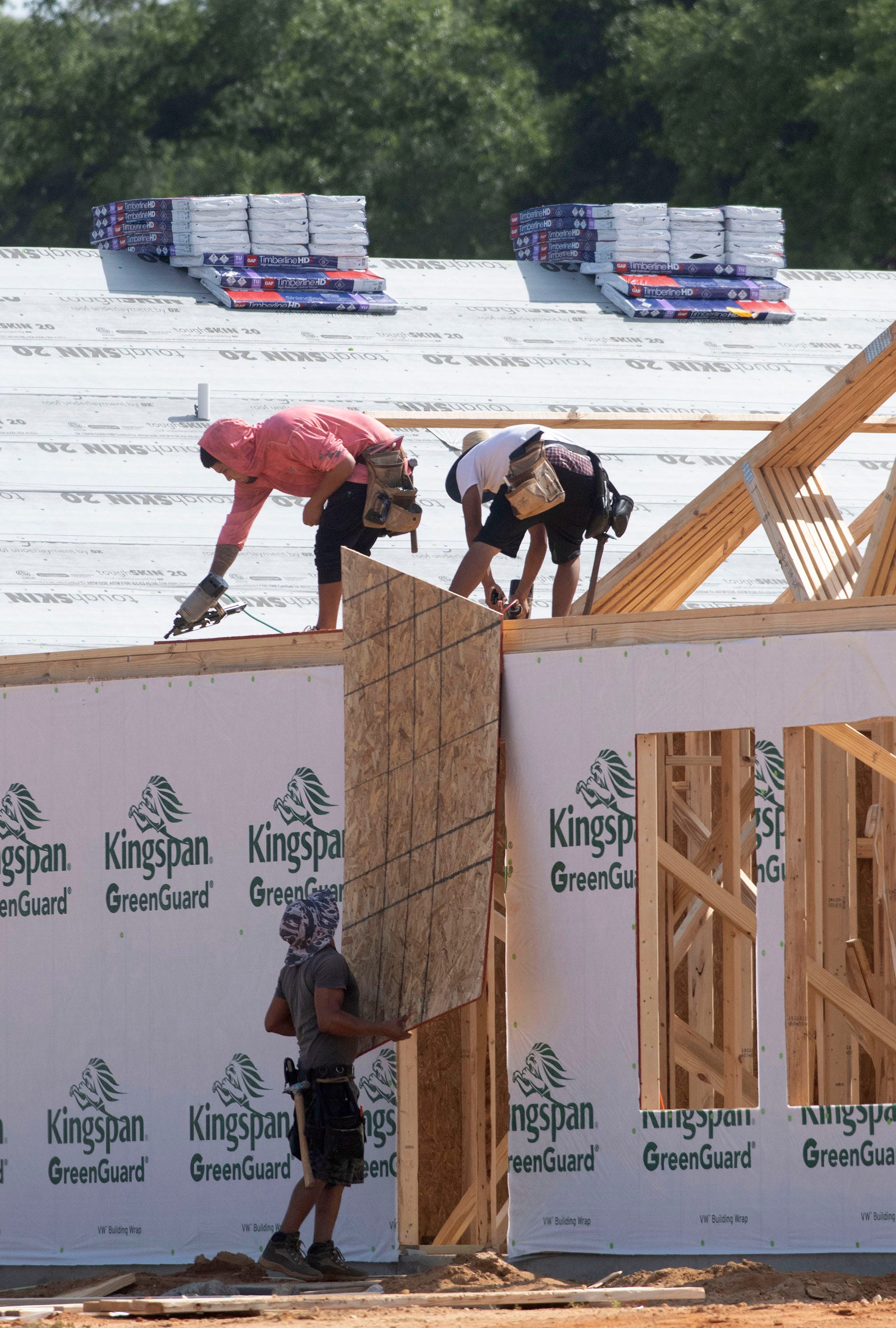
Looking at a top-down view of Santa Rosa County on a satellite map, Victor Dover was immediately struck by the contrast in areas that were very green and those that were very gray. He also grasped why many residents are frustrated to see those green spaces—fields, woods, and wetlands—being replaced by parking lots, strip malls, and subdivisions.
Dover explained, "It probably seems like a trade down when a beautiful pasture or ranch land or row crops get replaced with a shopping center, office park, or a subdivision with identical roofs disappearing off across the horizon. Who can blame people for wincing a little bit? It feels like a downward downgrade, right?" He added, "Of course, with good design and with a good city plan, your town can have that same growth occur in a way that makes it more charming."
Who Is Victor Dover?
Victor Dover is a founding principal of Dover, Kohl & Partners Town Planning. He is nationally recognized as an innovator in city planning, neighborhood design, and street design. Dover lectures around the world on the topics of livable communities and sustainable development. He has served as national chair of the Congress for the New Urbanism, is a fellow of both the American Institute of Certified Planners and CNU, and has been awarded both the Seaside Prize and the John Nolen Medal for his contributions to urbanism.
On August 12 at a free CivicCon event in Milton, Dover will discuss how to implement "balanced growth for a stronger future" using the rapid growth in Santa Rosa County as a springboard. This presentation will focus on how Santa Rosa County can embrace a more financially resilient development pattern that reduces traffic congestion, supports diverse and affordable housing options, and protects natural spaces for future generations.
The Rapid Growth of Santa Rosa County
Santa Rosa County has long been considered a bedroom community of the city of Pensacola and of four nearby military installations: Naval Air Station Pensacola, NAS Whiting Field, Hurlburt Field, and Eglin Air Force Base. Over time, however, Santa Rosa County has also become a destination in its own right. New residents are drawn to the A-rated school system, low crime rates, a housing market that gives you a bit more for your dollar than many other parts of the state, a growing cluster of manufacturing and distribution jobs, and amenities ranging from big box stores to breweries, pickleball courts, and kayak opportunities.
As a result, Santa Rosa County is one of the fastest-growing counties in the fastest-growing state in the nation. Between 2000 and 2024, Florida's population grew by about 45%, and from 2020 to 2024, it grew about 8.2%. By comparison, Santa Rosa County's population has grown almost 10% between 2020 and 2024—from 189,022 people to an estimated 207,653—and increased a gargantuan 75% since 2000, when the population was 118,430.
While the growth has brought in new jobs and industry, a larger talent pool, and significantly expanded the tax base, some don't see the trade-offs as worth it. Residents have expressed frustration about increased traffic congestion, clear-cutting of trees, and new developments diverting floodwaters onto neighboring property or sending red clay and other pollutants into local waterways.
Balancing Growth and Development
Dover said if people see that increased traffic and other negative impacts of growth are balanced with positive impacts like economic growth and prosperity, most folks can accept it. But when they're seeing a "whole bunch" of the negative and getting very little of the positive in return, it strikes people as unfair.
"Our biggest challenge is rekindling public confidence in the idea that growth and change can make things better rather than worse," Dover said. "That you might, in fact, be able to grow your way out of some of your problems if you channel the growth into the right places, in the right time, in the right forms."
Planning for the Future
Dover, whose firm is based in Coral Gables, is intimately familiar with Florida development, and over nearly four decades, Dover, Kohl & Partners has done more than 100 projects across the globe that have included retrofitting suburbs, reinventing streets and corridors, and revitalizing downtowns and historic districts.
In every community, planning for growth is critical, he said. "The place that is worried about a loss of rural character has different issues from the one that's worried about the loss of smokestack industry or is adapting to sea level rise. The subject varies from place to place, but in general, I think it's a rule for everywhere that we have to decide what we want to be when we grow up and then coordinate our efforts, public and private, to get to that goal."
Dover recommends that communities start with a livability plan first, then think about transportation second, as opposed to letting traffic engineers lead the way. "Ask yourself as a community, what do we want to be and what kind of neighborhoods do we want to live in? What kind of main streets do we want to have our businesses on and have our institutions reached on? And then from that, figure out the transportation plan."
Embracing Compact Development
Dover said building with "compactness" has a lot of benefits. To illustrate the idea, he noted that towns used to have lots of little neighborhood hardware stores that were only a mile or two from places people lived, resulting in short trips without too much interference from other drivers. Today, those stores have been replaced by centralized big box retailers that are longer distances away from neighborhoods and force more motorists onto the same streets at the same times to reach the same destination.
"You end up with a few main streets and intersections that are asked to do all the work. Every trip has to go there, all the trips will converge there, and then everybody wonders, 'Why is it taking so long to get through this intersection?'" he said. He added, "The future involves cars, but we have to learn to design our communities so that not as many of our households are dependent on having a personal car for every person, having room to park all those cars, when otherwise we could have (land) for parks, or farmland for that matter."
Joining the Conversation
During his CivicCon presentation, Dover will discuss examples of how other communities have addressed growth with positive results, and some best practices the citizens and communities can embrace to encourage the types of developments that help make our towns grow into the types of places we want them to be.
Dover’s presentation will be from 6-7:30 p.m. on August 12 in the Santa Rosa County Administrative Board Room at 6495 Caroline St., Milton. The free event is open to all. Registration is available by searching "CivicCon" at eventbrite.com. Registering will allow attendees to submit questions to Dover in advance. The event will be live streamed on pnj.com and on Pensacola News Journal’s Facebook page at facebook.com/pnjnews.
CivicCon is a partnership of the News Journal and the Center for Civic Engagement to help empower citizens to better their communities through smart planning and civic conversation. More information about CivicCon, as well as stories and videos featuring previous speakers, is available at pnj.com/civiccon.

Posting Komentar untuk "Santa Rosa's Rapid Growth: How to Take It Further"
Posting Komentar