
Scientists Uncover Lizard Venom Resistance, Potential Human Benefit Ahead
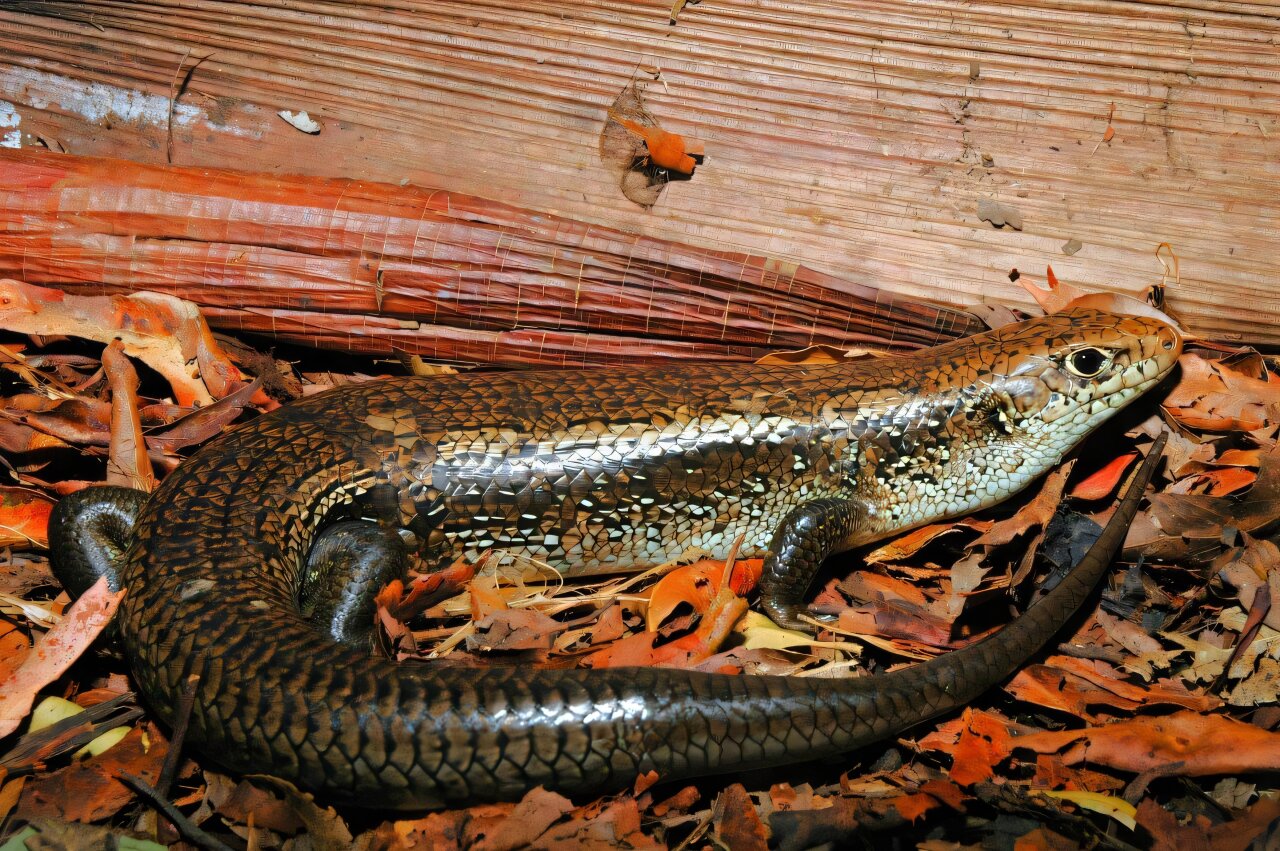
Evolutionary Adaptations in Australian Skinks
Australian skinks have developed remarkable strategies to survive deadly snakebites, according to a recent study conducted by researchers at the University of Queensland. This groundbreaking research, published in the International Journal of Molecular Sciences, could lead to the development of more effective antivenoms for humans.
Australia is home to around 470 described species of skinks, making these small lizards one of the most common reptiles on the continent. However, when snakes first arrived in Australia from Asia approximately 25 to 30 million years ago, they posed a significant threat to the native skinks. In response, the skinks evolved various defenses to protect themselves from the venomous bites of their new predators.
“What we saw in skinks was evolution at its most ingenious,” says Bryan Fry, a zoologist at the University of Queensland and senior author of the study, in a statement.
The research team examined 45 different skink species using tissue samples stored in museum collections. They discovered 13 distinct lineages that are now resistant to snake venom. The scientists identified 25 instances where the lizards independently developed genetic mutations that help them combat venom.
Normally, snake venom targets a skink’s ability to move by binding to receptors in their muscles, causing paralysis and death. However, the skinks have evolved mutations in their muscle receptors that prevent the venom from attaching. Some species use sugar molecules to block the venom, while others substitute specific amino acids—essential building blocks of proteins—that interfere with the venom's effects.
To further test their findings, the researchers created synthetic chains of amino acids and model receptors to simulate the process of a snakebite. “The data was crystal clear, some of the modified receptors simply didn’t respond at all,” says Uthpala Chandrasekara, a biotoxicologist at the University of Queensland and lead author of the study, in a statement. “It’s fascinating to think that one tiny change in a protein can mean the difference between life and death when facing a highly venomous predator.”
One particularly interesting discovery involves the major skink (Bellatorias frerei), which shares the same mutation that provides honey badgers with resistance to cobra venom. The fact that a lizard and a mammal developed the same genetic adaptation is “quite remarkable,” Fry notes in the statement. Another mutation found in the skinks mirrors one seen in mongooses, which also prey on cobras.
Fry and his colleagues believe that understanding how skinks resist snake venom could have broader implications for medical science. Their research could aid in the development of new antivenoms and other biomedical treatments. “The more we learn about how venom resistance works in nature, the more tools we have for the design of novel antivenoms,” adds Chandrasekara in the statement.
Andrew Amey, a collection manager of amphibians and reptiles at the Queensland Museum, who was not involved in the study, highlights that there is still much to learn about these animals. He suggests that there may be many more species of Australian skinks yet to be discovered.
“It is great to see research looking into how they deal with such an important predator that just might tell us more about how we can manage the effects of snakebite ourselves,” Amey says.

Posting Komentar untuk "Scientists Uncover Lizard Venom Resistance, Potential Human Benefit Ahead"
Posting Komentar