
The Grueling Fight Firefighters Have Against EV Fires
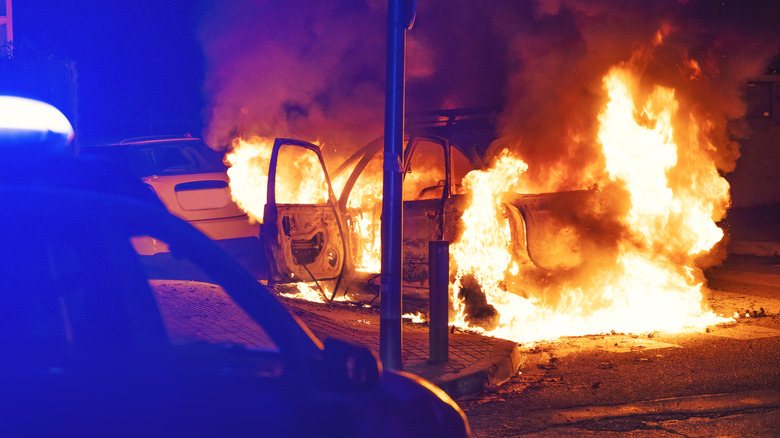
The Complexity of Fighting Electric Vehicle Fires
Firefighters are among the most dedicated and courageous professionals in the world, often risking their lives to save others during emergencies. While their job is inherently dangerous, the challenges they face have evolved with the rise of electric vehicles (EVs). Unlike traditional internal combustion engine (ICE) vehicles, EVs present unique dangers that require specialized knowledge and techniques.
One of the primary concerns with EV fires is the nature of their battery packs. These contain lithium-ion batteries, which are highly reactive and can ignite under certain conditions. Unlike gas-powered car fires, which can often be controlled with standard firefighting methods, EV fires are more complex due to the presence of combustible electrolytes within the battery modules. This makes it difficult for firefighters to effectively suppress the flames using conventional approaches like water spraying.
Why EV Fires Are So Dangerous
EV fires are not only more challenging to extinguish but also unpredictable. Once a fire starts, it can spread rapidly through the vehicle, leading to a chain reaction known as thermal runaway. This occurs when one cell in the battery pack overheats and ignites, causing adjacent cells to do the same. As a result, the fire can reignite even hours or days after the initial incident, making it difficult to fully control.
The toxic gases released during an EV fire, such as hydrogen fluoride and carbon monoxide, pose serious health risks to both firefighters and nearby residents. Additionally, the high temperatures generated by these fires can cause further damage to the vehicle and surrounding structures.
Common Firefighting Techniques and Their Limitations
Despite the challenges, firefighters have developed several strategies to manage EV fires. However, each method comes with its own set of drawbacks.
The cooling method involves using water to reduce the temperature of the burning vehicle. While this is the most commonly used technique, it is not always effective. The battery modules in EVs are often sealed, making it difficult for water to reach the affected cells. In some cases, up to 10,000 liters of water may be required, and the resulting runoff can be contaminated with harmful chemicals from the battery.
Another approach is the burn method, where firefighters allow the fire to burn out on its own. This strategy ensures that the entire battery pack is consumed, preventing future re-ignition. However, this method is controversial because it can lead to public backlash and environmental concerns due to the release of toxic gases.
The submerge method involves placing the burning vehicle in a pool of water to cool it down quickly. While this technique can be effective, it requires a large amount of water and careful management to prevent further complications. Moreover, thermal runaway can still occur beneath the surface, making it difficult to fully extinguish the fire.
The Need for Better Solutions
Currently, there is no universally accepted method for efficiently putting out EV fires. Fire departments across the country are continuously researching and developing new strategies to address this growing issue. As EV adoption increases, it is crucial for emergency responders to stay informed about the latest developments in battery safety and firefighting techniques.
With the increasing prevalence of electric vehicles, the need for better training, equipment, and protocols for handling EV fires has never been more urgent. Firefighters must be equipped with the right tools and knowledge to protect both themselves and the communities they serve.

Posting Komentar untuk "The Grueling Fight Firefighters Have Against EV Fires"
Posting Komentar