
The industrial slowdown: how tariffs and tech are changing emerging economies' future
The New Industrial Map: A Shift in the Global Economic Landscape
A new industrial map is being drawn, and it looks nothing like the one that powered Asia’s rise. Emerging economies are now navigating a complex landscape marked by trade barriers, political instability, and rapid technological change. For decades, export-led manufacturing was the key to prosperity for many developing nations, but this model is under pressure.
The Challenges of Low-Wage Economies
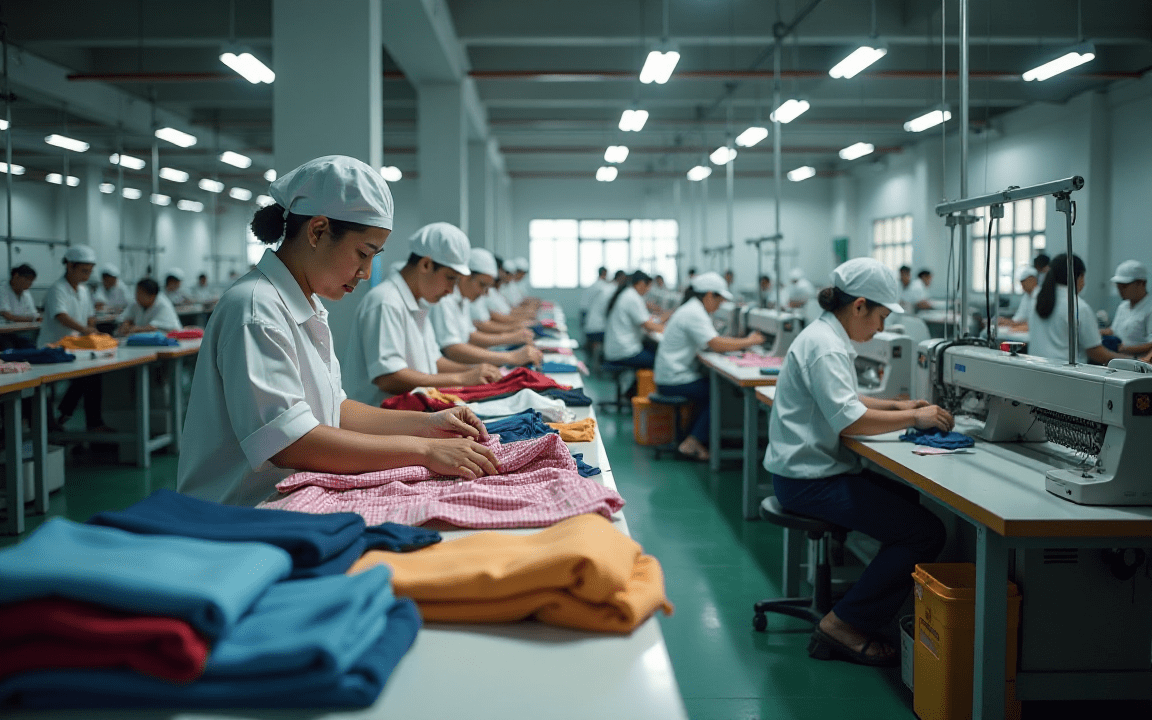
For emerging economies, low wages were once a country’s greatest asset. Bangladesh became the world’s second-largest garment exporter by leveraging this simple fact. Its factories employed more than four million workers and drove growth of around 6% a year through the 2010s. However, this story has stalled. Growth plunged in 2023 and 2024 after political unrest toppled the government, and productivity in its main industry has barely improved.
Vietnam, the region’s manufacturing star, is stuck in low-value assembly while automation looms. Despite a 16% year-on-year jump in exports to $42 billion in July, much of its success comes from assembling parts made in China and South Korea. Wages are rising, and Vietnam is approaching what economists call the “Lewis turning point,” where the pool of cheap rural labor runs dry.
The Impact of Tariffs and Trade Barriers
Tariffs are no longer just a tool for punishment; they may also force reinvention. Bangladesh has already begun talks with the United States to buy American wheat in exchange for lower tariffs on its garments. This transactional approach shows how trade policy is shaping industrial strategy. If the deal succeeds, it could set a precedent for other export-heavy economies to trade market access for strategic purchases.
Vietnam, which is facing a 20% tariff threat, is exploring ways to build domestic supplier networks. At present, even its largest export industry, electronics, depends heavily on imported parts. If tariffs accelerate this shift, Vietnam could move closer to the model that once made Malaysia a success: combining foreign investment with homegrown industrial depth.
Political Stability and Economic Growth
Political stability is as important as trade policy. Bangladesh’s political crisis last year was a reminder of how fast industrial gains can unravel. The country had failed to diversify beyond garments before unrest hit, leaving its economy exposed. The risk now is not just slower growth but social reversals. Garment jobs that pulled millions of women into the workforce could vanish if factories close or relocate to cheaper and more stable competitors.
Pakistan’s story is even worse. It has been in near-zero growth for two years, with investment less than 15% of GDP. Political power swings between military and civilian leaders, and each change disrupts economic planning. Even if Washington’s new 19% tariff on textiles hurts, it is political paralysis, not tariffs, that locks Pakistan out of industrial progress.
Diversification and Alternative Growth Models
Contrast that with the Philippines. Growth has been steady at around 5% despite the same global shocks. The country has avoided political turmoil and built strength in business services rather than manufacturing. Its call centers and IT services earn billions in exports each year. For a country that once relied mainly on remittances, this is a significant improvement. It suggests that not every developing nation needs to follow the old industrial path.
Malaysia’s electronics industry has made it one of Southeast Asia’s most successful economies. It’s now growing faster than most developed economies. Malaysia attracts steady foreign investment not because of cheap labor but because of its skilled workforce and strong infrastructure. The Dominican Republic is another overlooked story. Its economy has grown about 4% a year, driven by a mix of tourism and manufacturing. At over $30,000 per capita (PPP), it is now richer than China.
The Future of Industrial Development
The old path to development that was driven by cheap labor, rising exports, and steady foreign investment is narrowing. Although some countries will still follow it, it’s now far from guaranteed that it will bring success to any of these developing economies. Vietnam could succeed if it builds its own supplier ecosystem. Indonesia could climb the value chain in minerals and food processing. Bangladesh might diversify if it can regain political stability and use tariff negotiations smartly.
Others will take different routes. The Philippines and Ghana show that services can become a foundation for growth. Malaysia and the Dominican Republic prove that a mix of manufacturing and services can work even in a protectionist world. Mexico’s future depends on whether it can turn its proximity to the United States into a lasting nearshoring boom.
Tariffs, automation, and politics are rewriting the rules of development. For investors, this means looking beyond simple wage arbitrage. And for citizens of these countries, it means recognizing that the race to industrialize is not over, but it is now running on a far more complex track.

Posting Komentar untuk "The industrial slowdown: how tariffs and tech are changing emerging economies' future"
Posting Komentar