
The Jobs Report That Angered Trump Warned of a Recession
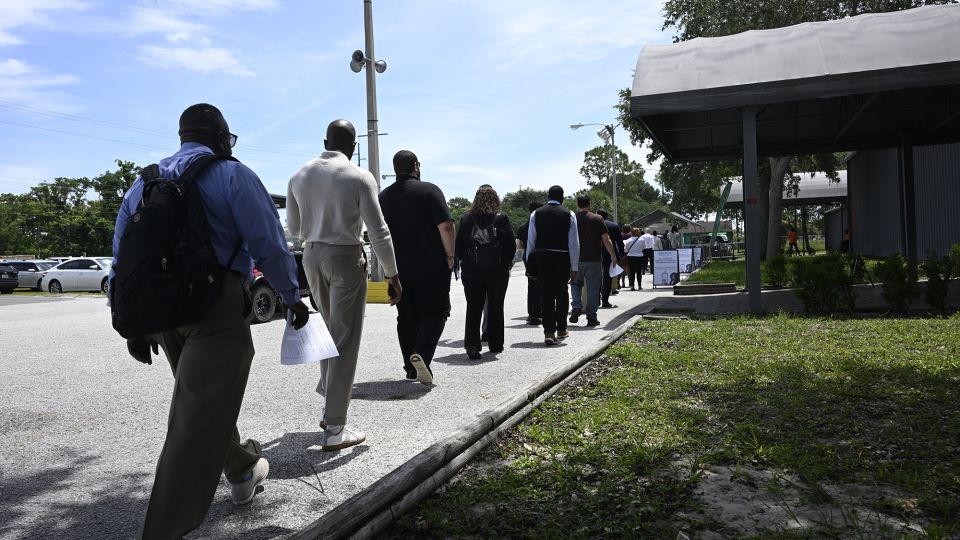
Concerns Over the U.S. Job Market and Economic Outlook
The recent jobs report released on Friday has sparked a wave of concern among economists, despite being overshadowed by the firing of the commissioner responsible for producing it. While the immediate attention was drawn to this event, the underlying data from the report has not gone unnoticed. Many economists are now using a term that has been absent from their vocabulary for months: recession.
Over the past three months, hiring has slowed significantly, creating challenges for the Bureau of Labor Statistics (BLS) in interpreting payroll data collected from thousands of businesses nationwide. As new information about employment in May and June came in, the BLS had to revise those months’ job totals downward by a combined 258,000. This substantial revision has raised alarm bells among economists.
Historically, large revisions have occurred, but when they happen over the course of at least two months, the U.S. economy has typically been in a recession since records began in 1968. Douglas Holtz-Eakin, former director of the Congressional Budget Office during the George W. Bush administration, described the current job market as "terrible." He pointed out that outside of education and health, the private sector has lost jobs in the past three months, which he called "terrible."
Warnings – But No Recession Yet
While the U.S. economy has added an average of just 85,000 jobs per month this year—well below the 177,000 average before the pandemic—this does not necessarily mean the country is in or heading into a recession. Several economic indicators, such as weak second-quarter GDP growth and slower-than-expected expansion in manufacturing and services, suggest some concerns. However, the National Bureau of Economic Research, which officially declares recessions, tracks four key indicators: consumer spending, personal income, factory production, and employment. None of these currently point to a recession.
That said, the latest jobs report has raised alarms, albeit with some caveats. Keith Lerner, co-chief investment officer at Truist, noted that recent slow job growth may have been influenced by business uncertainty surrounding Trump’s tariffs. It remains unclear whether this trend will rebound or continue. Lerner described the U.S. economy as being in a "muddle-through environment" and suggested that the Federal Reserve might need to act soon to lower interest rates, as the jobs report indicates the economy may be behind the curve.
The Impact of Tariffs and Immigration Policies
Ironically, the very policies that have kept the Fed from cutting rates—Trump’s tariffs—may be contributing to the slowdown in job growth. These tariffs have created uncertainty among businesses, leading them to freeze hiring and adjust investments. Chris Rupkey, chief economist at FwdBonds, noted that businesses are no longer waiting and are actively reducing the number of new workers they hire, which could affect future economic growth.
In addition, Trump’s immigration policy has also had an impact. Since April, 1.4 million people have left the U.S. labor force, with 802,000 of them being foreign-born. This drop may have made the jobs report appear slightly better than it actually is. If those who left the labor force but were still seeking work had reported being actively job hunting, the unemployment rate would have risen to 4.5% last month instead of 4.2%.
Understanding the Revisions
The recent revisions, while surprising in scale, were not entirely unexpected. Goldman Sachs economists noted that the data aligns with other trends analysts have observed. Jan Hatzius, an economist at Goldman Sachs, wrote that several key jobs indicators have slowed significantly in recent months, confirming the view that the U.S. economy is growing below its potential.
Bank of America economists acknowledged the revisions as "undeniably concerning," but they highlighted a silver lining: many of the adjustments were related to seasonal factors. The BLS considers its initial job numbers preliminary because some businesses fail to report their payroll data on time. This can make the estimates more challenging. The BLS continues to collect data and revises it accordingly, using seasonal adjustments to smooth out fluctuations and avoid large swings in monthly figures.
As the BLS gains a clearer picture of the slower hiring pace, future revisions may not be as dramatic as those seen recently.

Posting Komentar untuk "The Jobs Report That Angered Trump Warned of a Recession"
Posting Komentar