
Top Travel Backpacks 2025: Best for Carry-On, Hiking, and City Commutes
Understanding the Purpose of a Travel Backpack
Travel backpacks are specifically designed to carry your gear from one place to another, whether you're navigating planes, trains, or automobiles. While they might seem similar to hiking packs, their design requirements are often more complex. Hiking packs focus on balancing weight, durability, and comfort, but travel backpacks need to meet additional criteria to be considered effective.
To determine which travel backpack is right for you, start by considering how you plan to use it. If you're embarking on a gap-year style backpacking trip across Southeast Asia, a larger backpacking rucksack with a sophisticated back system and a bumbag or cross-body bag for valuables may be ideal. However, if you're going for a city break, work trip, or long weekend, a smaller hiking pack might not be the best choice.
Many lightweight hiking daypacks lack essential travel features like laptop sleeves, passport pockets, or compression straps. These features are crucial if you're tight on space and want to avoid paying extra for a check-in bag. Instead, choosing a pack designed with locomotion in mind is a better option for shorter trips where hills won't be much of an obstacle.
Features to Look For in a Travel Backpack
The following bags all fit into standard carry-on sizes and are compatible with overhead storage racks on trains and buses. They are also fairly unfussy, with stowable straps and enough features to be useful without being overwhelming.
Some are better suited for work trips where you'll need your bag on you at all times, while others are perfect for long weekends where you only need to carry it about for an afternoon while waiting to check into your accommodation.
Testing the Best Travel Backpacks
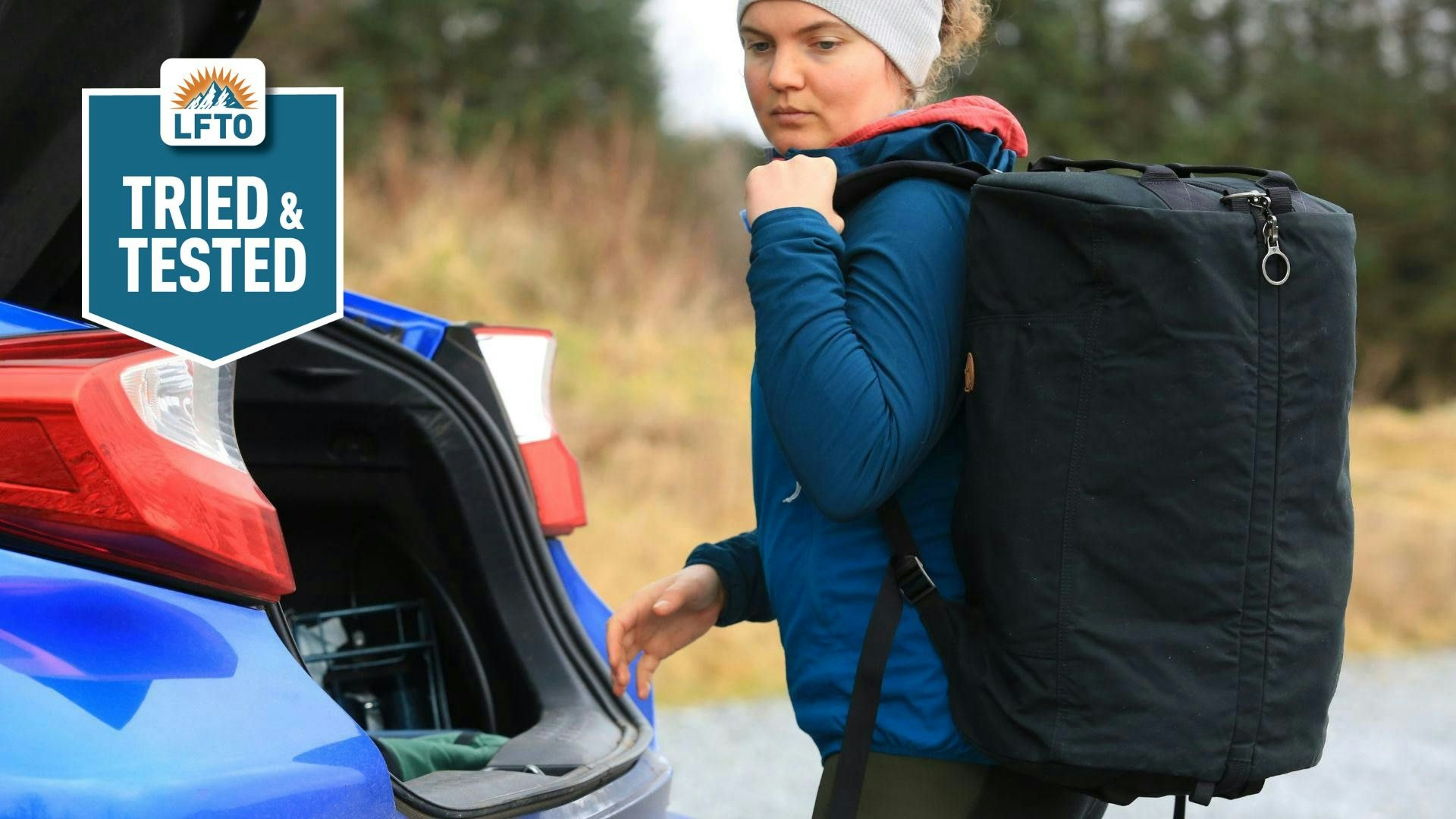
All the travel packs featured here (and several more that didn’t make the cut) have been used and abused by Fliss Freeborn, a digital writer for LFTO. Fliss used each pack over a few months for her frequent weekend travels both abroad and around the UK. She lives in Glasgow but spends more time traveling than she does in her own house.
As a remote outdoor journalist, she's always either heading into the city for work or into the wilderness for... work. So, she knows what makes a good piece of travel luggage. All of our usual testing hiking backpack criteria still applies when testing travel packs—comfort, material quality, capacity, value for money. But Fliss also evaluated each pack on its organizational features like laptop sleeves and quick-access pockets.
Plus, she made sure to highlight packs that maximize travel restrictions, like the Osprey Sojourn, which gives you a lot of packing space without incurring a hand-luggage charge.
What to Look for in a Travel Pack
Knowing what to look for before buying a travel backpack depends mostly on what it’s going to be used for, but there are a few constants to bear in mind—whether or not you're going off for months at a time, or just a few days.
Materials
You’ll want something that is tough enough to be thrown about a bus, taxi, ferry, or other mode of transport—and possibly sat on at an airport. So going for something on the heftier end might not be a bad shout. We like toughened canvas, but ripstop nylon is great too.
Some amount of padding, especially for laptop and tablet housing, is a must as well, but not so much that it impedes on useful packing space. This is not really the place for state-of-the-art gossamer lightweight materials, but that said, your pack shouldn't weigh a tonne either, as that’ll impact how much stuff you can get in it and still be within the weight limit if you’re using it as a carry-on.
Features
In general, a travel pack should have a separate handy compartment for valuables such as phones, wallets, or passports, which should be easily accessible to you—but crucially difficult to get to for others.
Lockable zips are also something to look for, especially if you'll be traveling on busy public transport in areas known for pickpocketing. You can buy handy luggage locks on Amazon.
Other features, including internal storage space, depend upon how exactly you like to pack. Many of the backpacks in the list above have cavernous, empty interiors which could benefit from being used with packing cubes, helping to organize larger spaces and compress your items so you can fit more in.
Other packs have built-in storage solutions for different bits and bobs—fine if you're only ever packing shoes and clothes, but this could be a little restrictive if you're wanting to cart around 15kg of charcuterie, or other strangely non-compressible objects.
Straps
The straps on a travel pack can make or break the experience, especially if you're having to carry it through museums and other tourist attractions in a city all day. That's why we at LFTO prefer packs over holdalls or duffels for city travel. They tend to be designed with ergonomics in mind more so than duffels, which, although can often be carried like a backpack, are better for car-based adventures or staying at basecamp during climbing expeditions.
If you know you're going to be in and out of a lot of public transport, you should look for stowable straps too: they're less likely to get caught in doors or catch on things in tight spaces. It also makes the travel pack more easily storable when not in use.
Choosing the Right Capacity for Your Trip
The capacity of your backpack depends on how you pack, what activities you'll be getting up to, and what facilities you have at your accommodation. If you're a savvy space saver going somewhere that already has bedding and toiletries, you can get away with 30 liters for a long weekend quite easily.
If you're a little bit more of an over-packer, or need spare shoes, extra warm clothing, or food, taking 35-40L for around three days is advisable. We find that if it's a sunny city trip for 4-5 days, 40 liters is absolutely fine.
Is a 40L Backpack Big Enough for Longer Travelling?
Yes, often quite comfortably if you're clever about what you pack. Even on longer trips—especially if you're going somewhere hot where you can take quick-drying lightweight baselayers that pack down to next to nothing—a 40L backpack can often offer the best travel solution.
Usually, 40L is small enough to count as hand-luggage, which makes air travel much more efficient and enables you to whisk yourself on and off a plane in no time.
Is a 50L Backpack Too Big for Carry-On?
In general, yes, 50L will be too large at full capacity. You can always get a travel pack of a larger size and use compression straps to cinch it down, but opting for something smaller as a carry-on bag is a better bet. The products we've reviewed here are all 30-40L, which will happily fit in most carry-on sizers.
Which Brand is Best for a Travel Backpack?
Any of the above brands are high on quality, but if you're unsure, picking a brand that only specializes in rucksacks and bags (for example, Lowe Alpine or Osprey) is a great bet. As usual, you tend to get what you pay for with travel packs, especially as they're probably going to see a fair amount of abuse in their lifetime.
About the Author
Fliss Freeborn is a writer and gear tester for Live for the Outdoors. During her time at university, she spent considerably more days in a tent in the Scottish Highlands than she did in the library, which she highly recommends as a study strategy.
Fliss also believes that life is too short to eat bad food outdoors, and that cooking good scran while in the hills is easier than you might think with the right kit and some forward planning—yes, you can always do better than a pot noodle.

Posting Komentar untuk "Top Travel Backpacks 2025: Best for Carry-On, Hiking, and City Commutes"
Posting Komentar