
Trump Raises India's Tariffs to 50% Over Russian Energy Deals
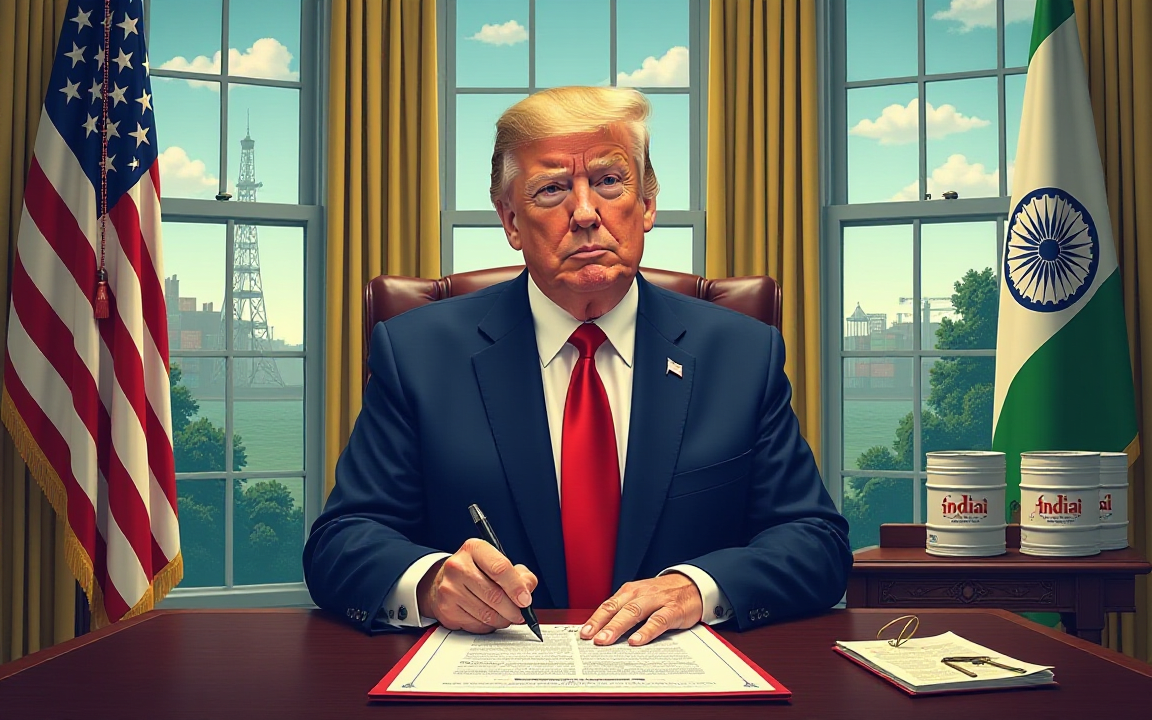
U.S. Imposes 50% Tariff on Indian Goods Over Russian Energy Imports
U.S. President Donald Trump has announced a new 25% tariff on Indian goods, citing New Delhi’s continued purchases of Russian energy as the justification for the move. This additional duty will be implemented within 21 days and will add to an existing 25% country-specific tariff that is set to take effect immediately, effectively doubling the total levy on Indian imports to 50%.
The decision comes after unsuccessful discussions earlier in the day between Washington and Moscow over the ongoing war in Ukraine, which did not result in any significant breakthroughs. Trump accused India of “fueling the war machine” by importing Russian oil and reiterated his frustration during an interview with CNBC.
Market Reactions and Trade Tensions
The announcement led to immediate market reactions. The iShares MSCI India ETF dropped to session lows, while oil prices surged and the Indian rupee weakened significantly against the U.S. dollar. These developments highlight the growing economic uncertainty surrounding the escalating trade tensions between the United States and India.
The tariff hike marks a major escalation in the U.S.-India trade dispute. For months, Trump has urged New Delhi to open its market further to American goods, but negotiations have not yet produced a formal trade agreement. Additionally, the president criticized India’s membership in the BRICS bloc, which includes Russia and China.
Strategic Economic Pressure
The new tariff is part of a broader U.S. strategy to apply economic pressure on nations that maintain energy ties with Russia. This approach is aimed at isolating Moscow economically amid the ongoing conflict in Ukraine, now in its fourth year. Trump has set an August 8 deadline for Russia to agree to a ceasefire, warning of potential sanctions and secondary tariffs on other Russian energy buyers, including China.
Diplomatic Efforts Without Conclusions
Earlier on Wednesday, U.S. envoy Steve Witkoff met with Russian President Vladimir Putin in Moscow. According to Kremlin foreign policy aide Yuri Ushakov, the three-hour meeting involved an exchange of “signals” on the Ukraine issue, but no concrete agreements were reached. Ushakov described the talks as “useful and constructive” and stated that Moscow would await Trump’s response before making further comments.
A White House statement emphasized that the tariff increase aligns with U.S. law and is intended to discourage purchases of Russian oil. Western allies argue that such purchases have helped sustain Putin’s economy and reduced international pressure to end the war. Trump also hinted that other countries could face similar tariff hikes in the near future, suggesting that the administration is actively considering such measures.
Geopolitical and Economic Impact
The steep tariff increase adds another layer of strain to U.S.-India trade relations. India is a major trading partner of the United States, and the higher costs for its exports could affect supply chains and consumer markets. At the same time, the move underscores Washington’s use of trade policy as a tool to advance geopolitical objectives—specifically, to isolate Russia economically.
While it remains unclear how New Delhi will respond to the tariff hike, the decision signals that the U.S. is prepared to use aggressive economic measures against both allies and adversaries in pursuit of its broader strategy regarding the Ukraine conflict.

Posting Komentar untuk "Trump Raises India's Tariffs to 50% Over Russian Energy Deals"
Posting Komentar