
Trump's 50% Tariff and Its Impact on India
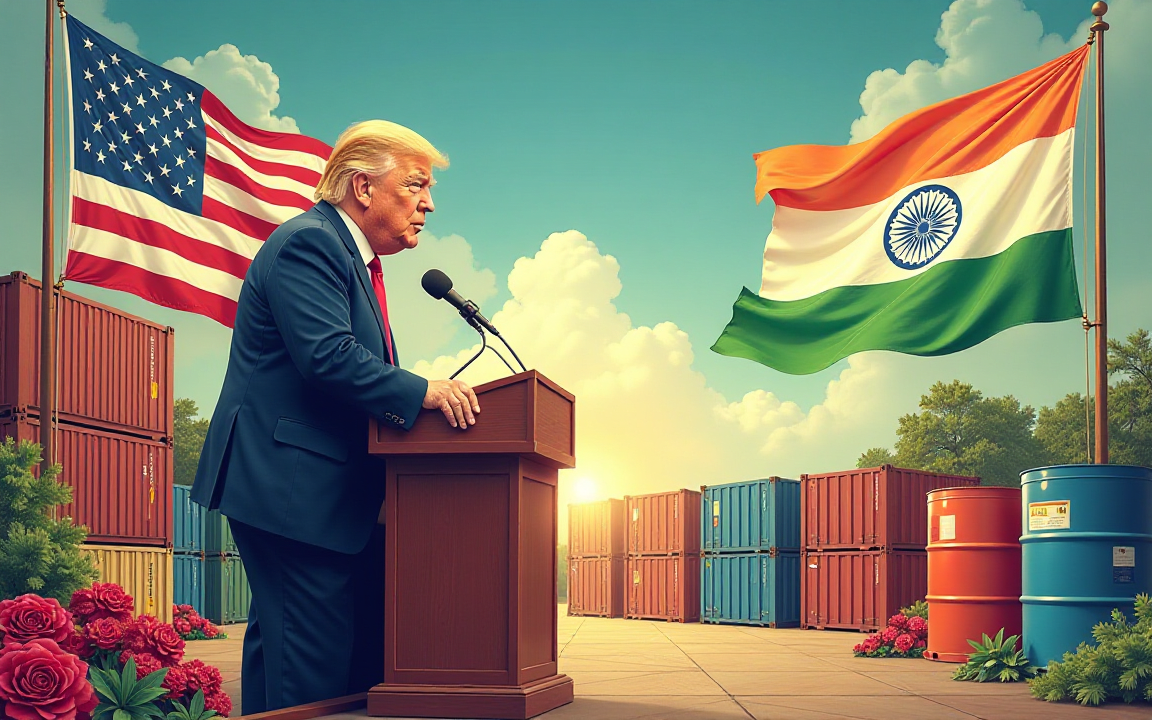
Economic Implications of the 50% Tariff on Indian Exports
India’s economy is facing a potential multibillion-dollar impact due to the recent decision by US President Donald Trump to increase tariffs on Indian goods to 50%. This move is in response to India's continued oil trade with Russia, which has drawn criticism from Washington. The new tariff rate doubles the previously announced 25%, marking one of the highest levies imposed on any US trading partner.
Although India's overall exposure to the US market is relatively limited—around 20% of its goods exports go to the US, equivalent to roughly 2% of its GDP—certain sectors are particularly vulnerable. Economists estimate that approximately $8 billion worth of Indian exports, including gems and jewelry, apparel, textiles, and chemicals, are at risk due to this tariff escalation. These sectors rely heavily on trade with the US and could face significant disruptions.
The newly introduced tariffs are set to take effect in 21 days, while the previous 25% tariffs will be implemented on Thursday. This timeline provides a narrow window for negotiations or adjustments, though some analysts suggest that the announcement may carry more symbolic weight than immediate economic consequences.
Sectoral Vulnerability and Potential Support
Economists from UBS, led by Tanvee Gupta Jain, have highlighted that the gems and jewelry, apparel, textiles, and chemicals industries are especially exposed to US trade flows. These sectors may require targeted government support in the coming months to mitigate the effects of the increased tariffs. While the direct impact on India’s GDP is expected to be minimal due to its diversified global trade network, sector-specific disruptions could still affect export growth.
Brian Jacobsen, chief economist at Annex Wealth Management, noted that the 21-day period before the new duties take effect offers a potential “offramp” for negotiations. He suggested that the announcement might be more symbolic than substantive, reflecting broader geopolitical tensions rather than an immediate economic threat.
Other major export sectors, such as pharmaceuticals, are likely to avoid direct impacts. This is because the latest tariffs apply only to goods and do not target India’s substantial IT services exports to the US. Additionally, pharmaceuticals remain shielded from these tariffs, as do semiconductors and other electronic products.
Limited Impact on Equities and Major Industries
Indian equities are expected to absorb much of the tariff shock, with the Nifty 50 index having only around 9% direct US exposure, according to Societe Generale’s equity research team led by Rajat Agarwal. Most of that exposure is concentrated in the IT services sector, which remains unaffected by the current duties.
The most immediate market effect has been seen in currency movements. The Indian rupee has weakened, and volatility has increased, which could weigh on foreign investment flows. However, despite these challenges, the pharmaceutical sector continues to thrive as one of India’s largest export categories to the US.
Apple, which operates large-scale manufacturing facilities in India, is also expected to be largely unaffected, given that its product categories are exempt from the tariff measures. Similarly, steel and aluminium exports are already taxed under a separate executive order, meaning the latest hikes will not alter their trade terms.
Geopolitical and Trade Context
Trump’s tariff escalation comes amid strained diplomatic ties between the US and India, with Washington seeking to curb global purchases of Russian energy. Analysts note that while the macroeconomic effect on India’s GDP may be limited, the decision underscores the growing risk of geopolitical tensions spilling over into trade policy.
The coming weeks may prove pivotal, as the 21-day delay before the additional tariffs take effect leaves room for diplomatic engagement. However, if implemented in full, the 50% levy will stand among the steepest trade measures imposed by the US, testing both economic resilience and political relations between the two nations.

Posting Komentar untuk "Trump's 50% Tariff and Its Impact on India"
Posting Komentar