
Trump's Trade Wins Clash With U.S. Shipbuilding Challenges
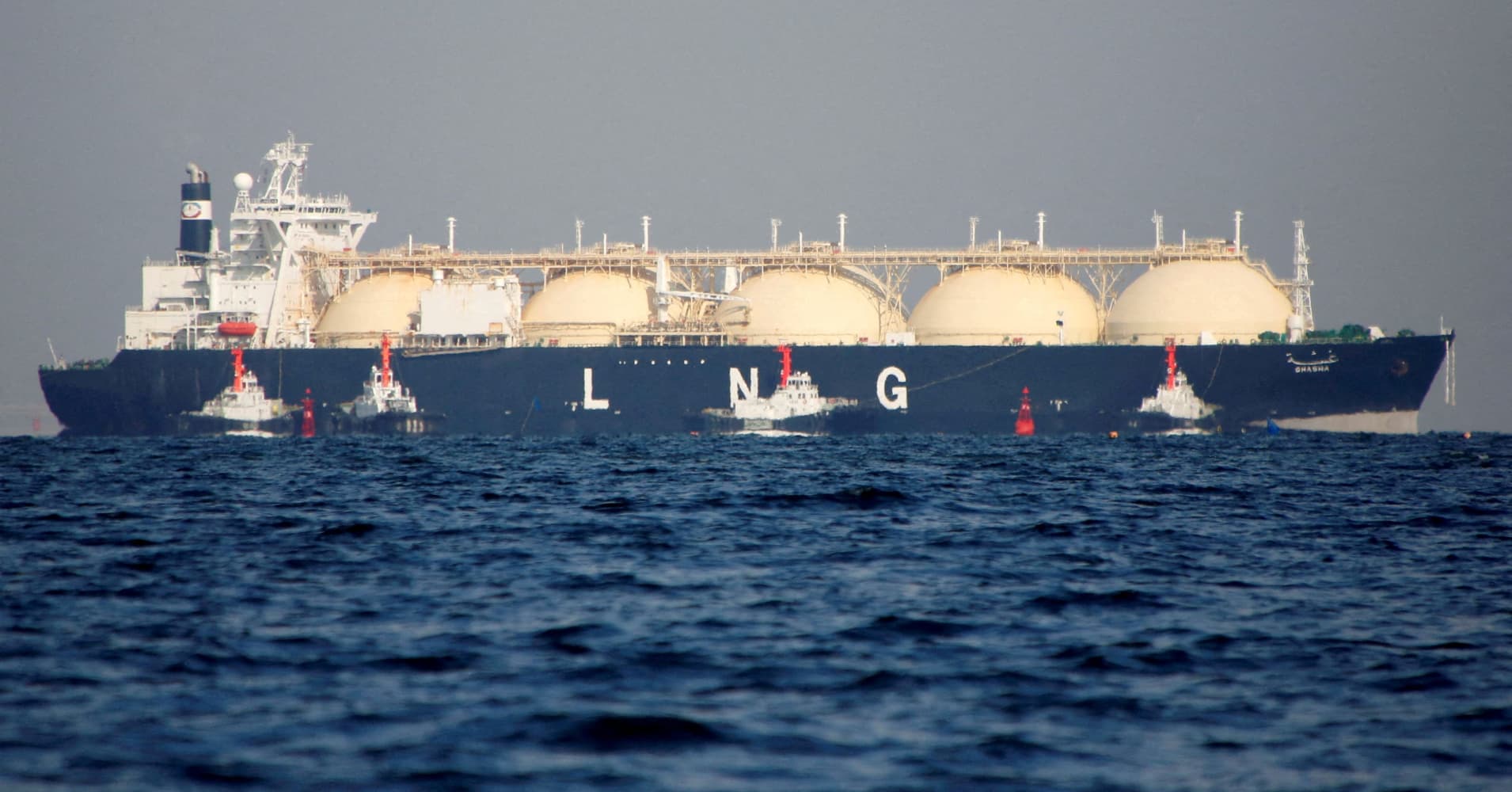
U.S. LNG Export Goals Face Major Challenges
The Trump administration has been promoting energy agreements with the European Union, Indonesia, and South Korea as part of recent trade deal frameworks. These agreements involve commitments to future large-scale purchases of U.S. liquefied natural gas (LNG). However, these promises face significant obstacles due to new U.S. Trade Representative (USTR) mandates that require domestic shipbuilding for LNG exports.
Under the USTR policy, 1% of U.S. LNG exports must be carried on U.S.-flagged ships starting in April 2028, with the requirement increasing by 1% annually until 15% of all LNG is transported on U.S.-built vessels by 2047. This mandate aims to bolster the U.S. shipbuilding industry, which has seen a decline in capacity over the past few decades.
Jason Feer, global head of business intelligence at Poten & Partners, highlighted the challenges posed by this policy. He stated that the requirement for U.S.-built ships to transport LNG and crude oil is problematic, especially given the current lack of domestic shipbuilding infrastructure.
The U.S. government’s focus on shipbuilding is partly driven by concerns over China's dominance in the shipbuilding industry. China accounts for up to 75%-80% of global freight fleets. The Trump administration announced the new USTR policy to address these concerns, aiming to rebuild America's shipbuilding capabilities.
On Capitol Hill, several lawmakers introduced the Shipbuilding and Harbor Infrastructure for Prosperity and Security (SHIPS) for America Act to close the gap with international builders through various programs. This legislation seeks to support domestic shipbuilding and improve infrastructure.
Currently, only one U.S.-flagged LNG vessel is operating: Crowley's American Energy, which was built in France in 1994 and began service in March 2025. It is a Jones Act vessel, meaning it must be staffed by a U.S. captain and crew and registered in the U.S. Globally, there are 682 LNG carriers, but only one, the LNG Aquarius, was built in the U.S. The LNG Aquarius was ordered in 1974 and delivered in 1977, but it now sails under the Indonesian flag.
According to Poten & Partners, the U.S. would need 45 vessels by 2047 to meet the USTR guidelines. However, there is currently only one U.S. vessel on the global order books out of 331 planned vessels. This lack of domestic capacity poses a significant challenge for meeting the export goals outlined in the USTR policy.
Hanwha Shipping, a U.S. subsidiary of South Korea's Hanwha Ocean, is building a domestic LNG carrier through its affiliate, Hanwha Philly Shipyard. This vessel will be the first U.S.-ordered, export market-viable LNG carrier in almost 50 years. A second possible LNG vessel could also be ordered.
However, building LNG vessels is a time-consuming process. It typically takes about two and a half years to construct an LNG vessel. Jason Feer pointed out that the U.S. has lost much of its shipbuilding capacity over the years, and the remaining yards are primarily used for building Jones Act domestic ships and the Navy.
Another major hurdle is the shortage of skilled labor. There are not enough craft workers—pipefitters, carpenters, welders—to meet the demands of the shipbuilding industry. Feer noted that the costs associated with skilled labor will also be a factor, as building an LNG vessel can cost around $260 million, with U.S.-made vessels being two to four times more expensive.
Feer emphasized the need for clarity on what constitutes a U.S.-made vessel within the USTR mandate. Questions remain about whether the majority of a vessel can be manufactured overseas and completed in the U.S., or if specific components like the engine must be U.S.-made.
Louis Sola, former Federal Maritime Commission Commissioner, expressed doubts about the feasibility of the SHIPS Act. He questioned whether the U.S. can build enough LNG carriers fast enough without jeopardizing its own exports. Sola pointed out that Korean and Japanese shipyards take over two years per ship and are already booked solid, while the U.S. does not currently build this class of vessel.
BIMCO, the largest association for global ship owners, reported that U.S. exports account for up to 27.5% of global LNG and 9.5% of crude tanker demand. The U.S. predominantly uses South Korean LNG vessels to move the commodity. South Korean shipyards dominate the LNG fleet, with 78% of the fleet built in South Korea, followed by Japan and China.
One potential workaround for the USTR mandate is the reflagging of foreign-built ships under specific conditions. Niels Rasmussen, chief shipping analyst for BIMCO, noted that foreign-built ships owned by U.S. citizens or entities can qualify for certain programs, allowing them to be reflagged for inclusion in the Strategic Commercial Fleet Program (SCFP).
Energy experts suggest that the U.S. may have to rely on waiver provisions in the USTR mandate. Andrew Lipow, president of Lipow Oil Associates, noted that using waivers could increase the cost of vessel components by 25%, but it might be necessary to avoid unreasonable delays in ship availability. Lipow emphasized that the administration would likely consider waivers to prevent production shutdowns and maintain market stability.
Overall, the U.S. faces significant challenges in meeting its LNG export goals due to the combination of new shipbuilding mandates, limited domestic capacity, and the need for skilled labor. The success of these initiatives will depend on addressing these hurdles effectively.

Posting Komentar untuk "Trump's Trade Wins Clash With U.S. Shipbuilding Challenges"
Posting Komentar