
Uber's Ride Performance Falls Short Despite Strong Bookings
Uber's Rideshare Division Misses Wall Street Expectations
Uber Technologies Inc. faced a mixed performance in its latest financial results, with the rideshare division falling short of investor expectations. Despite overall gross bookings surpassing analysts' predictions, the company's core business saw a slight dip, causing a decline in stock value. The results have sparked discussions about the broader ride-hailing and food-delivery industries, particularly amid ongoing concerns about consumer spending.
Gross bookings for the quarter ended June 30 reached $46.8 billion, slightly exceeding analyst forecasts. However, this was largely driven by the success of the food-delivery unit. In contrast, the rideshare division reported $23.8 billion in bookings, just shy of the average estimate of $23.9 billion. This shortfall led to a drop in stock prices, with shares falling as much as 3.5% on Wednesday.
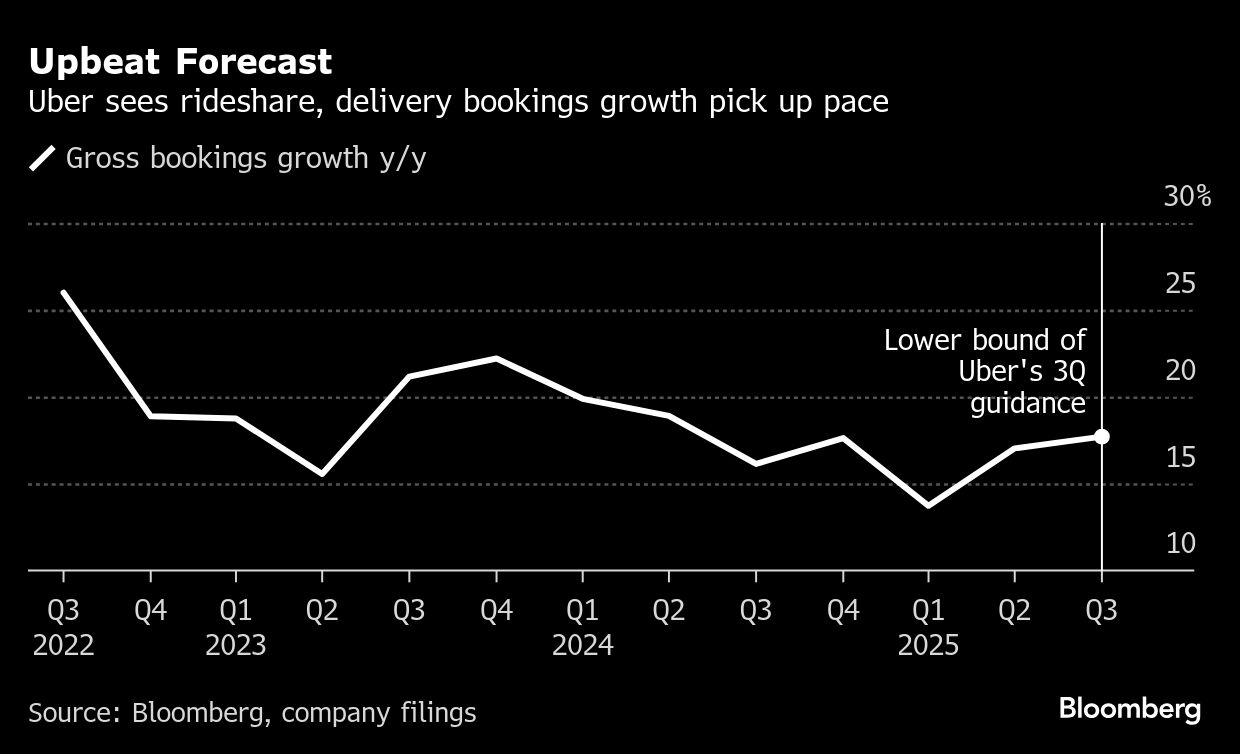
Despite the disappointing figures, Uber provided an optimistic outlook for the current quarter, projecting an 18% to 21% growth in bookings. This is a slight improvement over the 17% growth seen in the previous quarter. The company also announced an additional $20 billion in share buybacks, reflecting confidence in its long-term strategy. With $3 billion remaining from previous authorizations, Uber continues to focus on strengthening its financial position.
Growth in Delivery Business
The food-delivery segment has been a key driver of growth for Uber, with increased user engagement across several regions, including the US, Australia, Canada, and Mexico. The platform has also seen more grocery and retail merchants joining, further expanding its reach. Additionally, the acquisition of Turkish delivery app Trendyol Go at the end of the second quarter is expected to bolster operations in the region.
On the rideshare side, Uber has introduced new trip types to cater to diverse customer needs. While ride prices have not risen sharply due to lower insurance costs, the company has focused on improving affordability. Initiatives such as cheaper pooled rides and monthly ride passes have contributed to increased trip growth. Furthermore, Uber has leveraged cross-selling between its two main services, with 12% of annualized delivery bookings generated through the Eats tab within the Uber app.
Expansion and Strategic Moves
Uber has also seen significant growth in its subscription model, with Uber One members increasing by approximately 60% year-over-year, reaching over 36 million users. These subscribers now account for 40% of total gross bookings. Internationally, the company is intensifying efforts to expand beyond major European cities and into new markets through taxi partnerships. This comes as competition in Europe intensifies following Lyft’s acquisition of Freenow.
For the current quarter, Uber expects gross bookings to range between $48.25 billion and $49.75 billion, surpassing the projected $47.6 billion. The forecast includes minor benefits from the completion of the Trendyol Go purchase and favorable currency movements.
Financial Performance and Future Plans
Adjusted earnings before interest, taxes, depreciation, and amortization (EBITDA) for the second quarter reached a record $2.12 billion, exceeding the $2.09 billion forecast by analysts. For the third quarter, Uber anticipates EBITDA between $2.19 billion and $2.29 billion, with the midpoint surpassing estimates.
In addition to its core operations, Uber is exploring ways to monetize its $8.7 billion equity stakes, primarily in publicly listed assets, to fund autonomous vehicle investments. The company has formed 20 autonomous partnerships across its ride-hailing, delivery, and freight businesses, including offering Waymo robotaxis on its platform in several cities. These initiatives are still in early stages but are being closely monitored for revenue generation potential.
Uber is also investing in real estate, facilities, and vehicles within the autonomous ecosystem, as demonstrated by its recent deal with Lucid Group Inc. The company aims to build a strong learning base and gather data to engage more effectively with financing partners. This approach aligns with Uber’s history of entering markets and products at a loss, building scale, and eventually achieving profitability through strategic adjustments.

Posting Komentar untuk "Uber's Ride Performance Falls Short Despite Strong Bookings"
Posting Komentar