
Where to Store Our Literal Burden?
The Growing Challenge of Luggage Storage in Modern Living Spaces
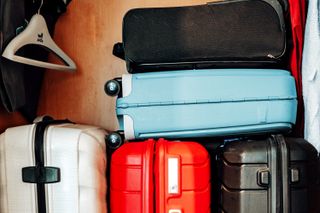
In a world where luxury luggage is more popular than ever, the problem of where to store it remains a persistent and frustrating issue for many. My 450-square-foot apartment’s laundry closet serves multiple purposes: it holds cat food, cleaning supplies, shoes I rarely wear, and, of course, various pieces of luggage. Inside my Away roller suitcase, I place my carry-on backpack, and inside that, my small Patagonia duffle from college. I stack my roller carry-on bag with the broken handle on top of my Away checked bag, and for the final touch, I manage to fit my Osprey hiking backpack inside the carry-on.
This situation isn’t unique. As the global luggage market continues to grow—valued at around $38.3 billion in 2023 and expected to reach $61.9 billion by 2030—space has become increasingly scarce, especially in urban areas where rents are rising. With more people purchasing luggage than ever before, practical storage solutions remain elusive for most.
On platforms like Reddit, users often share their strategies for storing luggage. Common answers include hiding suitcases under the bed, nesting them on wardrobe shelves, or stashing them in guest room closets. These solutions are less about aesthetics and more about functionality, as the goal is simply to keep the luggage out of sight.
Even influencers who review luggage and share packing tips struggle with storage. TikTok travel expert @rileejsmith, who has over 382,000 followers, recently posted a video showcasing her luggage stash. Given her curated profile and luxury suitcases, one might expect an organized and aesthetically pleasing space. Instead, she stacks her suitcases one on top of the other in a crawl space. If someone whose job revolves around luggage can’t find a better way to store hers, what hope is there for the rest of us?
The Evolution of Luggage Through the Years
The history of luggage has been a slow but transformative journey. In the late 19th century, wealthy travelers relied on heavy steamer trunks carried by porters and bellhops. These trunks were so popular that some houses, including Sears Kit Homes, had dedicated trunk rooms for storage. By the early 20th century, the first suitcases resembling today’s models began to appear. They were lighter, more compact, and easier to carry than the traditional steamer trunks. During this era, glamorous hotels started using stick-on luggage labels.
In the 1950s, as air travel became more accessible, lighter carry-on luggage became the norm. Wheels made their debut in 1972, followed soon after by zippers and molded plastics. Today, some of those early vintage pieces have been repurposed into furniture or storage solutions, serving as a reminder of the lost glamour of old-school travel. Up through the early 2000s, squishable soft-sided bags were popular due to their ease of storage, even if they weren’t the most visually appealing.
By around 2010, luxurious-looking hardshell suitcases made a comeback, offering a lighter wheeled version of the vintage trunk. This shift marked a new era in luggage design, emphasizing both style and functionality.
Adapting Home Design to Meet Luggage Needs
As the luggage industry accelerates, home design has yet to fully catch up. Lisa Adams, founder of LA Closet Design, notes that when designing new spaces, she often asks clients where their luggage will go. “They’ll say, ‘Great question,’ as if they hadn’t thought about it before,” she says. “We all have luggage, but there’s no dedicated space for it.”
Adams’ solutions include pull-down hooks for garment bags, pull-out packing tables, and custom shelves that showcase rather than conceal suitcases. For celebrity clients like Ray Romano, she designed a custom luggage closet to display high-end brands such as Louis Vuitton and Celine.
Architects are also stepping in to address the need for smarter storage. Bade Stageberg Cox Architecture is currently designing a New York City apartment with two dedicated luggage spaces: a cabinet hung from the mezzanine stair and a walk-in closet. Becky Garnett of Garnett.DePasquale, an architecture firm based in New York City and Sag Harbor, explains that every client wants storage for luggage. “The key is not just the luggage itself,” adds Pete DePasquale. “But having the right arrangement to properly review and then easily pack the luggage!”
Innovative Solutions in Dense Urban Areas
The need for clever storage solutions isn’t limited to the U.S. In Hong Kong, one of the densest cities in the world, architect Patrick Lam of Sim-Plex Design Studio has created a unique solution for a 484-square-foot apartment. Designed for a couple who travel extensively, the apartment features operable floor panels that lift to reveal suitcases and other items, such as their son’s toys.
These examples show that while the challenge of luggage storage persists, creative solutions are emerging to meet the needs of modern living. Whether through custom closet designs, architectural innovations, or repurposed spaces, the future of luggage storage is evolving alongside the industry itself.

Posting Komentar untuk "Where to Store Our Literal Burden?"
Posting Komentar