
Demolition Begins at Tampa's Robles Park Village: A 71-Year Legacy Unveiled
A Community’s Legacy and the Demolition of Robles Park Village
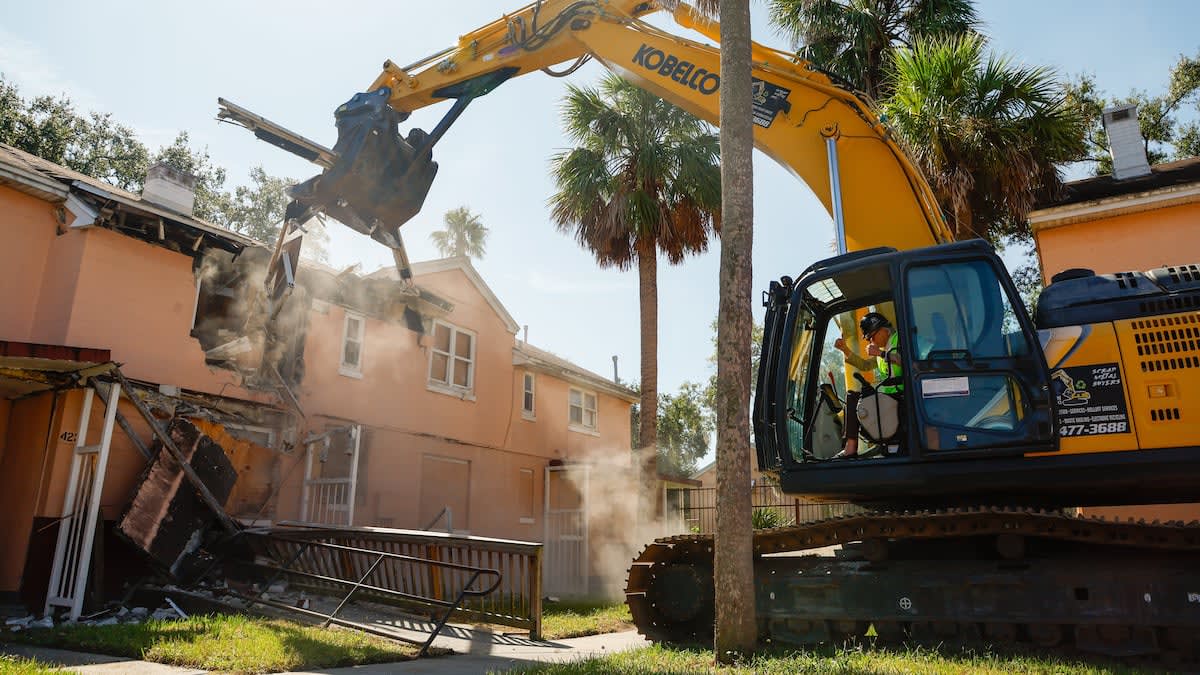
When Angerloe Bellamy recalls her time in Robles Park Village, she thinks of carefree days spent roller-skating in the streets, leaving her front door unlocked at night, and gathering with neighbors for weekend talent shows. For Bellamy, the housing project was more than just a place to live—it was a community that shaped her childhood. She lived there from 1962 to 1964, and later returned with her own children and grandchildren. Her connection to the neighborhood ran deep, but on Monday, she watched as the last remnants of Robles Park were demolished.
The physical destruction of the housing complex marked the end of an era, but Bellamy believes the real transformation began years ago. “The demolition with our minds, to get us in the mind frame for the changes coming to us here at Robles Park,” she said. The project, which had been home to some of Tampa’s most vulnerable residents for over 70 years, faced decades of challenges, including aging infrastructure, rising crime, and quality-of-life issues.
A Hidden History Beneath the Surface
Robles Park Village sits on land with a complex and often overlooked history. At the turn of the 20th century, the area was part of a Black neighborhood that included Zion Cemetery, a 2.5-acre burial ground founded by developer Richard Doby. Records suggest that as many as 800 people may have been buried there. However, by 1929, the cemetery disappeared from public records after white developer Henry P. Kennedy built storefronts on the land, effectively hiding its existence.
It wasn’t until a few years ago that the truth came to light. A retired Hillsborough County employee named Ray Reed discovered death certificates referencing Zion Cemetery, leading to a 2019 investigation by the Tampa Bay Times. The report revealed that more than 120 coffins were buried under part of the housing complex. Leroy Moore, chief operating officer at the Tampa Housing Authority, called the site “sacred ground that never should have been disturbed.”
From Segregation to Decline
Public housing was introduced as part of the New Deal to support Americans struggling after the Great Depression. Initially designed for older white adults, Robles Park became a symbol of segregation when it opened in 1954. By the mid-1900s, as white families moved to the suburbs, Black and Latino families took their place, often facing systemic barriers like redlining that limited their access to homeownership.
By the 1990s, public housing projects like Robles Park became places of last resort. Crime and social stigma rose, and federal funding dwindled. Residents reported feeling unsafe walking outside at night and facing tense interactions with police. Bellamy, who lived in the area during the 1970s, said crime wasn’t a concern then. “I’m sure it was there, but it was concealed from us,” she said. When she returned in 2019, the neighborhood had changed dramatically.
A New Vision for the Future
Despite its troubled past, Robles Park held a special place in the hearts of many residents. Tiffany Bolden, who moved into the area in 2021 after being homeless, described it as a “stepping stone” toward a better life. She took advantage of resources offered by the housing authority, secured a job, and is now working toward buying a home.
At a reunion event last year, former residents shared fond memories of fishing in nearby ponds, playing basketball, and enjoying community gatherings. “To some people, it was the projects,” Bolden said. “But for us, it was home.”
Now, the neighborhood will be redeveloped into a mixed-income community featuring shops, green spaces, a community center, and a memorial for Zion Cemetery. The project, led by the Tampa Housing Authority and developer PMG Affordable, includes 1,250 affordable residences, 600 market-rate units, and a genealogy center dedicated to the burial ground.
Challenges and Opportunities
While the redevelopment promises a brighter future, it also raises concerns. As public housing transitions to mixed-use developments, there is a risk of reducing the number of homes available for the most vulnerable. However, the Tampa Housing Authority claims Robles Park will offer nearly triple the number of affordable units compared to the original 433-unit complex. Former residents will also have the right of first refusal to move back.
Elizabeth Strom, an associate professor at the University of South Florida, sees potential in the new model. “There’s people of different ages and different walks of life who do different things for a living,” she said.
For Moore, the project represents a chance to rebuild something meaningful. “Not a lot of cities get to remake these historic, stigmatized projects,” he said. “Everything we’ve learned redeveloping our other communities will, we hope, make Robles the best-designed project we’ve built.”

Posting Komentar untuk "Demolition Begins at Tampa's Robles Park Village: A 71-Year Legacy Unveiled"
Posting Komentar