
Dual harvest: Solar panels and crops grow in harmony
A New Approach to Sustainable Land Use
Imagine a field where solar panels and crops coexist—without any compromise. This might sound like a futuristic concept, but it's now a reality thanks to a groundbreaking agrivoltaic project conducted by researchers at Aarhus University. The study, which took place in the Danish countryside, has demonstrated that solar panels and agriculture can thrive together, offering benefits for both energy production and food security.
Measuring Success in Agrivoltaics
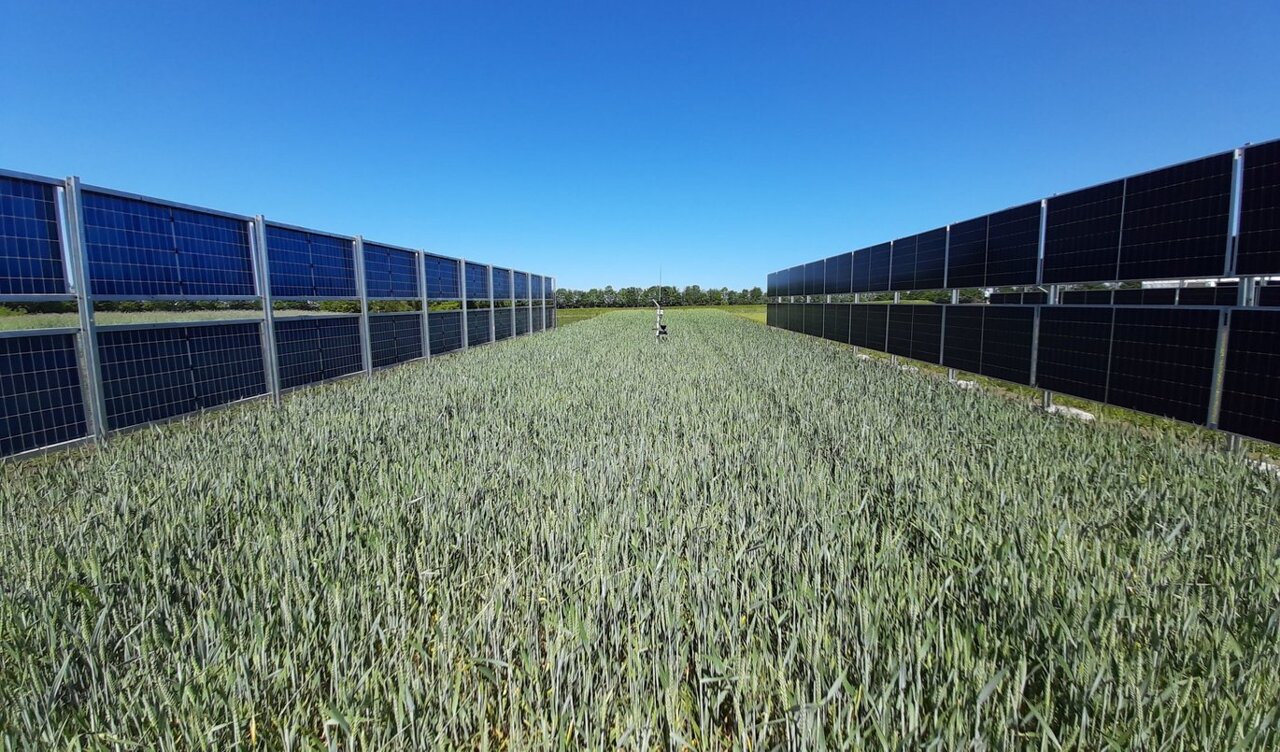
The research team, led by Marta Victoria, an Associate Professor at the Department of Mechanical and Production Engineering, found that wheat and grass-clover mixtures grow just as well between vertical solar panels as they do in open fields. Moreover, the electricity generated by these panels aligns more closely with daily energy demand patterns, creating a win-win scenario for both farmers and energy consumers.
This study was published in the journal Energy Nexus, highlighting the potential of agrivoltaics as a sustainable solution for land use.
Dual Benefits for Crops and Energy
At the test site in Foulum, two types of bifacial solar panels were installed: a traditional south-facing tilted system and a vertical east-west-facing system. While the vertical panels produce slightly less electricity annually, their generation peaks coincide with higher energy demand during mornings and late afternoons. This makes them more valuable in terms of meeting real-time energy needs.
Crops growing among the vertical panels showed no decline in yield. In fact, the yield per square meter remained almost the same. According to Professor Uffe Jørgensen from the Department of Agroecology, the crops seem to benefit from the wind protection provided by the panels, even with some shade.
Additionally, the combined system requires significantly less land than separate installations. The researchers estimate that if we were to produce the same amount of electricity and food using separate land, we would need 18–26% more area.
Environmental and Technical Advantages
The vertical configuration of the solar panels offers several technical and environmental benefits. Bifacial glass-on-glass panels require fewer materials, have lower CO₂ emissions, and reduce wind loads. They also maintain compatibility with standard farming equipment, making them a practical option for agricultural settings.
Beyond the environmental and technical advantages, the aesthetic appeal of vertical agrivoltaics is another key factor. To assess public perception, the research team conducted an immersive virtual reality (VR) study involving over 100 participants. The results showed that vertical agrivoltaics were rated more positively than conventional solar parks.
Participants appreciated the vertical panels, especially when they saw that the land was still being farmed. They perceived vertical agrivoltaics as more innovative and environmentally friendly compared to traditional solar parks. Unlike flat, industrial-looking systems, vertical panels resemble modern hedgerows, blending into the landscape rather than disrupting it.
A Vision for the Future
The researchers hope their findings will inspire a more integrated approach to solar deployment across Europe and beyond. With increasing land-use pressure, climate targets, and energy demands, agrivoltaics present a promising path forward. This approach not only supports food security and energy production but also promotes biodiversity.
Future steps include long-term monitoring across multiple crop cycles. However, the message is already clear: We don’t have to choose between wheat and watts. Agrivoltaics offer a sustainable solution that benefits both people and the planet.

Posting Komentar untuk "Dual harvest: Solar panels and crops grow in harmony"
Posting Komentar