
The B2B Battle: Expedia, Booking, and Hopper Transform Online Travel's Hidden Profit Engine
The Shift in Online Travel: A Focus on Business-to-Business Deals
For years, the online travel industry has been dominated by a fierce competition among platforms like Expedia, Booking.com, and Hopper. These companies have fought for market share through search engines and app stores, aiming to capture the attention of travelers. However, the most significant developments are now occurring behind the scenes. The major players are increasingly focusing on business-to-business (B2B) deals, which are proving to be a faster-growing segment of their overall businesses.
This shift is driven by several factors. B2B partnerships allow online travel agencies (OTAs) to reach new sets of travelers without relying heavily on paid advertisements. It also enables them to expand into foreign markets that might otherwise be difficult to penetrate. Additionally, these partnerships offer stability during economic fluctuations and can boost growth when consumer-facing businesses face slowdowns.
How the B2B Model Works
In the B2B model, partners such as credit card companies, airlines, or retailers use a “white label” template to access an OTA’s inventory of hotels, flights, and car rentals. They can brand it as their own travel portal. Alternatively, they may access APIs from OTAs for deeper integration and customization. For example, Capital One uses hotel and flight inventory from Hopper but also has direct relationships with luxury hotel groups.
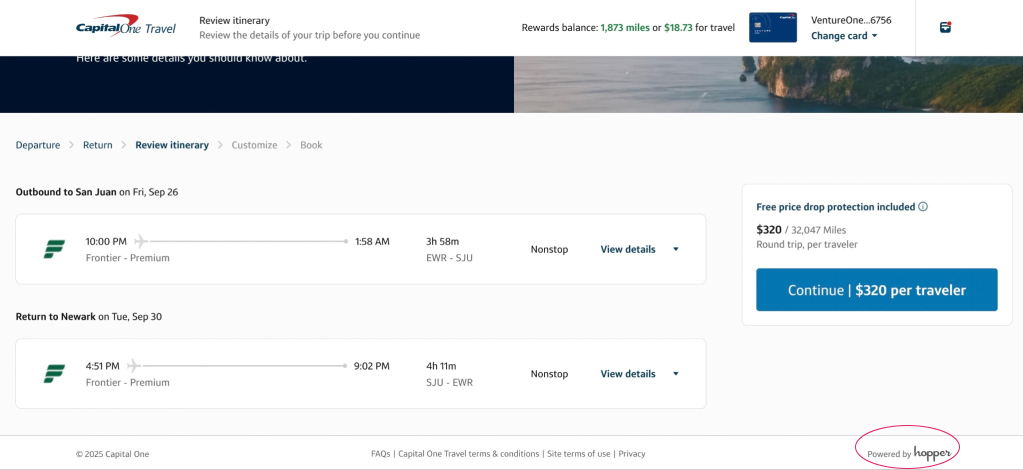
When consumers book a hotel through Chase Travel or Southwest Airlines, they often don’t realize that Expedia or Booking were the providers. Similarly, when cardmembers book a flight from Capital One Travel, they might see a small note at the bottom of the page stating “Powered by Hopper.”
Under this model, a hotel typically pays the OTA a commission when a partner’s customer makes a booking. The OTA then splits the commission with the B2B partner or provides a revenue share. According to Bernstein analyst Richard Clarke, Expedia might give British Airways, Walmart, and Mastercard around 50% of its commission. This can lead to margin pressures, as the OTA would then have to manage payment costs and customer service.
The Risks and Rewards of B2B Expansion
While B2B offers stability and long-term contracts, there are risks involved. Pranavi Agarwal, a senior research analyst at DISCOVER TRENDS, highlighted the potential issue of sharing inventory with competitors who could potentially take over. However, Alfonso Paredes, president of Expedia’s B2B unit, argues that not winning the bank means someone else will. He emphasized that B2B partnerships benefit both Expedia’s B2C and B2B operations.
Expedia has positioned itself as the leader in B2B travel, with 70,000 partners and 160,000 affiliated travel agencies. Its partners include major names like Chase Travel, American Express, United, Delta Air Lines, and Walmart. In the second quarter of 2025, Expedia’s B2B segment generated $8.8 billion in gross bookings, accounting for 29% of the total. The B2B segment grew by 17%, compared to just 1% for the consumer businesses.
Expedia’s CEO, Ariane Gorin, has long advocated for B2B expansion, and she will be speaking at the DISCOVER TRENDS Global Forum. Paredes noted that the company aims to be a one-stop shop for a broader array of inventory, not just hotels.
Expanding B2B Offerings
Expedia is enhancing its B2B offerings by adding a cars API and planning to include travel insurance in the near future. These additions aim to simplify the technology lift for partners. Paredes emphasized the goal of making the process simple and seamless for partners, reducing the need for extensive technical support.
Another opportunity lies in advertising revenue. Expedia recently gave B2B partners access to sponsored listings from advertisers, creating a new revenue stream for partners and enabling advertisers to reach new audiences. The advertising/media arm generated $182 million in Q2 2025 revenue, up 19% year-over-year.
B2B and OTA Margins
The impact of B2B on margins varies between OTAs. For Expedia, B2B can improve margins, as seen in the first quarter of 2025, where the adjusted EBITDA margin in B2B was 22.8% versus 11.1% in B2C. However, for Booking Holdings, B2B could be dilutive to margins, according to Clarke. Booking Holdings has not prioritized B2B as much as Expedia, though it is now consolidating its partnership teams into a single B2B division.
Booking Holdings emphasizes flexibility and supply, offering customized solutions for partners. Ransom, the company’s senior vice president and chief strategy officer, said B2B is expanding faster than the overall travel industry. While Booking doesn’t lead in partner counts, it focuses on product differentiation across brands.
Hopper: The Challenger
Hopper, an app-only OTA, has shifted heavily toward B2B, with its consumer business outside North America nearly gone. Its Hopper Technology Solutions (HTS) unit generates two-thirds of the company’s revenue. Partners include Capital One, Uber, and Air Canada. Hopper’s pitch centers on fintech innovation, embedding price prediction and trip disruption protections into partners’ platforms.
However, Hopper faces challenges due to its reliance on Expedia for hotel supply. In 2023, Expedia terminated its relationship with Hopper, but resumed it in 2024 under new leadership. Paredes wouldn’t comment on the reason for the resumption but noted that Expedia and Hopper have built bridges.
The Broader Implications
The shifts at Expedia, Booking, and Hopper are transforming online travel into a layered ecosystem where banks, airlines, and retailers act as travel distributors. Expedia leads with scale and global reach, while Booking is positioning B2B as more central in the future. Hopper, despite its smaller size, is showing how agility and fintech innovation can secure high-profile partnerships.
As the industry navigates disruptions from new marketing channels and slowed consumer growth, B2B offers a refuge from volatility. With the continued evolution of B2B strategies, the landscape of online travel is set to change significantly in the coming years.

Posting Komentar untuk "The B2B Battle: Expedia, Booking, and Hopper Transform Online Travel's Hidden Profit Engine"
Posting Komentar