
Trump Seeks to Eliminate Quarterly Earnings Reports. Investors Warned.
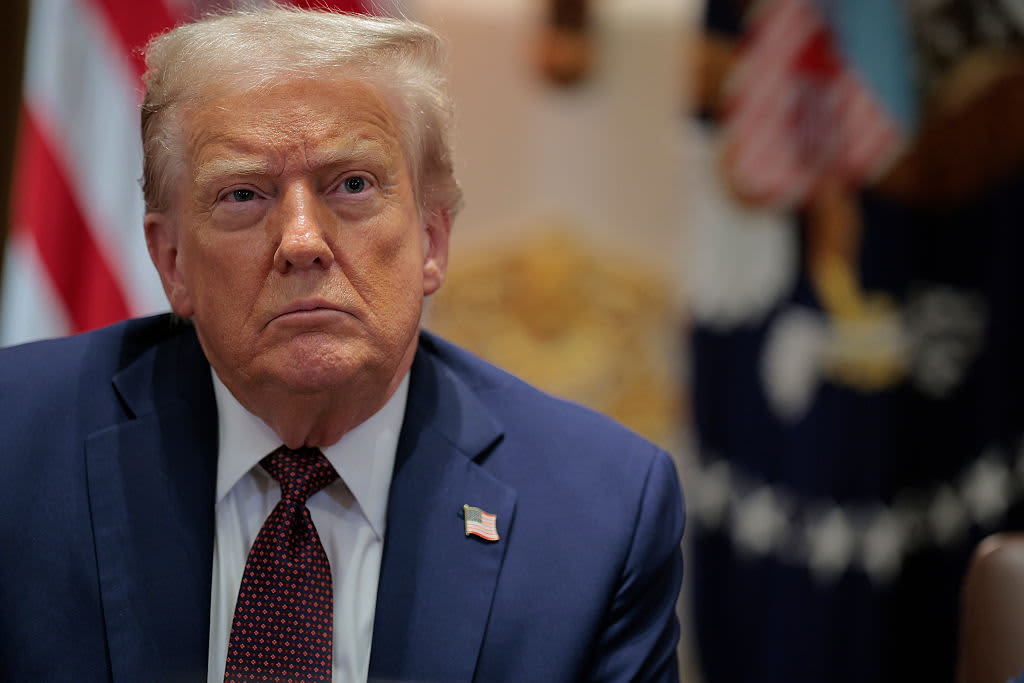
Trump’s Proposal to Shift Corporate Reporting to Semiannual Basis Sparks Debate
President Donald Trump has recently proposed that companies should no longer be required to report financial results on a quarterly basis, suggesting instead that they report every six months. This idea was shared through a social media post on Truth Social, where Trump claimed that such a change would save money and allow company managers to focus more on running their businesses effectively.
Trump referenced the notion that countries like China have a long-term approach to corporate management, in contrast to the U.S., which he said operates on a quarterly basis. He described this as “not good” and suggested that moving to semiannual reporting could help U.S. companies avoid short-termism.
The proposal, according to Trump, is “Subject to SEC Approval.” However, it remains unclear whether the Securities and Exchange Commission (SEC) is currently considering such a shift. The current quarterly disclosure requirement has been in place since 1970, and the SEC has not officially commented on the possibility of changing it.
This isn’t the first time Trump has raised the idea of semiannual reporting. During his first term, he asked the SEC to study the potential of moving to a semiannual system. A public comment period was opened later that year, but the proposal never gained much support, even among financial analysts.
A 2019 survey by the CFA Institute revealed that 59% of respondents disagreed with the idea of uniform semiannual reporting, while only 36% supported it. Sandra Peters, global head of advocacy at the CFA Institute, explained that one concern is the potential for leaks that could undermine market fairness. She noted that six months is a long time for information to leak, potentially creating an imbalance between different investors.
While some businesses may argue that the cost of compiling quarterly reports and the pressure to meet quarterly targets are burdensome, it’s not clear that less frequent reporting would lead to better capital formation for companies. In fact, it could negatively impact investors who rely on quarterly data to make informed decisions.
Quarterly reporting plays a crucial role in the efficient pricing of American stocks, which is considered one of the gold standards globally. Less frequent reporting could reduce the usefulness of key financial metrics like book value and price-to-earnings ratios, making comparisons between companies and industries less meaningful.
Trump also pointed out that other countries allow less frequent corporate reporting, suggesting that businesses there suffer less from short-termism. However, it’s not clear that corporate decision-making in places like China or Japan leads to better outcomes than in the U.S. For instance, China’s opaque reporting practices contributed to excessive investment and self-dealing in residential real estate, a sector that Trump himself is familiar with.
In the U.S., an alternative solution exists: staying private. The availability of venture capital and private equity has allowed companies like OpenAI to remain private while investing heavily in ventures that have outperformed foreign competitors. This suggests that the U.S. has a robust system of both public and private capital.
There is also experimental evidence regarding the impact of less frequent reporting. In Europe, some companies were required to report quarterly two decades ago, but these requirements were later phased out due to industry pushback. Researchers in Germany examined the consequences and found that when reporting became less frequent, the market value of companies tended to decline.
Lars Hornuf, a finance professor at Dresden University of Technology, noted that deregulation reversed the positive effects of mandatory quarterly reporting, increasing information asymmetry and decreasing firm value on average. He also observed that larger, more popular stocks were most affected when quarterly reporting was removed, while smaller firms benefited less, possibly because the costs of compliance are relatively higher for them.
Markets that provide more frequent information about securities tend to offer more generous valuations and greater liquidity. So, the question remains: do we really want to abandon this system?

Posting Komentar untuk "Trump Seeks to Eliminate Quarterly Earnings Reports. Investors Warned."
Posting Komentar