
Fed confronts economic uncertainty and political pressure in rate decision
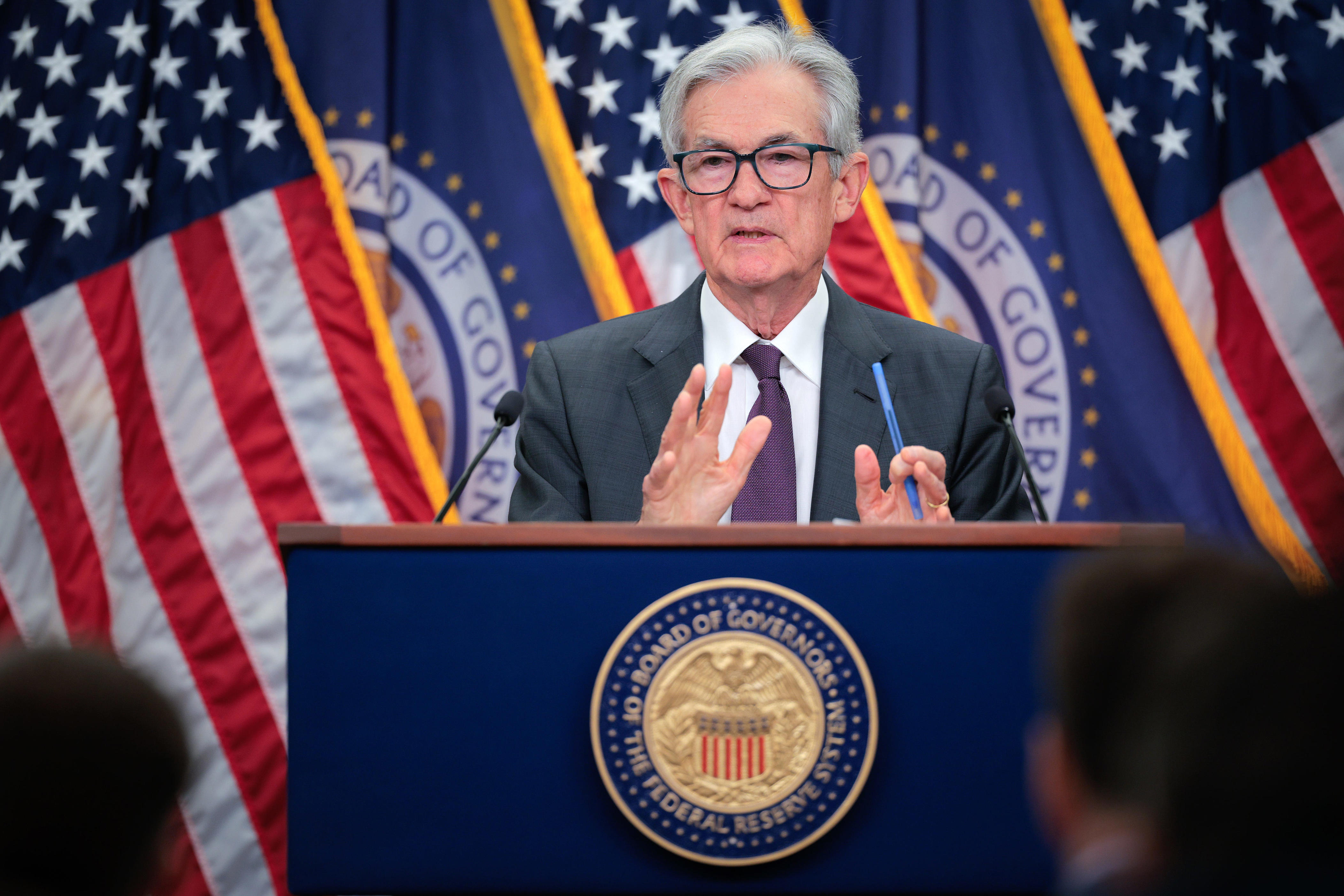
The Unusual Dynamics of the Federal Reserve Meeting
The upcoming Federal Reserve meeting this week is shaping up to be one of the most unusual in recent history. While the decision on interest rates typically takes center stage, there are several other critical factors that will influence the outcome. From personnel changes to economic challenges, the Fed faces a complex landscape as it prepares to meet on Tuesday and Wednesday.
One of the key uncertainties involves the presence of certain officials. Lisa Cook, an embattled governor, may not be at the meeting if an appeals court or the Supreme Court rules in favor of efforts to remove her from her position. Additionally, Stephen Miran, a top White House economic aide nominated to fill a vacant seat on the Fed’s board, might also be involved. However, these decisions could remain unresolved until late Monday, adding another layer of unpredictability.
Economic Challenges Facing the Fed
At the heart of the Fed's concerns is the state of the U.S. economy, which is currently marked by uncertainty. Hiring has slowed significantly, while inflation remains stubbornly high. This dual challenge presents a difficult balancing act for the central bank.
Jill Schlesinger, a CBS Business Analyst and host of "Jill on Monday," emphasized the complexity of the situation. She pointed out that the Fed has two main objectives: promoting job creation and maintaining price stability. According to Schlesinger, the labor market has cooled down over the past 68 months, particularly in the last four months following the announcement of new tariffs. This slowdown in hiring is a major concern for the Fed.
On the other hand, the Fed must also manage inflation, aiming for a stable environment where prices neither rise too quickly nor fall. Although current inflation rates have decreased from the peak seen a few years ago, they are still above the target of 2%. Schlesinger noted that the rate is approaching 3%, which is not ideal.
Interest Rate Decisions and Market Expectations
The key question for the Fed is whether it will prioritize addressing unemployment or managing rising costs for consumers. Schlesinger predicts that the Fed will focus more on the job market, leading to a potential 0.25% reduction in interest rates when the meeting concludes on Wednesday afternoon. This would bring the benchmark rate down to 4.1%.
Fed Chair Jerome Powell and other policymakers have indicated that weaker hiring is a primary concern, which aligns with investor expectations of a quarter-point cut. However, the persistence of high inflation may force the Fed to proceed cautiously, limiting the number of rate reductions.
In addition to the rate decision, the Fed will release its quarterly economic projections on Wednesday. Economists anticipate that these projections will suggest one or two additional cuts this year, with several more expected next year.
Political Pressure and Public Perception
Amidst the economic uncertainty, political pressure from former President Donald Trump has intensified. He has been vocal in demanding lower interest rates, seeking to remove Lisa Cook from her position, and criticizing Fed Chair Jerome Powell with strong language. These actions have raised concerns about the Fed's credibility and independence.
Loretta Mester, a former president of the Federal Reserve Bank of Cleveland, noted that while Fed officials are unlikely to let political criticisms sway their decisions, the attacks are problematic. They risk undermining public confidence in the central bank's ability to make impartial policy decisions.
David Andolfatto, an economics professor at the University of Miami, highlighted the unprecedented nature of the current situation. Presidents have historically pressured Fed chairs, but never in such a personal and public manner. Andolfatto described the level of disrespect as "beyond the pale."
Voting Dynamics and Potential Divisions
The Federal Reserve typically has 12 officials who vote on policy decisions at each meeting. If Lisa Cook is removed or Stephen Miran is not approved in time, only 11 officials will vote on Wednesday. Despite this, there is likely enough support for a quarter-point cut. However, there could be significant divisions among the remaining members.
Governor Michelle Bowman and Stephen Miran may oppose the quarter-point cut, advocating for a larger reduction. Conversely, some regional bank presidents, such as Beth Hammack and Jeffrey Schmid, have expressed concerns about inflation and may oppose any rate cuts altogether. This could lead to dissents in both directions, a rare occurrence since 2019.
Economic Indicators and Future Outlook
Recent economic data shows a slowdown in hiring, with employers shedding jobs in June and adding only a limited number in August. Additionally, a preliminary report indicated that job growth was lower than previously estimated. At the same time, inflation has picked up, with core prices rising 3.1% in August compared to the previous year.
Given these challenges, the Fed may need to proceed carefully with further rate cuts, which could frustrate the Trump administration. As economist Ellen Meade noted, turning points often involve reasonable disagreement about timing.
The Fed's decisions in the coming days will have far-reaching implications for the economy, the labor market, and public confidence in monetary policy. With so many variables at play, the outcome of this meeting remains highly uncertain.

Posting Komentar untuk "Fed confronts economic uncertainty and political pressure in rate decision"
Posting Komentar