
Fed navigates uncertainty and pressure in rate decision
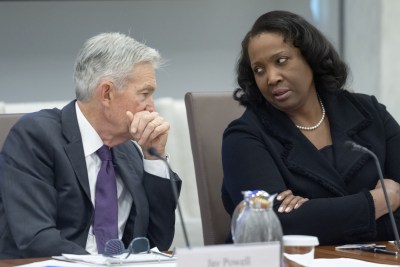
Unusual Challenges at the Federal Reserve Meeting
The upcoming Federal Reserve meeting is shaping up to be one of the most unusual in recent history. While the decision on interest rates is typically the main focus, there are several other key issues that remain unresolved as officials gather for their Tuesday and Wednesday sessions.
One of the most pressing questions is who will be present at the meeting. Lisa Cook, an embattled governor, may or may not be there depending on whether an appeals court or the Supreme Court rules in favor of a recent effort to remove her from office. Similarly, Stephen Miran, a top White House economic aide, has been nominated to fill an empty seat on the Fed’s board, but his confirmation may not be finalized until late Monday.
This uncertainty adds another layer of complexity to what is already a challenging economic landscape. The U.S. economy is facing significant headwinds, with hiring slowing down sharply and inflation remaining stubbornly high. These factors have created a difficult balancing act for the Fed, which is tasked with maintaining both price stability and full employment.
Economic Uncertainty and Policy Dilemmas
As the Fed prepares to make its decision, a central question remains: Should the focus be on addressing high unemployment or controlling inflation? The central bank's mandate requires it to balance these two goals, but the current economic environment makes this task particularly challenging.
Currently, Fed Chair Jerome Powell and other policymakers have signaled that they are more concerned about weaker hiring, which has led many investors to expect a quarter-point reduction in the benchmark interest rate. This would bring the rate down to approximately 4.1%. However, the persistence of high inflation may force the Fed to proceed cautiously, limiting the number of rate cuts they implement.
In addition to the interest rate decision, the Fed will also release its quarterly economic projections. Economists anticipate that these projections will indicate that policymakers expect one or two additional rate cuts this year, along with several more in the following year.
Political Pressure and Public Perception
Amid these economic uncertainties, President Donald Trump has been applying unprecedented political pressure on the Fed. He has demanded sharply lower interest rates, sought to remove Lisa Cook from her position, and made public criticisms of Fed Chair Jerome Powell, whom he has called a “numbskull,” “fool,” and “moron.”
While some experts believe that Fed officials will not let these criticisms influence their policy decisions, others argue that the attacks could undermine the central bank’s credibility with the public. Loretta Mester, a former president of the Federal Reserve Bank of Cleveland, noted that while Fed officials will likely remain focused on economic data, the public's skepticism about the Fed’s decision-making process could pose a challenge.
David Andolfatto, an economics professor at the University of Miami, highlighted the unusual nature of the current situation. He pointed out that while past presidents have pressured Fed chairs, the level of personal and public criticism directed at Powell is unprecedented. “This is just beyond the pale,” he said.
Voting Dynamics and Potential Divisions
The Fed typically has 12 officials who vote on policy decisions—seven members of the board of governors and five regional bank presidents. If Lisa Cook is removed or Stephen Miran is not confirmed in time, the meeting will have only 11 voting members. Despite this, there is expected to be enough support for a quarter-point rate cut, though the decision may come with notable divisions.
Governor Michelle Bowman and Stephen Miran, if confirmed, may oppose the quarter-point cut in favor of a larger reduction. On the other hand, some regional bank presidents, such as Beth Hammack and Jeffrey Schmid, have expressed concerns about inflation and may vote against any rate cuts altogether. This could result in dissents from both sides, a rare occurrence since 2019.
Labor Market and Inflation Trends
Recent labor market data shows a slowdown in hiring, with employers shedding 13,000 jobs in June and adding just 22,000 in August. A preliminary report also indicated that job growth in the year ending in March was lower than previously estimated. At the same time, inflation has picked up slightly, with core prices rising 3.1% in August compared to a year earlier.
With inflation still above the Fed’s 2% target, further rate cuts may be limited, which could lead to continued frustration from the Trump administration. Ellen Meade, an economics professor at Duke University, noted that turning points in economic policy often involve reasonable disagreement about when to act.
As the Fed navigates these complex challenges, the outcome of this meeting could have far-reaching implications for the U.S. economy and the broader financial landscape.

Posting Komentar untuk "Fed navigates uncertainty and pressure in rate decision"
Posting Komentar