
Unseen Crisis: Mill Closures Strike Struggling Industry
The Impact of International Paper's Closures on the Local Economy
The recent closures of International Paper’s facilities in Savannah and Riceboro have sent ripples through the local economy, affecting not only the 1,100 employees who were directly impacted but also a vast network of workers in related industries. For some, the closures came as no surprise. A maintenance mechanic at the company, who chose to remain anonymous, remarked, “If you couldn’t see it coming, you weren’t looking.” This sentiment was echoed by several colleagues who had noticed signs such as reduced production and other mill closures across the southeastern United States.
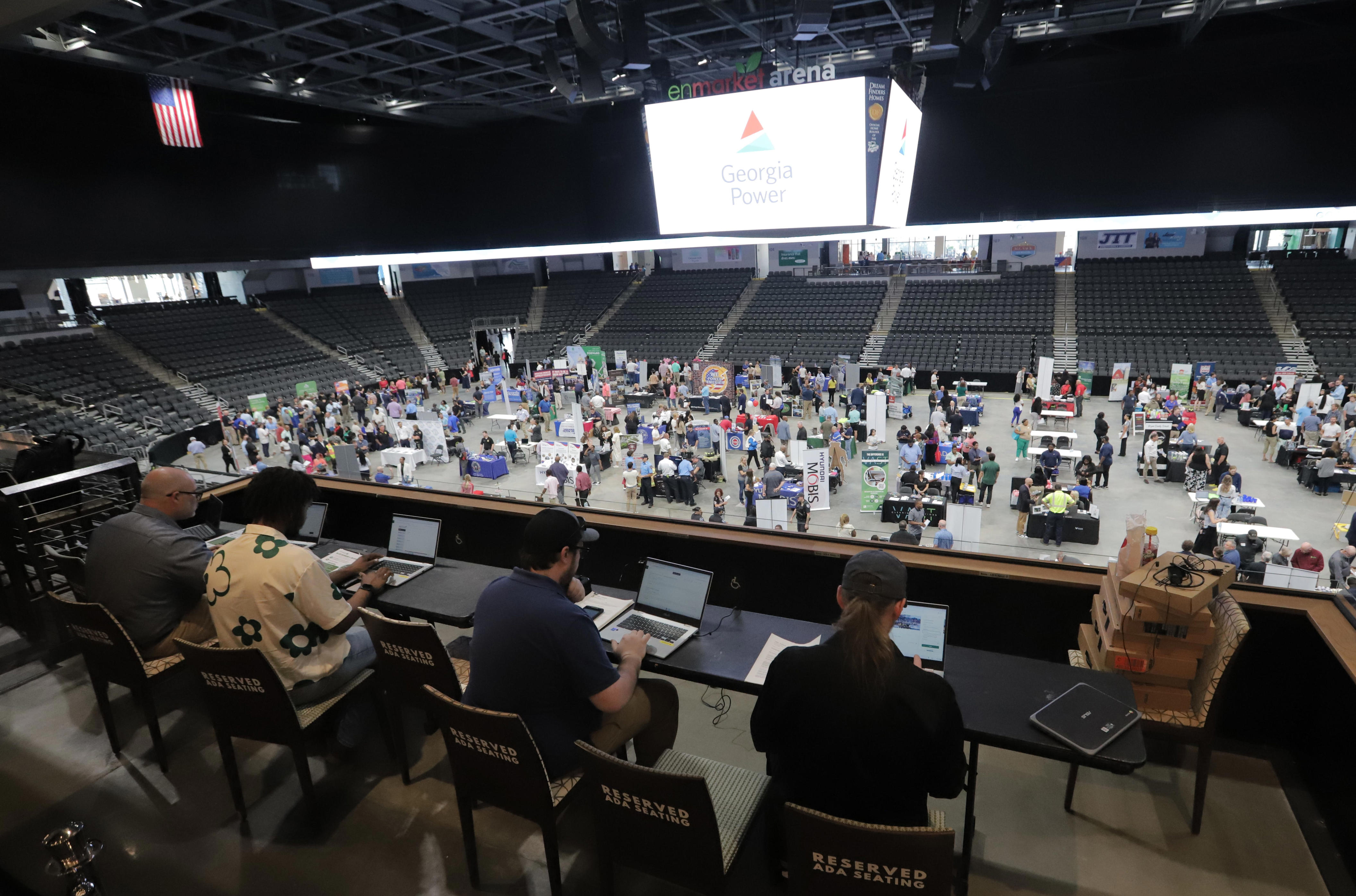
These workers, while still employed as of the time of the job fair, attended the Regional Industry Support Enterprise (RISE) Job Palooza event at the Enmarket Arena seeking new opportunities. They were looking for lateral or forward career moves with registered employers, hoping to transition into roles that would offer similar or better compensation.
Savannah Area Chamber of Commerce President and CEO Bert Brantley emphasized the complexity of the situation, stating, “There's not one solution for 1,100 people…there are 1,100 solutions.” This statement highlights the individualized approach needed to support those affected by the closures.
A Broader Economic Impact
The closures have far-reaching consequences beyond the immediate workforce. Georgia Tech School of Chemical and Biomolecular Engineering Professor Christopher Luettgen pointed out that International Paper is just one part of a complex paper industry stream that spans the state. From forest landowners to loggers and truck drivers, the entire supply chain is affected when mills shut down.
Tim Lowrimore, president and CEO of the Georgia Forestry Association, estimated that around 6,000 truckloads of woodchips per week will be stalled due to the closures of International Paper’s Savannah and Riceboro facilities, as well as Georgia-Pacific’s Early County mill. He noted that this could result in a $3 billion economic loss to the state, with approximately 8 million tons of wood demand lost from these three facilities.
Despite the challenges, there are signs of hope. Experts suggest that the Southeastern region has a strong industrial labor market, with unemployment hovering around 3% thanks to investments in sectors like automotive manufacturing. However, the impact of the closures may be more pronounced in smaller, localized labor markets, such as those in Riceboro and Liberty County.
Market Trends and Strategic Moves
Professor Luettgen also highlighted that the paper industry has been undergoing an internal review for some time. He pointed to three mill closures in the Florida panhandle over the past 18 months as evidence of a broader trend. Companies are weighing whether to keep aging facilities running or invest in expansion and innovation.
International Paper’s decision to close its Savannah facilities was partly driven by financial considerations. The company cited a softening boxboard market, which has been impacted by decreased consumer spending. This dip in confidence can be attributed, in part, to economic instability caused by uncertainty surrounding trade policies, including those from the Trump Administration.
The closures will result in a reduction of 1 million tons in containerboard production, according to a press release from the company. This shift could have downstream effects on independent containerboard converters, further impacting the industry.
Optimism Amid Challenges
Despite the challenges, there is an optimistic outlook among employers and job seekers. At the RISE Job Palooza, several companies were actively recruiting, offering positions that align with the skills of former International Paper employees. Hyundai Steel Human Resource Manager Ashley Scott noted that quality assurance and production supervisor professionals were among the most transferrable roles.
JCB’s recruiting manager, Kelly Peppers, emphasized the need for senior supervisors and individuals with experience in production floor and purchasing roles. The City of Savannah was also present, offering positions in wastewater reclamation, maintenance, and equipment operations.
SNF, a Riceboro-based employer with over 1,300 employees, was seeking to fill 40-50 positions, including entry-level and advanced chemical operator roles. The company values qualities such as manufacturing safety awareness, stable work histories, and an understanding of shift work.
As of 11 a.m., about 100 International Paper employees were at the job fair, showing determination to find new opportunities. Some sought lateral moves that could pay over $40 an hour, while others aimed for managerial positions offering annual salaries of around $125,000.
Looking Ahead
The second day of the RISE Job Palooza is scheduled for Friday, Sept. 12, from 9 a.m. to 3 p.m. at the Enmarket Arena. For those affected by the closures, the event represents a crucial step in navigating the next phase of their careers.
While the road ahead may be uncertain, the collaborative efforts of local leaders, employers, and workers offer a path forward. With the right support and opportunities, the community is working to ensure that those impacted by the closures can find new and meaningful employment.

Posting Komentar untuk "Unseen Crisis: Mill Closures Strike Struggling Industry"
Posting Komentar