
Walmart's AI Rise: A Major Edge Unveiled
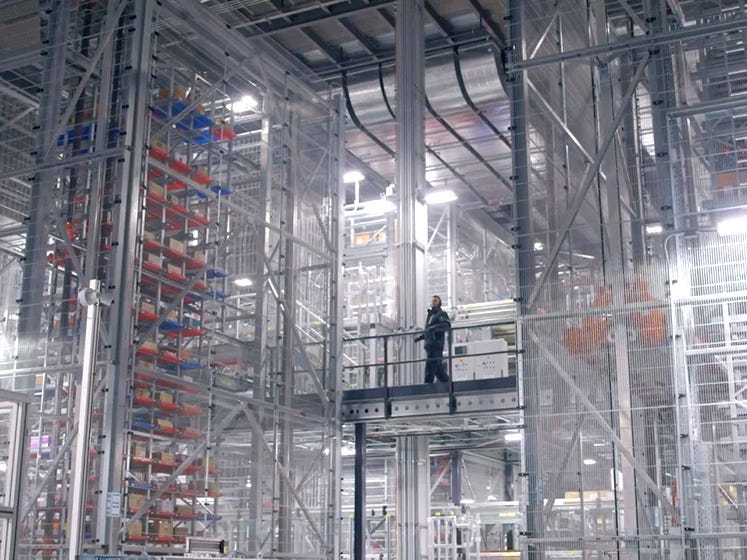
Walmart's AI Revolution: Solving Real-World Challenges
Walmart is leveraging artificial intelligence (AI) to tackle some of the most complex physical challenges in the retail industry. As one of the largest retailers globally, the company has found itself in a unique position to become a powerful player in the AI space. Unlike many other companies that focus on digital-only solutions, Walmart’s operations span both the physical and digital worlds, giving it an edge in developing practical AI applications.
The company has developed advanced AI "super agents" designed to help manage the growing number of tools and systems it uses. These agents are part of a broader strategy to streamline operations and improve efficiency across its vast network of stores, warehouses, and distribution centers.
While much of the recent stock market surge has been attributed to the so-called "AI rally," Walmart is quietly making waves in the sector without being part of the well-known group of tech giants. The company’s sheer size and global presence give it a unique advantage in the AI race. Walmart even has its own weatherman, a testament to its scale and operational complexity.
Most leading AI companies operate primarily in the virtual space, processing massive amounts of data to generate more digital outputs. Companies like Nvidia, Intel, and Oracle provide the hardware infrastructure for AI systems. Meanwhile, firms such as Tesla and Amazon use digital intelligence to drive physical outcomes through automation and enhanced customer experiences. Walmart, however, faces a different set of challenges—one that involves managing real-world logistics, from cleaning up spills in the dairy aisle to ensuring shelves are always stocked.
Walmart’s CEO, John Furner, emphasized the company’s long-term investment in machine learning and automation during a recent appearance at the Fortune Brainstorm Tech conference. Since around 2015, Walmart has been developing tools to optimize inventory management and ensure products reach the right place at the right time.
One key innovation is the use of "digital twins"—virtual replicas of each facility that simulate how merchandise moves through the system. This helps Walmart predict demand and manage supply chain operations more effectively.
Furner also highlighted the role of AI chatbots that assist store associates via handheld devices. These tools help employees prioritize tasks and better serve customers, combining human judgment with technological support. He described this as a new phase where physical AI and generative AI work together to enhance retail operations.
AI in E-Commerce and Fulfillment
David Guggina, Walmart’s head of e-commerce, spoke about how AI is transforming the company’s ability to run experiments and fulfill orders at an unprecedented speed. What once took days or weeks for data scientists can now be completed in minutes. This acceleration allows Walmart to respond quickly to changing consumer demands and improve delivery times.
Each of Walmart’s 4,700 stores benefits from AI-driven insights that ensure they carry the right products for their local markets. This not only improves customer satisfaction but also reduces delivery times to just minutes after an order is placed.
Guggina used a baseball analogy to describe Walmart’s progress, saying they’ve reached the “third inning” of their automation journey. While there’s still a long way to go, the company is making significant strides in optimizing its fulfillment network.
Micro Agents and Super Agents
Walmart’s AI ecosystem includes a variety of "micro agents" that handle specific tasks, such as tracking local events or monitoring inventory levels. However, the proliferation of these custom-built agents initially caused confusion among users. To address this, the company consolidated many of them into four "super agents" designed to assist different groups, including shoppers, merchandisers, programmers, and third-party sellers.
This shift reflects Walmart’s commitment to creating a more streamlined and user-friendly AI experience. With over 20,000 employees in its global tech team, the company continues to develop in-house solutions that combine digital and physical capabilities.
Strategic Moves and Partnerships
Walmart has made several strategic moves to strengthen its AI initiatives. In July, the company hired Daniel Danker, a former Instacart executive, to lead its AI efforts. Additionally, Walmart recently deepened its partnership with OpenAI by launching a training program for associates and providing enterprise access to ChatGPT tools for Sam’s Club employees.
These partnerships highlight Walmart’s dedication to integrating AI into its daily operations. While AI systems can sometimes produce inaccurate responses, the company’s focus on real-world applications ensures that its solutions deliver tangible results—like a cold gallon of milk arriving at a customer’s doorstep.

Posting Komentar untuk "Walmart's AI Rise: A Major Edge Unveiled"
Posting Komentar