
Berkshire Faces $3 Billion Interest Income Loss if Fed Cuts Rates Next Year
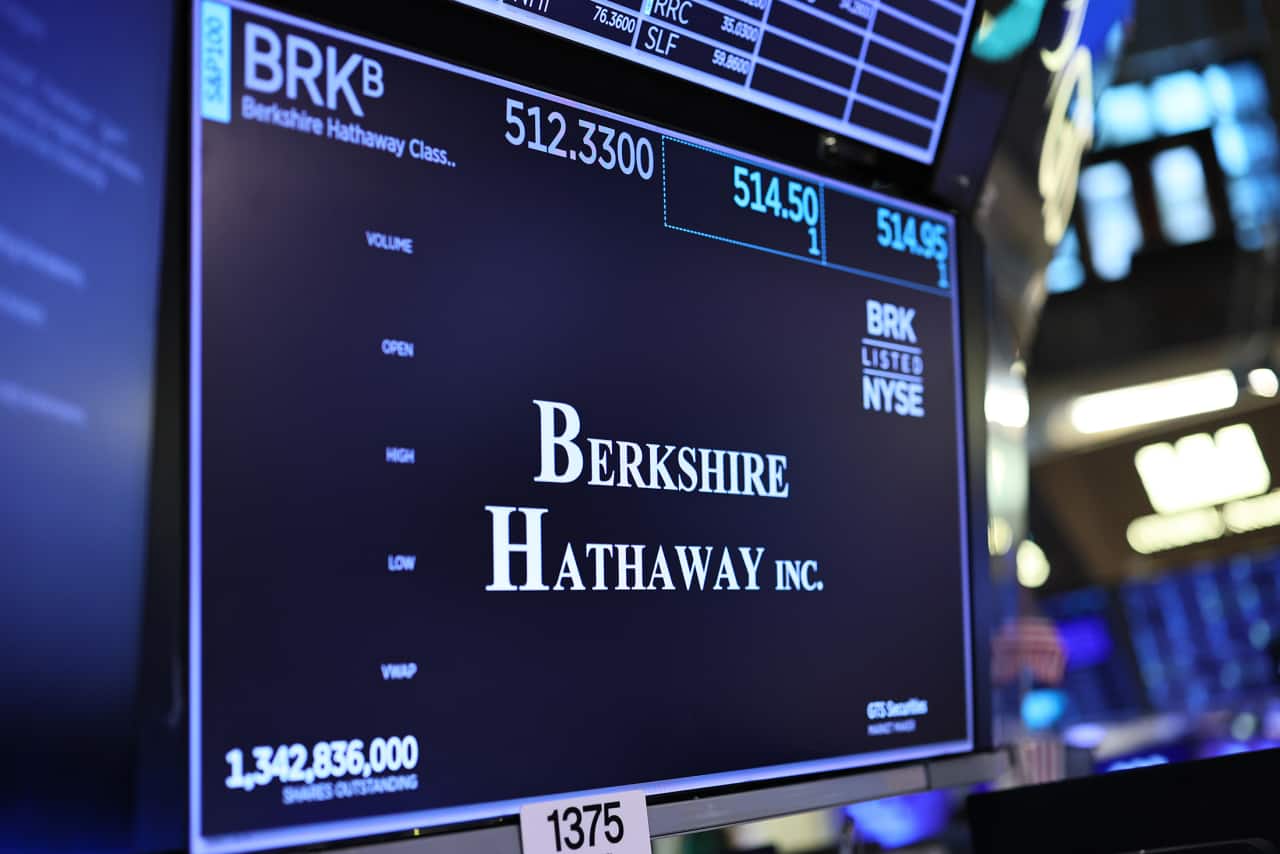
Berkshire Hathaway Faces Significant Impact from Potential Rate Cuts
Berkshire Hathaway is preparing for a potential decline in its interest income due to expected reductions in the Federal Reserve's benchmark rate. If the Fed cuts rates aggressively over the next year, the company could see a drop of more than $3 billion in annual interest income. This comes as a result of its massive cash and equivalent holdings, primarily consisting of U.S. Treasury bills.
The Federal Reserve is anticipated to lower its key rate by a quarter point on Wednesday, reducing it from the current range of 4.25% to 4.50%. Further reductions are expected through the end of next year, potentially bringing short-term rates down to around 3% by late 2026. These changes could significantly affect Berkshire’s financial outlook.
As of June 30, Berkshire held $340 billion in cash and equivalents across its insurance units and the parent company. Of this amount, approximately $244 billion was invested in Treasury bills, which are short-term government obligations that mature within a year. The company's cash reserves have grown by about $70 billion since mid-2024, driven by earnings and a reduction in its equity portfolio. Notably, Berkshire has not distributed any cash to shareholders over the past year, with no share repurchases or dividends issued.
Berkshire currently holds the largest cash balance among any U.S. nonbank company. A one-point decrease in short-term rates could lead to a $3 billion or greater reduction in annual interest income, according to estimates from Barron’s. After accounting for taxes, the impact might be around $2.5 billion. This represents more than 5% of the company’s after-tax operating profits, which are currently approaching $45 billion annually.
The possibility of lower short-term rates may be affecting investor sentiment toward Berkshire’s stock. While the S&P 500 continues to reach new highs, including a record closing on Monday, Berkshire’s Class A shares fell 0.5% to $736,469, and B shares dropped 0.6% to $491.54. In comparison, the S&P 500 gained 0.5% on the same day. Over the past year, Berkshire’s A and B shares have risen approximately 8%, lagging behind the S&P 500’s 14% total return.
Other factors contributing to the underperformance of Berkshire’s stock include a shift in investor preferences toward more aggressive "risk-on" stocks, particularly in the technology sector. Berkshire is considered one of the most defensive stocks in the market and the largest value issue in the Russell 1000 index. Additionally, many property and casualty insurance stocks have struggled this year, which could be impacting Berkshire given its position as the owner of the world’s largest P&C business by capital.
Berkshire has already begun to feel the effects of lower short-term rates. Its insurance business, where most of its cash is held, reported a 3% decline in “interest and other investment income” during the second quarter, reaching $2.5 billion. This decline was attributed to lower rates offsetting higher cash balances, as detailed in the company’s second-quarter 10-Q filing.
Despite these challenges, the prospect of lower rates is positively influencing the broader stock market, which could benefit Berkshire’s $300 billion equity portfolio. Apple leads this portfolio with a stake of $66 billion, representing just over 20% of the total.
Warren Buffett, CEO of Berkshire Hathaway, emphasizes the importance of maintaining ample liquidity at the company. Although he acknowledges that the current cash holdings are larger than necessary, he has previously been willing to hold significant amounts of cash when short-term rates were near zero. Buffett has not extended the maturity of Berkshire’s cash holdings to secure higher rates, and the company maintains virtually no bond portfolio. As of June 30, bond holdings totaled $15 billion, with $11 billion classified as cash-like with maturities of a year or less.
Buffett’s approach to investing can be characterized as a “barbell” strategy, balancing roughly 50% in stocks and 50% in cash. He has taken a calculated risk that short-term rates would fall, leading to reduced interest income, and appears comfortable with this decision.

Posting Komentar untuk "Berkshire Faces $3 Billion Interest Income Loss if Fed Cuts Rates Next Year"
Posting Komentar