
Mayor Duggan Unveils $42M Tax Reserve to Offset Corporate Losses
Detroit's Surplus and the Push for a New Reserve Fund
The city of Detroit is continuing to maintain a balanced budget with a surplus, and Mayor Mike Duggan has proposed the establishment of a new reserve fund for the current fiscal year. This initiative aims to address potential revenue losses that could result from unexpected manufacturing slowdowns or changes in federal law.
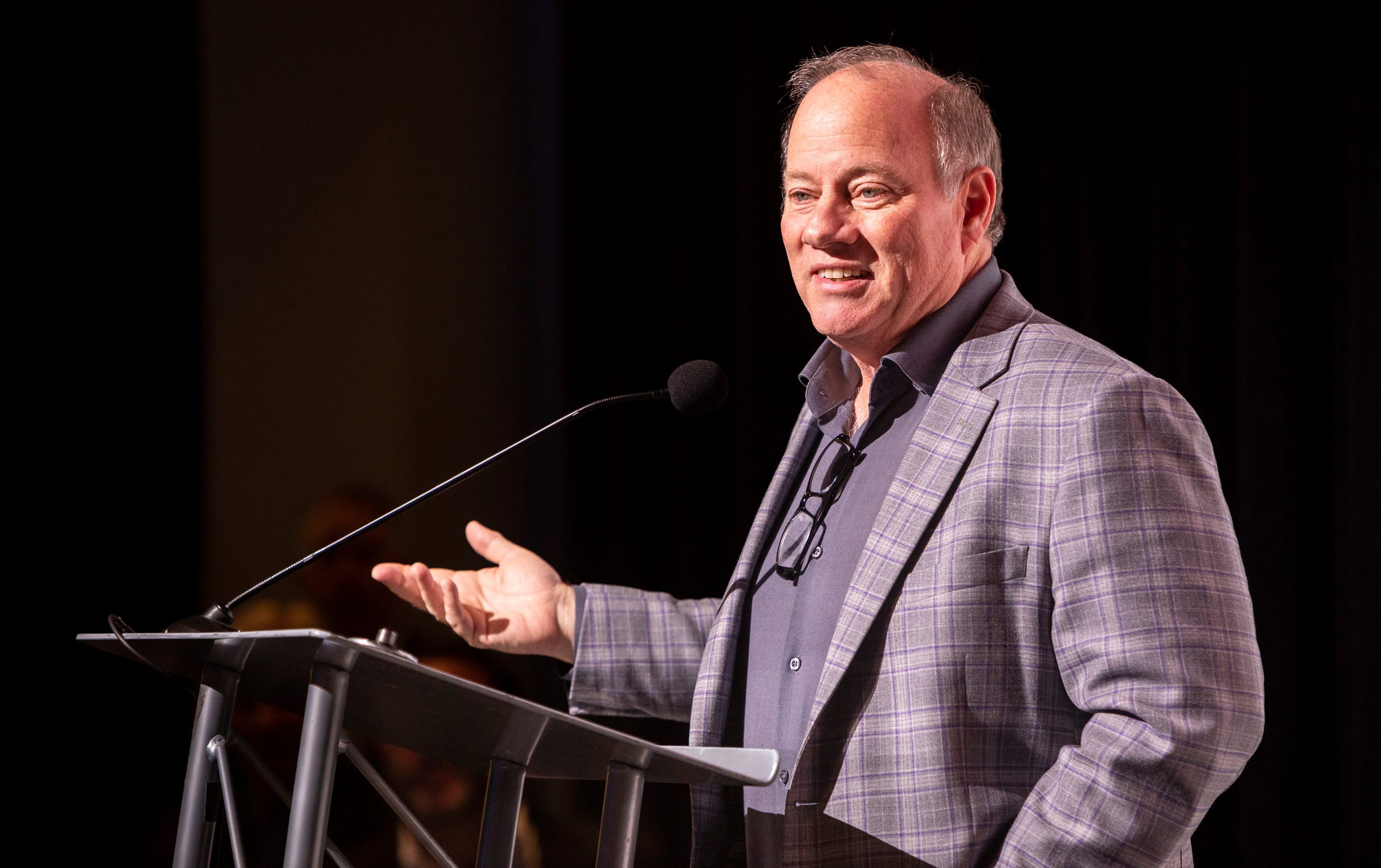
Following the end of the 2024-2025 fiscal year on June 30, the city is projected to have a $60.2 million surplus. This was announced by Mayor Duggan during a press event at the Detroit Police Department’s downtown headquarters on Monday, September 15. The mayor is requesting that $42 million of this surplus be allocated to the new reserve fund, which would require approval from the City Council. This marks the 11th consecutive year that Detroit has ended a fiscal year with a surplus.
Duggan emphasized his desire to ensure that his successor starts the next year with a budget surplus, just as he did when he took office. As he prepares to leave his position at the end of his term to run for governor in 2026, the mayor is focused on securing the city’s financial future.
One of the concerns driving the proposal is the potential impact of tariffs on corporate profits. Duggan expressed hope that President Donald Trump will soon reach an agreement with Canada to resolve the imposed tariffs on several sectors. He noted that corporate income tax is a tax on profits, and since the budget was adopted in April, there has been a significant drop in manufacturing profits due to these tariffs.
"This is the first time, since I’ve been here, we’ve seen corporate profits go down," Duggan said. "You’ve watched as we’ve built one manufacturing plant after the next over the last decade. It does put you in a situation where tariff uncertainty can have a significant impact in a short period of time."
The mayor added that if corporate profits decline, so too will city revenues. He stressed that the city does not prepare for best-case scenarios but rather for worst-case ones. This approach is reflected in the current surplus, which was achieved through cost reductions across all city departments. Duggan credited department executives for their diligence in managing the city's finances.
Detroit’s Chief Financial Officer, Tanya Stoudemire, described the $60-million surplus as a "conservative estimate." She noted that the final amount may increase before the end-of-year audit of the 2024-25 fiscal year budget. Stoudemire pointed out warning signs of decreasing corporate income tax revenues for the current fiscal year and recommended that the city take action to prevent future financial difficulties in the upcoming 2025-2026 fiscal year.
Stoudemire highlighted the passage of the 'Big Beautiful Bill' by Congress, which allows corporations to accelerate 'bonus depreciation,' potentially reducing their federal tax payments. She warned that if these provisions apply to the city’s corporate income tax, it could result in a $16 million loss to the city’s budget. Additionally, she noted a major reduction in corporate income tax from Detroit manufacturers, reflecting a steep drop in profits.
"We hope the tariff uncertainty driving these drops are resolved quickly at the national level. If they are not, Detroit could be looking at a potential loss of $26 million by the end of the year," Stoudemire said.
Duggan acknowledged that Michigan has one corporate income tax, which may not be tied to federal definitions. His administration is working to determine whether the city's income taxes align with federal definitions, which could lead to deductions. The mayor wants to ensure that the city has the $16 million needed to cover any potential shortfall if a court rules that the deduction applies.
Duggan also praised the City Council for adopting budgets that have helped grow Detroit’s reserves to $502 million. These reserves include a $150 million Rainy Day Fund, a $281 million Retiree Protection Fund, and a $71 million Risk Management Liability Fund.
City Councilman Fred Durhal III plans to bring the issue up in the budget, finance, and audit standing committee this week. He emphasized the shift from past practices of budgeting for the present or catching up from the past to a forward-looking approach that ensures the city remains fiscally stable while delivering necessary resources to residents.
Moody's Investment Services recently gave Detroit a credit rating boost, marking one of the highest ratings the city has received since 1999. The company noted that Detroit has bolstered its financial resiliency over the years, largely due to its strong operating performance and maintained reserves that help weather potential economic slowdowns.

Posting Komentar untuk "Mayor Duggan Unveils $42M Tax Reserve to Offset Corporate Losses"
Posting Komentar