
This Rare Dime May Hold Massive Value
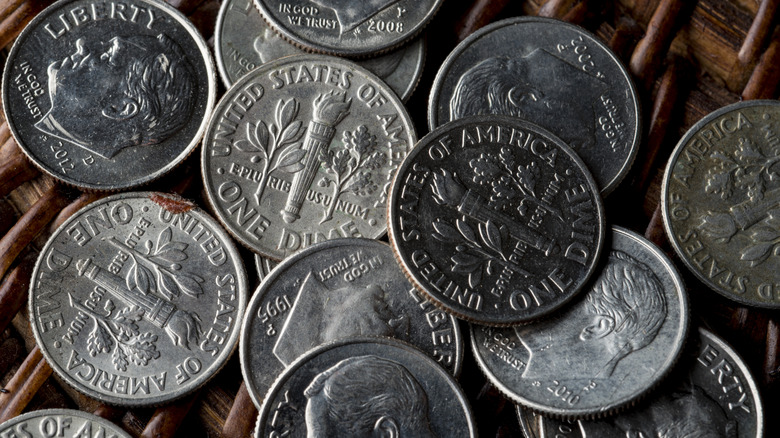
The History and Value of the Mercury Dime
From 1916 to 1945, the U.S. Mint produced the Mercury dime at three different locations: Denver, Philadelphia, and San Francisco. This iconic coin featured a striking image on its obverse, depicting Liberty with a head-and-neck profile wearing a cap adorned with wings. This design inspired the nickname "Mercury," referencing the Roman god known for his winged helmet. Over the years, the U.S. mints produced nearly 2.7 billion Mercury dimes across 77 different dates and mint marks.
The production numbers varied significantly from year to year. Some years saw only a few hundred thousand coins, while others resulted in hundreds of millions. For instance, in 1922, 1932, and 1933, no Mercury dimes were produced at all. These low-mintage years make certain coins more valuable to collectors, and one in particular has become highly sought after.
The Rare 1916-D Mercury Dime
The 1916-D Mercury dime is among the most valuable and rarest of the series. That year, the Denver Mint struck just 264,000 of these dimes. Most of them were circulated by consumers, which reduced their availability in high-grade condition. But why was the production so low?
Shortly after starting production, the Denver Mint received orders to shift its focus to producing quarters and half dollars. As a result, the mint stopped making dimes until 1917, when it produced 9.4 million. This brief interruption made the 1916-D a standout in the series.
To understand how rare this coin is, consider that the average annual production of Mercury dimes at a single mint was around 34.76 million. In contrast, the largest mintage occurred in 1944, when 231.41 million dimes were produced in Philadelphia. That’s nearly 1,000 times more than the 264,000 struck in Denver in 1916.
If someone discovers a 1916-D Mercury dime in excellent condition, it can be worth up to $20,000, according to some sources. In September 2025, the NGC Price Guide listed a circulated 1916-D at between $850 and $12,650, with an uncirculated version potentially reaching $39,000. One such coin sold at Heritage Auctions in August 2010 for $195,500.
Mint Marks and Collectibility
Not all Mercury dimes have a mint mark. For example, the Philadelphia Mint did not include a mint mark on its coins for the first 150 years of operation. The “P” symbol only appeared on some coins during World War II and became standard in 1980. This lack of a mint mark makes some coins even more unique and valuable to collectors.
The Value of Older Dimes
Older dimes, especially those produced before 1965, often hold more value than their face value. This is because they are made of a silver-copper alloy—90% silver and 10% copper. Today, it costs the U.S. Mint about 5 cents to produce a dime, which means the coin’s intrinsic value is less than its face value.
However, pre-1965 dimes, including Mercury and Roosevelt dimes, contain significant amounts of silver. Each dime weighs 2.5 grams, or approximately 0.088 troy ounces. With 90% of that being silver, each coin contains about 0.0723 troy ounces of silver. If you have multiple dimes, this adds up quickly.
As of mid-September 2025, the price of silver was around $42 per ounce, according to APMEX. However, if you decide to sell your silver dimes, you may not receive the full market value. Many buyers offer only about half the current price for bulk silver.
Conclusion
The Mercury dime is not only a piece of American history but also a valuable collectible. Its rarity, historical significance, and composition make it a prized item among numismatists. Whether you're a seasoned collector or simply curious about the value of old coins, the Mercury dime offers a fascinating glimpse into the past—and potentially a substantial return on investment.

Posting Komentar untuk "This Rare Dime May Hold Massive Value"
Posting Komentar