
Trump Calls Foreign Workers 'Welcome' After ICE Raid Targets Hundreds of South Koreans in Georgia
The Incident and Its Impact
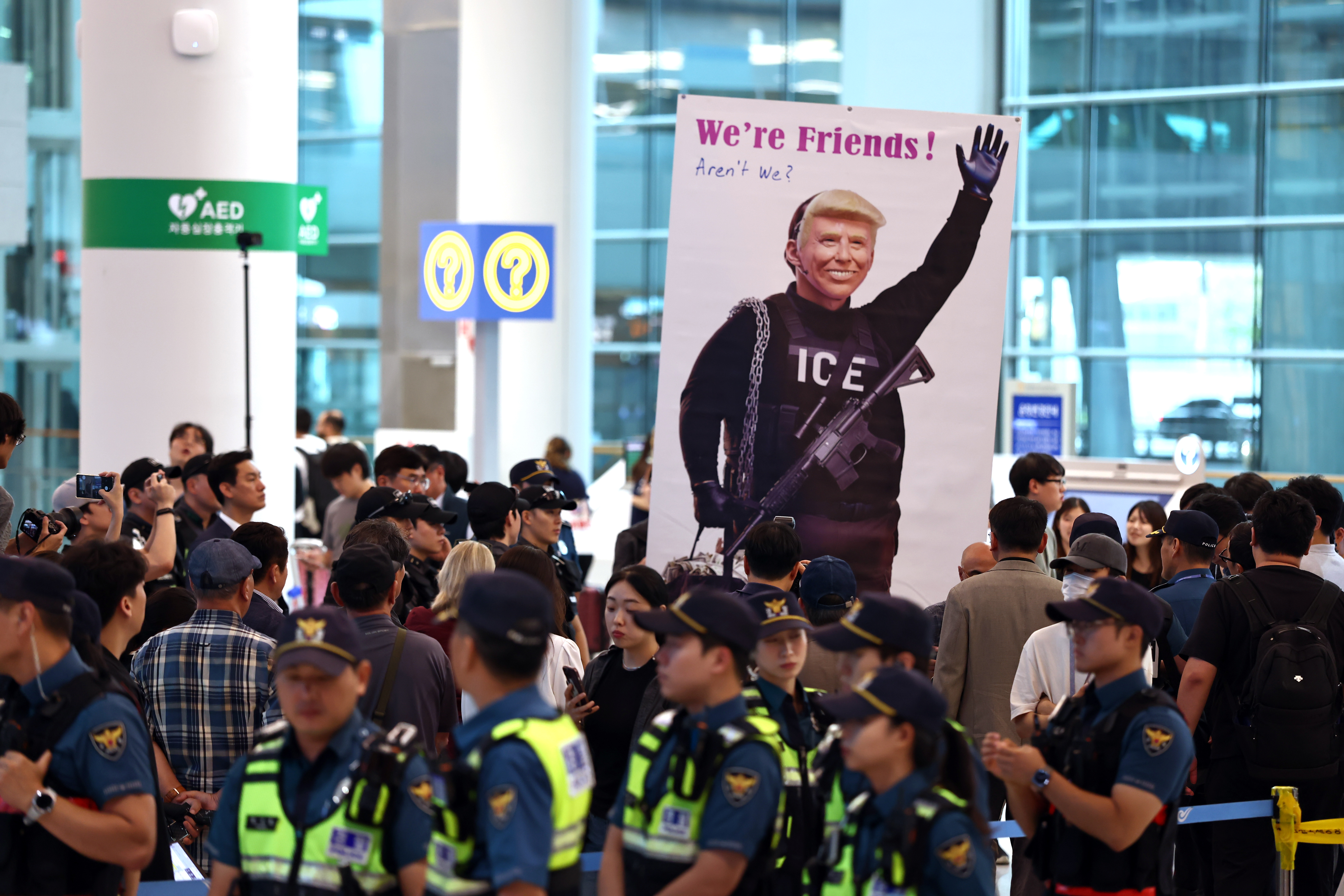
President Donald Trump is working to mend relations with South Korea after his administration's recent actions involving a Hyundai plant in Georgia. Earlier this month, hundreds of workers at the facility were arrested, causing significant concern among South Korean officials and companies.
This incident occurred just hours after reports surfaced that South Korea would initiate a human rights investigation into the detention of Korean employees. In response, Trump emphasized his desire not to "frighten off" foreign investment into the United States, a key focus of his administration.
On September 4th, Immigration and Customs Enforcement (ICE) agents raided an electric vehicle battery plant operated by Hyundai and LG Energy Solutions. During the raid, nearly 500 workers were detained, including around 300 from South Korea. ICE officials stated that the workers overstayed their visas or were not authorized to work in the U.S., according to NBC News.
Workers who were detained described being "shackled and handcuffed" and taken to the ICE detention center in Folkston, Georgia. Their belongings and phones were also confiscated. It remains unclear whether all the workers were eligible for deportation, as reported by The New York Times, which noted that in at least one case, a worker was legally employed but still forced to leave the country.
Visa Issues and Company Practices
Many of the workers entered the U.S. on B1 visas for business travel, allowing them to stay for less than six months, or on a visa waiver program, permitting stays of up to 90 days. Some companies opt for these short-term visas instead of H-1B visas, which allow foreign workers to stay for up to six years. This choice is often due to the lower cost, faster processing, and fewer restrictions associated with short-term visas.
Previous U.S. administrations had largely overlooked this practice, according to The Guardian. However, the current situation has raised concerns about the treatment of foreign workers and the potential impact on international business relations.
Economic Implications
Trump has urged foreign companies to invest more in the U.S. to avoid costly tariffs. Hyundai, in response, announced plans to spend $21 billion in the U.S. from 2025 to 2028. The company aims to expand car production in the U.S. to 1.2 million vehicles annually and improve its facilities.
The removal of hundreds of workers could delay these plans, as Hyundai has already postponed the opening of its Georgia factory. This development highlights the delicate balance between enforcing immigration laws and maintaining strong economic ties with foreign partners.
International Reactions
The raid sparked outrage from South Korean President Lee Jae Myung, who called the move "extremely bewildering." He expressed concern that companies in South Korea would become hesitant to invest more in the U.S. South Korea’s security advisor, Wi Sung-Lac, mentioned that the government would collaborate with the U.S. to establish clearer guidelines for visa requirements and potentially create a new category for Korean workers, according to Reuters.
Diplomatic Tensions
This incident places the Trump administration in a challenging position with South Korea, a longstanding ally of the U.S. Despite the tensions, Trump has expressed a desire to bring foreign workers to the U.S. to "teach and train" employees based in the U.S. He emphasized that the U.S. welcomes foreign workers and is eager to learn from them, aiming to excel beyond their standards in the near future.
The situation underscores the complexities of international relations and the need for clear communication and cooperation between nations. As both countries navigate this difficult period, the focus will remain on resolving issues while maintaining strong diplomatic and economic ties.

Posting Komentar untuk "Trump Calls Foreign Workers 'Welcome' After ICE Raid Targets Hundreds of South Koreans in Georgia"
Posting Komentar